

Best Compression Wear for Loose Skin After Weight Loss
Best Compression Wear
for Loose Skin After Weight Loss
Loose skin after weight loss changes how every shirt fits — compression creates the smooth foundation.
Quick Answer
A mesh compression tank constructed with a 75% nylon and 25% spandex open-knit fabric smooths loose skin movement under everyday clothing by mechanically redistributing soft tissue across the torso, allowing outer shirts to drape cleanly without visible tension lines or fabric bunching during 8-hour daily wear. Not intended for medical compression.
Breathable mesh for all-day wear?
Open-knit mesh construction prevents overheating — so you can wear it from morning coffee to evening commute without feeling trapped.
Light-medium compression that actually holds?
75/25 nylon-spandex gives you smoothing power without the squeeze. Loose skin stays put, shirts drape right.
Invisible under everyday clothing?
Deep U-neck and flatlock seams remain largely undetectable under most polos, dress shirts and tees — with no obvious lines or hardware showing through fabric.
Visual smoothing only. Not a medical device. For persistent body concerns, consult a physician.
Why Loose Skin Changes Clothing Behavior
After significant weight reduction, body volume decreases faster than skin elasticity adapts, creating surface irregularities that lightweight clothing fabrics tend to highlight. Compression fabric redistributes soft tissue across the torso, providing a uniform surface for outer clothing to drape over.
Standard dress shirts and thin cotton tees cling to uneven body contours, causing fabric to pull and gap at the midsection. A 75/25 nylon-spandex compression layer creates a smooth sub-surface that forces outer shirt fabric to drape straight down from the chest line, visually isolating movement from loose skin.
Loose skin moves independently of the body during walking, sitting, and bending. Compression stabilizes this movement by applying even pressure across the abdomen and chest, reducing visible fabric tension changes throughout the day.
For loose skin after weight loss, light-medium compression from a 75/25 nylon-spandex mesh tank is typically more effective than maximum compression. Firmer compression garments can create more visible edges under lightweight clothing and may feel restrictive during long seated periods. Light-medium compression allows the fabric to flex with your body throughout the day while maintaining consistent smoothing — without the pressure fatigue that causes most people to remove high-compression garments after a few hours.
Which Compression Type Works Best for Loose Skin After Weight Loss
Find your match based on how much loose skin you have and where you plan to wear it.
← Swipe to compare all options →
| YOUR SITUATION |
PRIMARY CHOICE MESH TANK |
ALTERNATIVE FIRM UNDERSHIRT |
ALTERNATIVE BODY SHAPER VEST |
|---|---|---|---|
| BEST FOR |
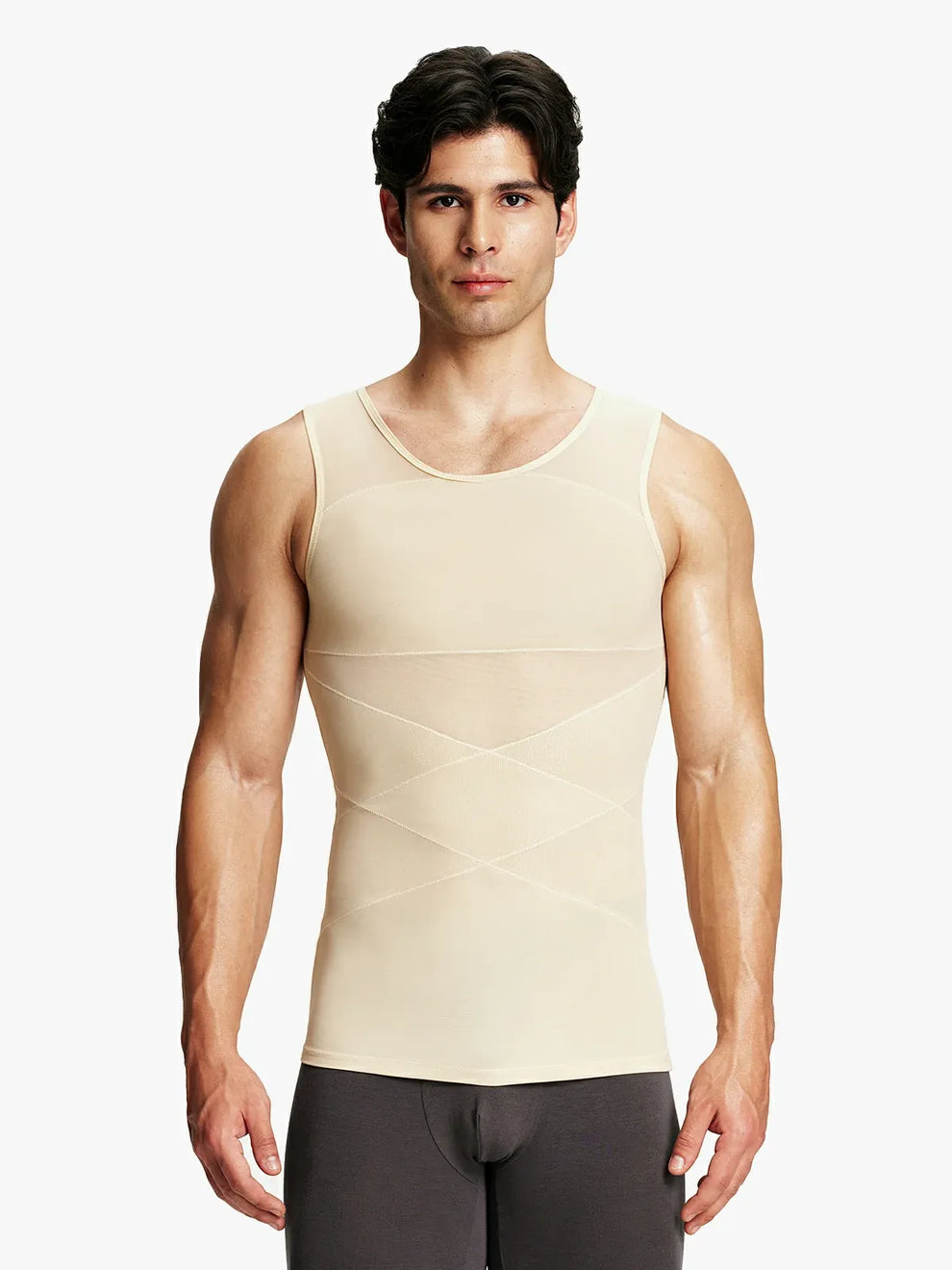 Moderate loose skin, daily wear |
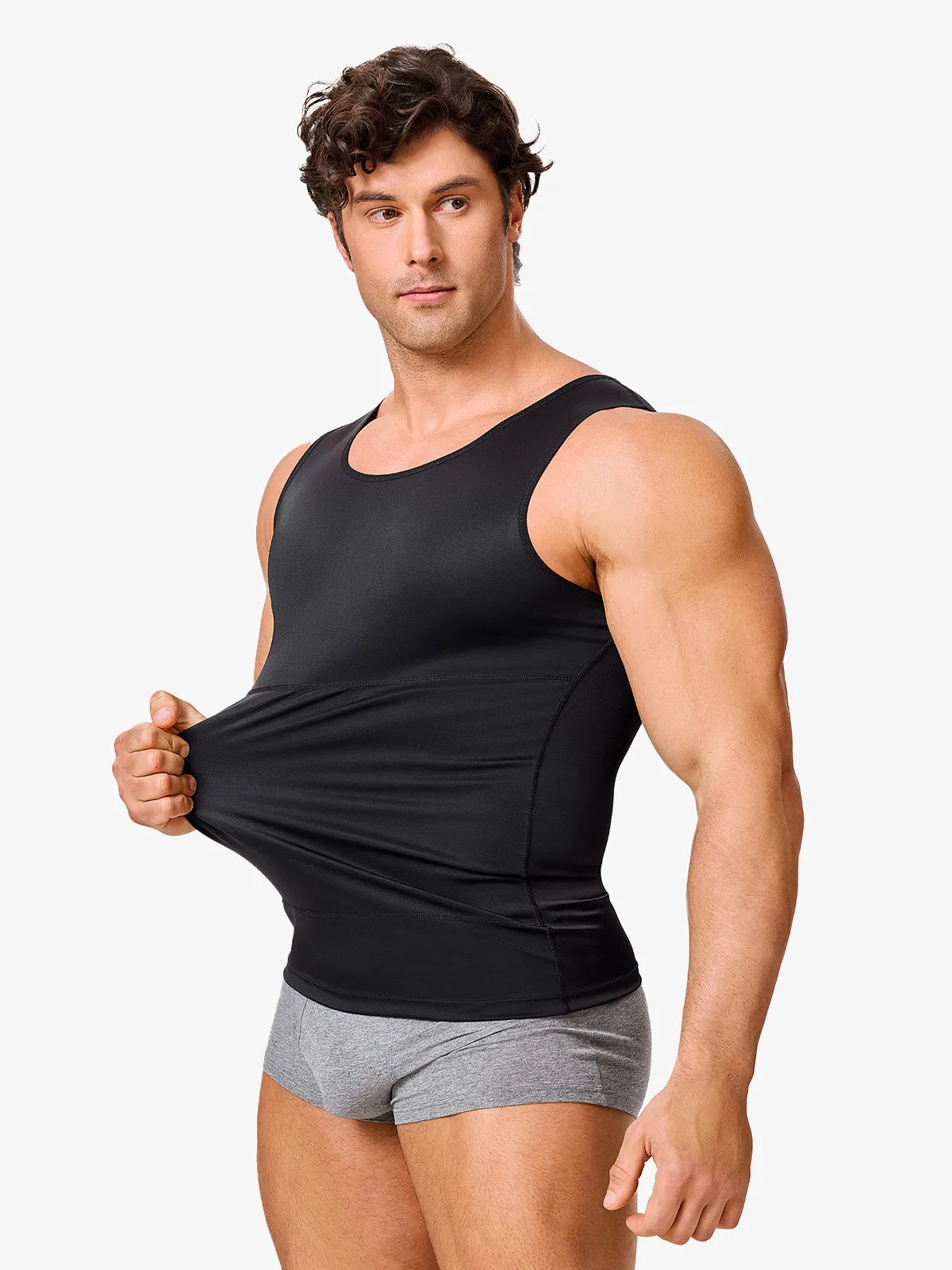 Significant loose skin, formal events |
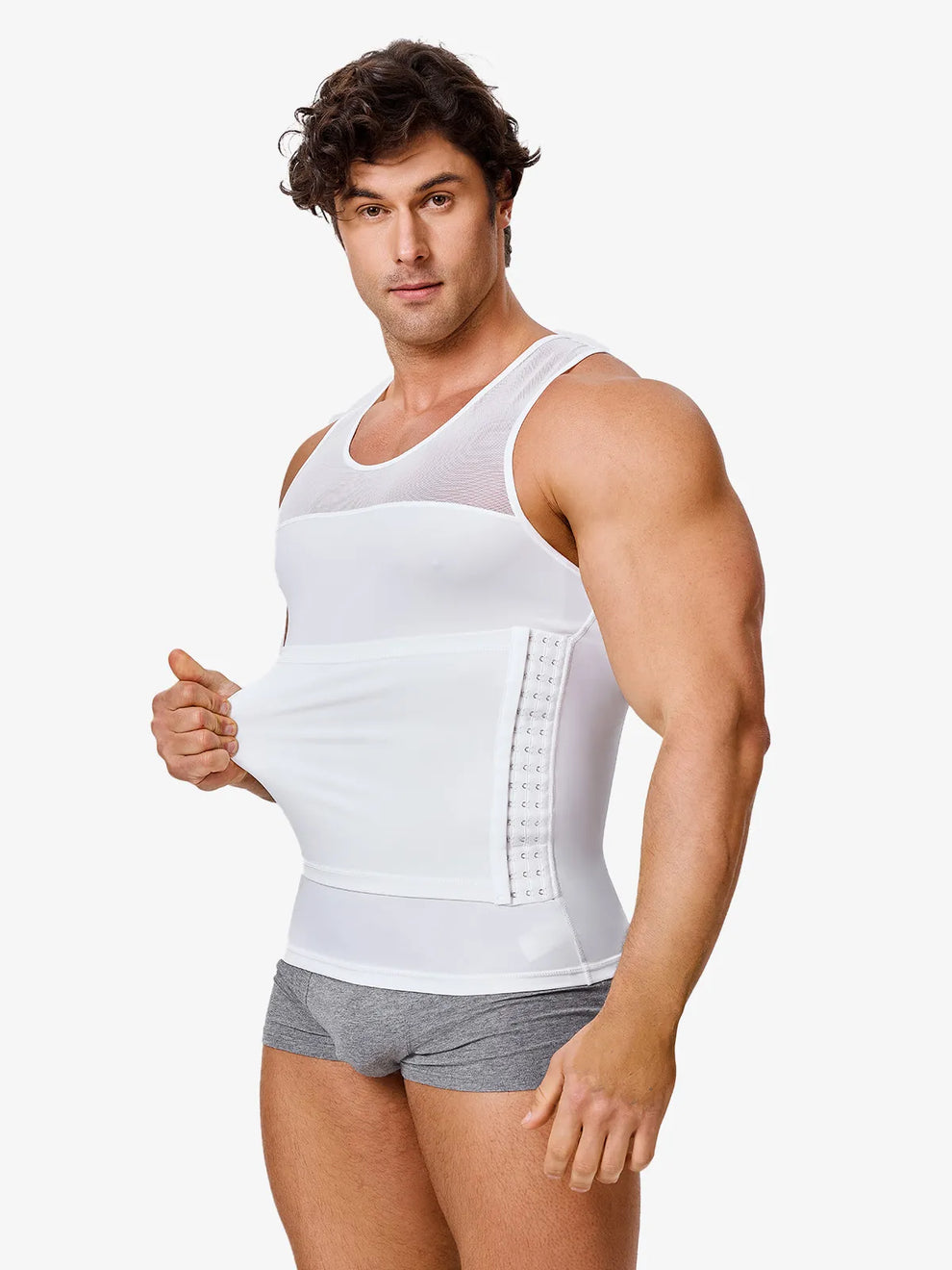 Targeted shaping with loose skin, 12+ hour events |
| COMPRESSION LEVEL | ★★☆☆☆ Light-Medium | ★★★☆☆ Medium-Firm | ★★★★☆ Firm (Built-In Belt) |
| WHY | 75% Nylon / 25% Spandex open-knit — best for daily loose skin smoothing without the squeeze | 70% Nylon / 30% Spandex double-layer — stronger smoothing than mesh for formal settings | 60% Nylon / 40% Spandex Mesh + adjustable belt — flexible firm control for all-day shaping |
| View Mesh Tank → | View Firm Undershirt → | View Body Shaper Vest → |
What Men Actually Tell Us About Compression After Weight Loss
"Based on recurring customer feedback: men who have lost significant weight are often more concerned about loose skin movement than waist size. In these situations, a smoothing layer is usually more comfortable than aggressive compression. Moderate compression with breathable materials tends to be worn consistently, while ultra-tight garments are often abandoned after a few hours."
What to Avoid
Starting with the strongest compression often leads to discomfort, rolling at the waist, and visible edge lines. Most people after weight loss find light-medium compression more sustainable for daily wear.
Short compression tanks frequently roll upward during sitting because the garment loses anchoring stability against the torso. Full-torso length provides more consistent coverage.
Compression works best at your true size. Sizing down creates bulging at the edges, restricted movement, and pressure fatigue — and you will likely remove the garment before the day ends.
If your primary goal is permanent skin tightening, this is not the right solution. Compression garments provide visual smoothing while worn — not lasting body changes. For medical compression needs, post-surgical recovery, or skin removal procedures, consult a qualified physician.
WaistSculpt designs men's shapewear & compression for body smoothing and everyday wear. Independently reviewed.
Best Compression for Loose Skin
← Swipe to see all products →
Men's Mesh Compression Tank Top
75% Nylon / 25% Spandex open-knit mesh. Breathable, light-medium compression. Best for daily wear, hot climates, and people who want all-day smoothing without overheating.
View Mesh Tank →
Men's Firm Compression Undershirt
70% Nylon / 30% Spandex double-layer construction. Firm elastic compression — stronger smoothing than mesh. Best for dress shirts, formal events, and people who want stronger smoothing without hardware.
View Firm Undershirt →
Men's Compression Body Shaper Vest With Waist Trimmer Belt
60% Nylon / 40% Spandex mesh with built-in adjustable belt. Firm compression. Best for locked-in all-day shaping, 12+ hour wear, and people who want targeted midsection control that stays put through long events.
View Body Shaper Vest →Real Results
Demonstration images showing garment effect during wear. Individual results vary depending on body composition, skin elasticity, and garment sizing. Same person, same lighting, same angles.

Without Compression vs. With Compression — Front View
Result: The Mesh Tank eliminates the horizontal fabric pulling and bunching caused by lower belly loose skin under a fitted dress shirt.

Without Compression vs. With Compression — Side View
Result: The side profile shows visibly reduced love handle protrusion and a smoother transition from chest to waist under lightweight shirting.
Frequently Asked Questions About Compression Wear After Weight Loss
Straight answers to the most common questions about compression and loose skin.
Effectiveness & Results
Q: Do compression shirts help with loose skin after weight loss?
Q: Does stronger compression always look better under clothing?
Q: Can compression garments permanently tighten loose skin?
Comfort & Daily Wear
Q: What material is best for breathable compression wear?
Q: Why do compression shirts roll down?
Q: Why does loose skin look worse under certain shirts?
Unsure about your size? Check our Size Guide before ordering. Most returns come from sizing down — order your regular shirt size.
Continue Your Journey
Not sure which guide to read next? If you're mostly wearing compression to the office, start with Smooth Belly Under a Dress Shirt. If you're still figuring out whether compression helps daily, start with Do Compression Shirts Help Loose Skin Daily.

📋 Do Compression Shirts Help Loose Skin Daily?
What to expect — and how to get the right fit.

👕 Smooth Loose Belly Skin Under Everyday Clothing
How to layer compression under tees, polos, and casual shirts.

🤵 Best Compression Under Dress Shirts & Formal Wear
The complete guide for formal and office wear.
What Compression Can — and Cannot — Do
Compression Can Help With
- Stabilizing loose skin movement during daily activities
- Improving clothing drape and reducing visible fabric tension
- Creating a smoother silhouette under fitted shirts
- Reducing friction and skin irritation during movement
- Providing comfortable, breathable all-day wear
Compression Cannot
- Permanently tighten or restore skin elasticity
- Replace surgical or medical skin removal procedures
- Burn fat or reduce body weight while worn
- Work identically for all body types and skin conditions
Why We Wrote This
After helping thousands of customers through our support team, one pattern became impossible to ignore: many people who had lost significant weight were buying compression garments based on maximum strength alone — and ending up with something they couldn't comfortably wear. This guide exists to help you avoid that same mistake, and to give you a realistic starting point based on how you actually plan to use compression wear throughout the day.
The Goal Is Sustainable Daily Wear
The best compression garment is usually the one you stop noticing halfway through the day. Free shipping. Free returns.
Explore Compression WearDiscreet packaging. Nobody knows what's inside.
Explore All Compression Guides
Browse the Loose Skin Smoothing Hub →Alex Chen, Founder | Updated June 2026
Compression garments are fitness and posture aids, not medical devices.
Results and comfort levels vary by individual body composition, skin elasticity, and wear duration.