
Best Compression for Office, Travel, and Long Sitting Days
Best Compression for Office, Travel,
and Long Sitting Days
Compression behaves differently when you sit for hours. Here is what actually works for desk work, long flights, and formal office days.
Quick Answer
WaistSculpt recommends: For 8-hour desk work, choose the Mesh Compression Tank — breathable honeycomb mesh keeps air flowing and creates a clean silhouette under dress shirts. For long flights and travel, choose the Seamless Lightweight Tank — circular-knit construction eliminates friction in cramped seats. For formal office days and presentations, choose the Firm Compression Undershirt — adjustable hooks let you customize compression for the moment. Visual smoothing only. Not a medical device. Compression shirts are a type of men's compression wear designed for full-torso smoothing under everyday clothing.
8-hour desk work or long office days?
Mesh Compression Tank — breathable honeycomb mesh. Clean silhouette under dress shirts all day.
Long flights, travel, or commuting?
Seamless Lightweight Tank — circular-knit eliminates friction. Built for cramped seats and limited mobility.
Formal office days, interviews, or presentations?
Firm Compression Undershirt — adjustable hooks let you dial in the compression for the big moment.
Compression garments are fitness and posture aids, not medical devices. For persistent body concerns, consult a physician.
Why Sitting Changes How Compression Feels
Compare the three styles for sitting scenarios.
Which Compression for Your Sitting Scenario?
Three products — each built for a different type of long sitting day.
← Swipe to compare all options →
| YOUR NEED |
BREATHABLE MESH TANK |
FRICTION-FREE SEAMLESS TANK |
ADJUSTABLE FIRM UNDERSHIRT |
|---|---|---|---|
| BEST FOR |
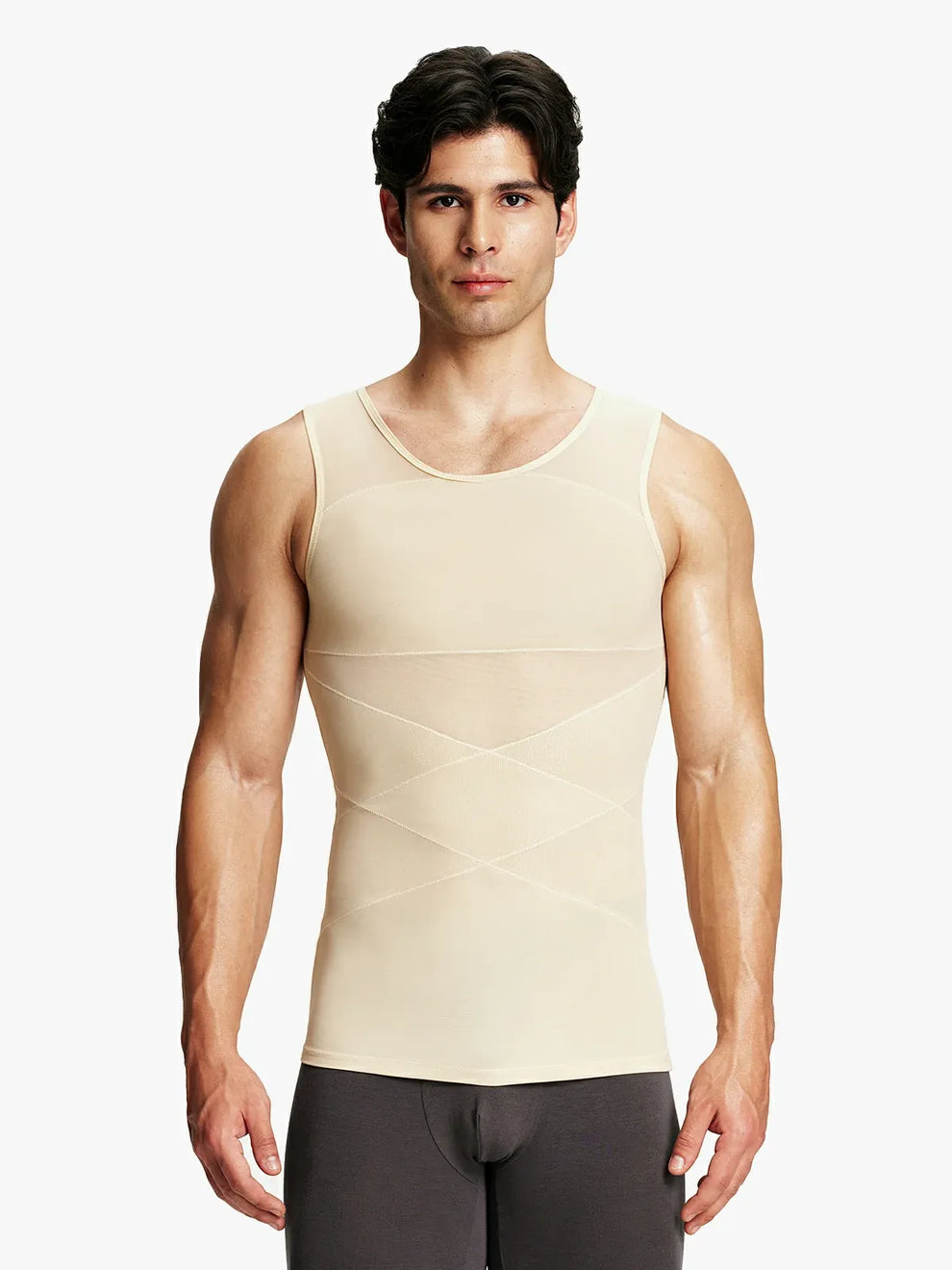 8+ hour desk work, warm offices — breathable honeycomb mesh |
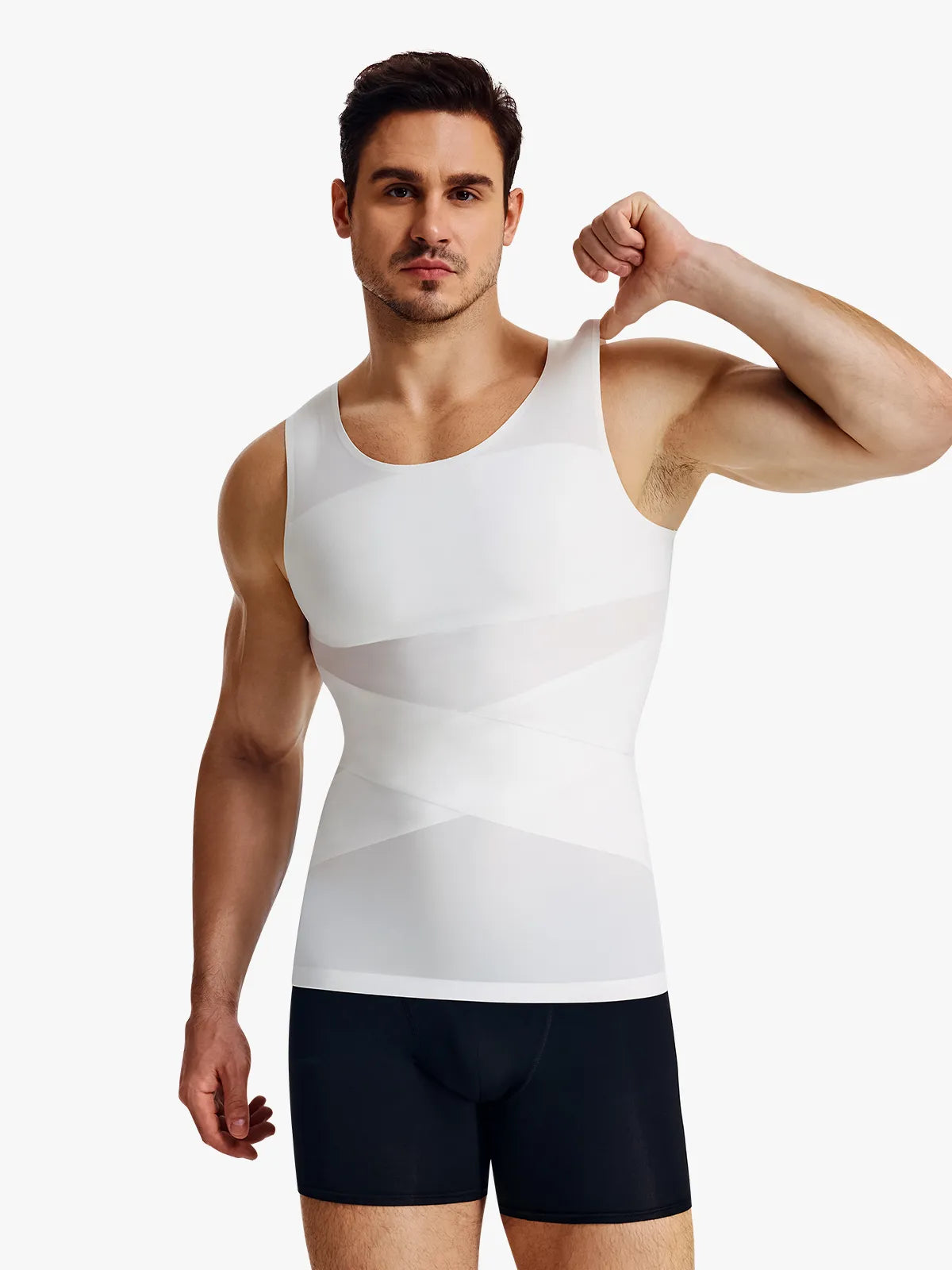 Long flights, commutes — seamless circular-knit eliminates friction |
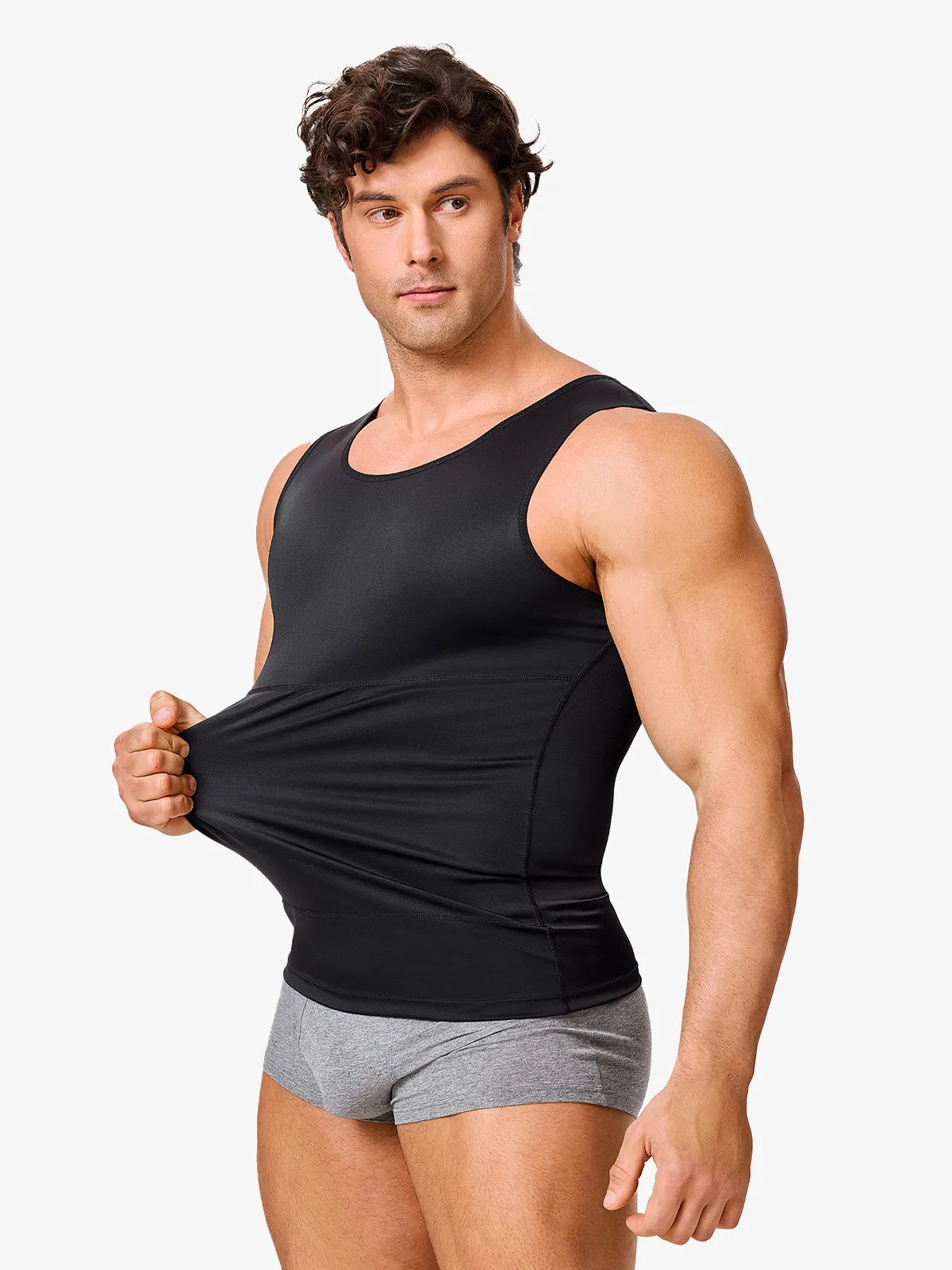 Formal office days, interviews — adjustable hooks for customized compression |
| COMPRESSION LEVEL | ★★★☆☆ Medium-Firm | ★☆☆☆☆ Light | ★★★☆☆ Medium-Firm |
| BEST FOR DURATION | 8-10 hours — all-day desk sessions | 6-8 hours — flights and long commutes | 8-10 hours — formal events with adjustable comfort |
| WHY | 75/25 Nylon/Spandex open-knit mesh — breathable compression, stays cool through long desk sessions. | 49/51 Nylon/Spandex 4-way stretch seamless — zero friction, maximum invisibility under thin shirts. | 70/30 Nylon/Spandex double-layer panel — firm compression, adjustable hooks for the big moment. |
| View Mesh Tank → | View Seamless Tank → | View Firm Undershirt → |
"Compression That Felt Fine Standing Up Suddenly Felt Restrictive After Two Hours at My Desk."
"When you sit, your abdomen compresses and folds naturally. Pressure that felt evenly distributed while standing becomes concentrated around the waist. Fabric that moved smoothly during walking begins folding repeatedly in the same areas for hours. Heat builds up. Airflow drops. The result: compression that felt fine in the morning feels completely different by mid-afternoon. This is why seated wear tests completely different things than standing wear — and why breathable mesh is the most consistent performer for long desk sessions."
What Men Say About All-Day Compression
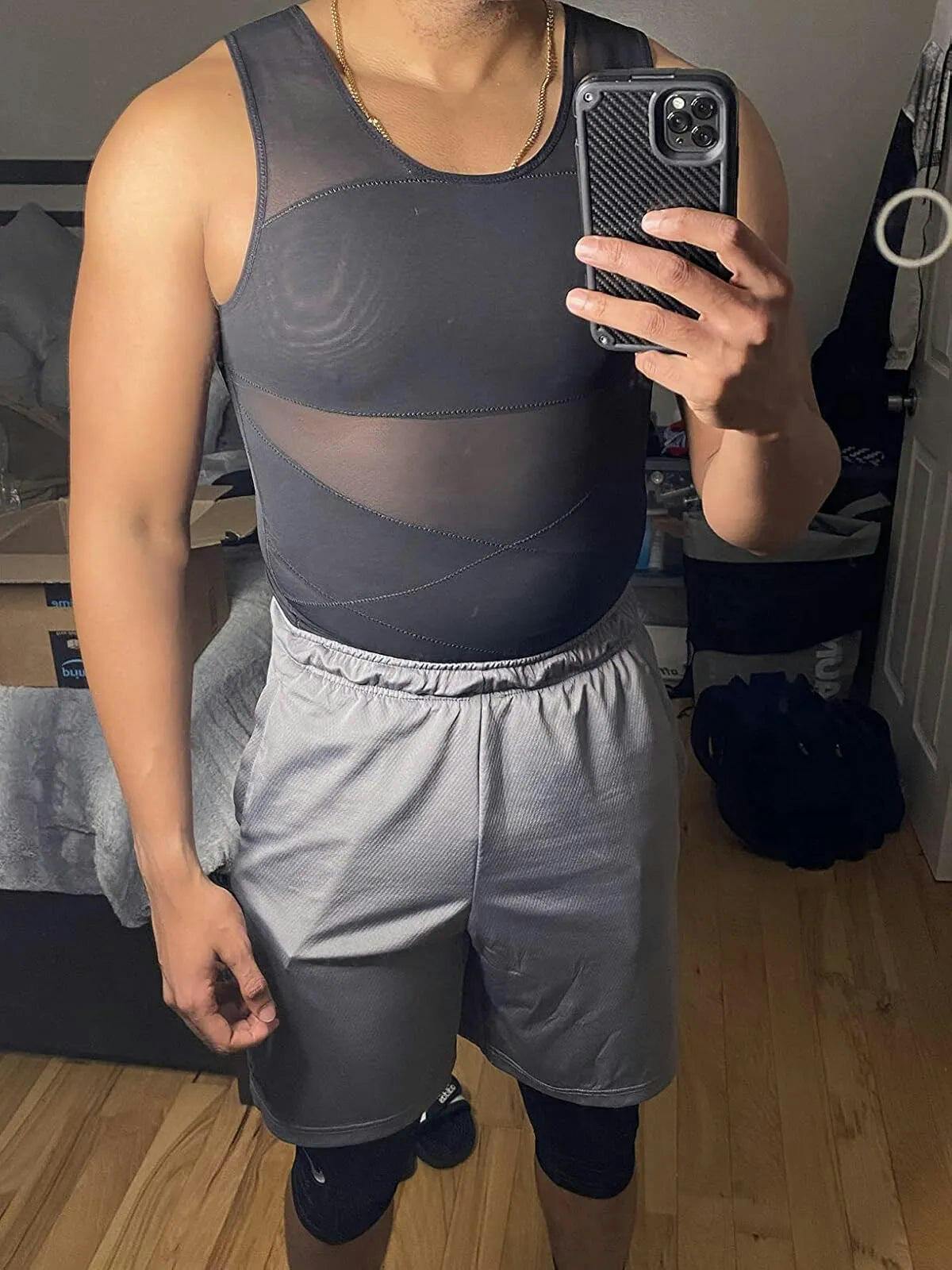
Real feedback from men who wear compression through long workdays and flights.
← Swipe to see all reviews →
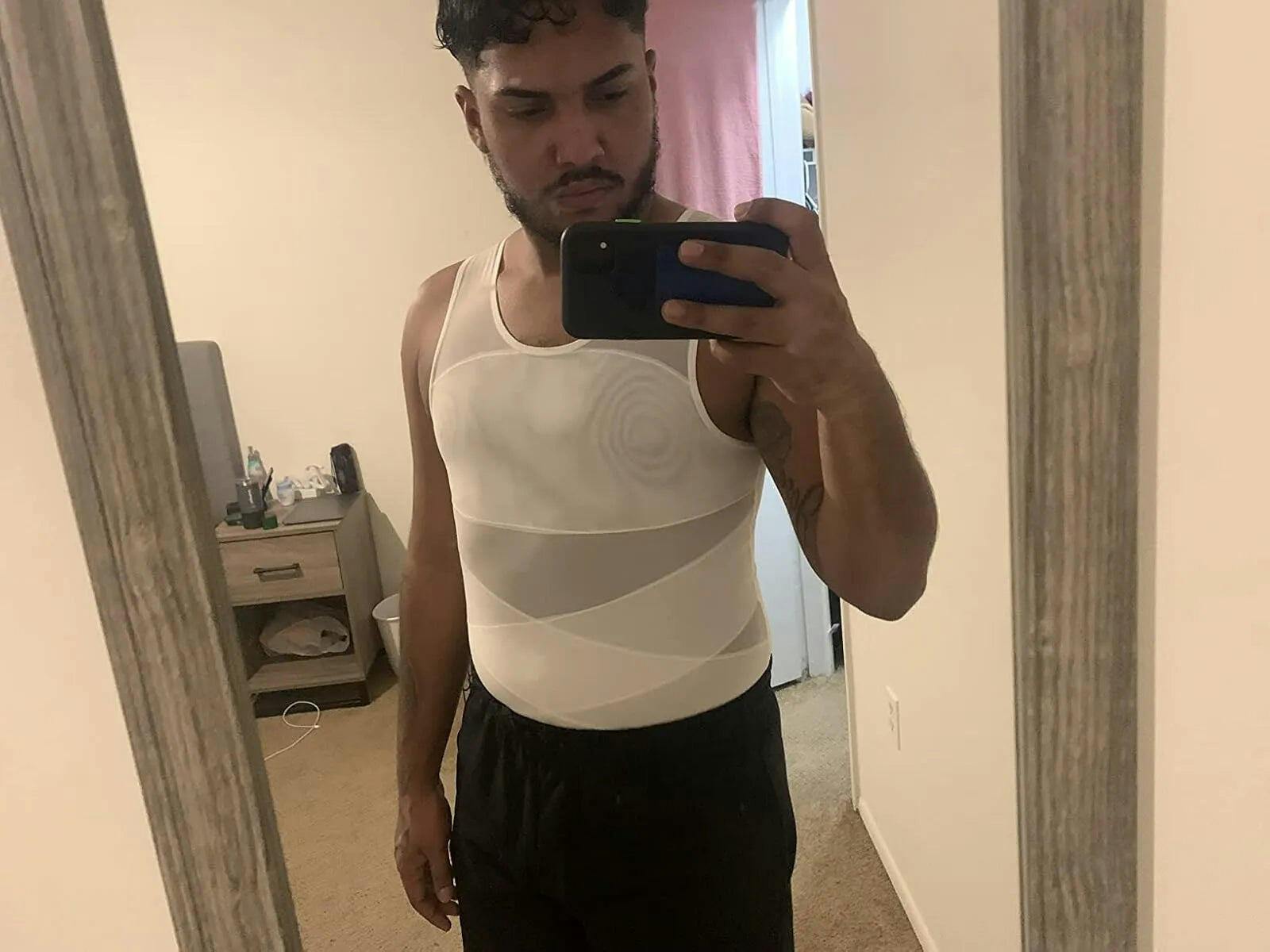
Common Mistakes When Choosing Compression for Sitting
Rigid compression becomes noticeably restrictive after 60-90 minutes of continuous sitting. For 8+ hour desk days, medium breathable compression is the better choice — it stays comfortable without the squeeze.
Friction builds up in cramped seats. Seams dig in. Seamless circular-knit construction eliminates friction points entirely — the most comfortable option for travel and limited mobility.
Under bright office lights, pure white can create a visible outline because light bounces off the fabric. Choose nude or beige — it blends with your skin and disappears under your shirt.
If you need compression specifically for abdominal smoothing during long sitting, see our Stomach Compression for Office and Long Sitting guide. If you are new to compression and want to understand what it can and cannot do, start with What is Men's Shapewear?
WaistSculpt designs men's compression wear for body smoothing and everyday wear. Independently reviewed.
Our Top Picks for Long Sitting Days
← Swipe to see all products →
Men's Mesh Compression Tank Top
75% Nylon / 25% Spandex open-knit mesh. Light-medium compression — breathable and flexible. Best for daily wear, hot climates, and moderate loose skin smoothing without overheating.
View Mesh Tank →
Men's Seamless Breathable Tummy Control Tank Top
49% Nylon / 51% Spandex 4-way stretch seamless knit. Light compression — zero seams, zero hardware, zero visible edges. Best for maximum invisibility under thin fitted t-shirts.
View Seamless Tank →
Men's Firm Compression Undershirt
70% Nylon / 30% Spandex double-layer construction. Medium-firm compression — stronger smoothing than mesh for formal settings. No hardware means zero visible lines under dress shirts.
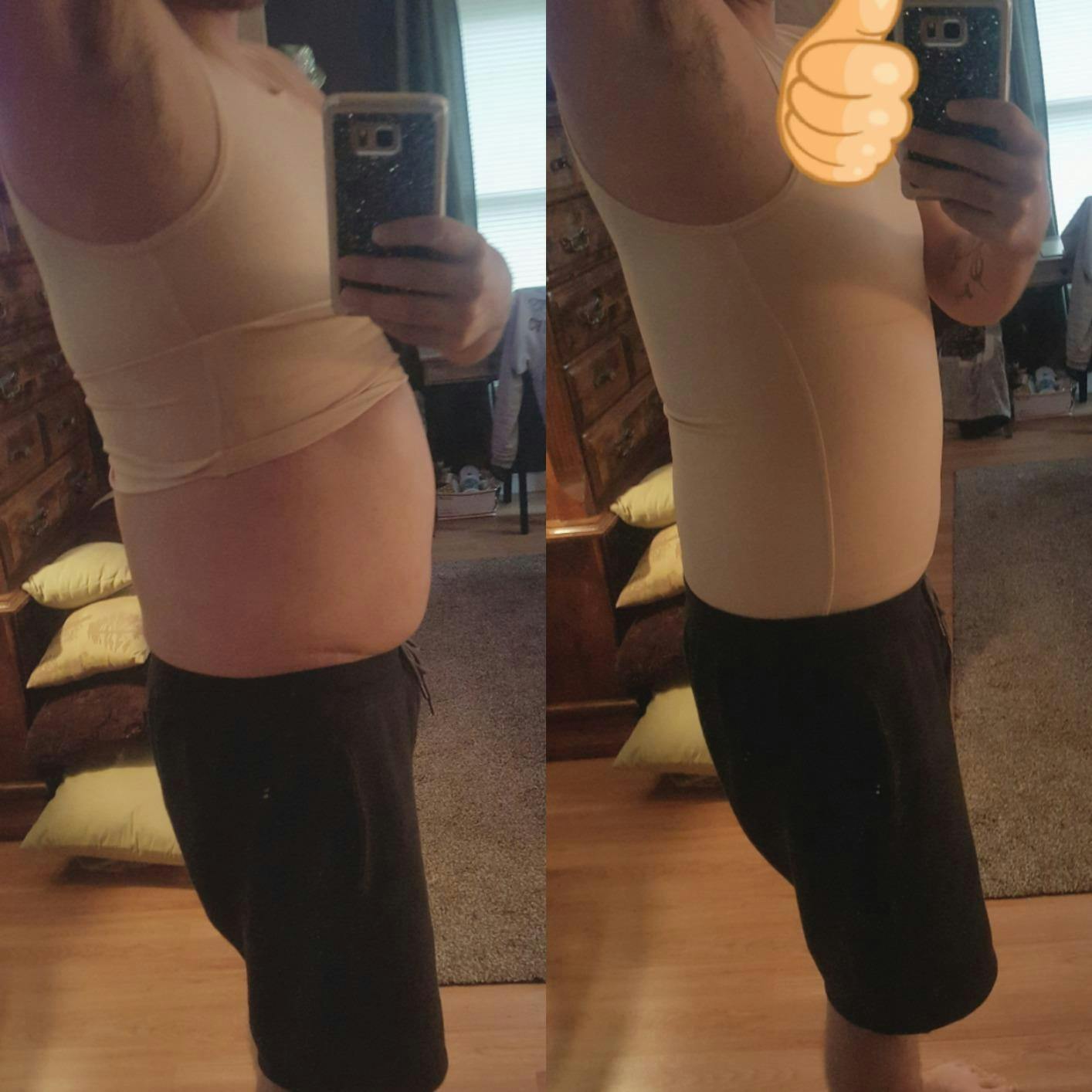
View Firm Undershirt →See How Compression Smooths Your Silhouette Through Long Sitting Days
Demonstration images showing garment effect during wear. Breathable mesh compression maintains a smooth contour through long desk sessions — no rolling, no visible lines, consistent all-day comfort. Individual results vary. Same person, same lighting, same angles.

Before & After — Front View
Result: Smooth, even compression — stays invisible under dress shirts through 8+ hour desk sessions

Before & After — Side View
Result: Consistent contour from every angle — breathable mesh stays smooth whether standing or sitting
Your Office Compression Questions Answered
From all-day comfort to staying invisible — everything about compression for long sitting days.
Comfort & Duration
Q: Why does compression feel tighter after sitting for hours?
Q: Can I wear a compression shirt all day at the office?
Q: Why does my compression roll up when I sit?
Visibility & Product Choice
Q: Will people see a compression shirt under my dress shirt?
Q: Are compression shirts hot in summer?
Q: Mesh vs Seamless — what is the difference?
Q: I have never worn compression before — where should I start?
Unsure about your size? Check our Size Guide before ordering. Most returns come from sizing down — order your regular shirt size.
What Compression Can — and Cannot — Do
Compression Can Help With
- Smoothing your torso for a clean silhouette under dress shirts
- Staying breathable through 8+ hour desk sessions
- Eliminating friction during long flights with seamless construction
- Providing adjustable compression for formal events and presentations
Compression Cannot
- Permanently tighten or restore skin elasticity
- Replace surgical or medical skin removal procedures
- Burn fat or reduce body weight while worn
- Work identically for all body types and skin conditions
Why We Wrote This
Compression feels completely different when you sit for hours — and most guides ignore this entirely. This guide exists so you know which compression to reach for whether you are at your desk, on a plane, or suiting up for a formal day. Compression garments are fitness and posture aids, not medical devices.
The Best Compression Is the One You Forget You Are Wearing
Free shipping. Free returns. Compression that stays comfortable through your longest workdays.
Explore Office & Travel Compression


Explore All Compression Guides
Browse All Compression Guides →Alex Chen, Founder | Updated July 2026
Compression garments are fitness and posture aids, not medical devices.
Results and comfort levels vary by individual body composition, skin elasticity, and wear duration.