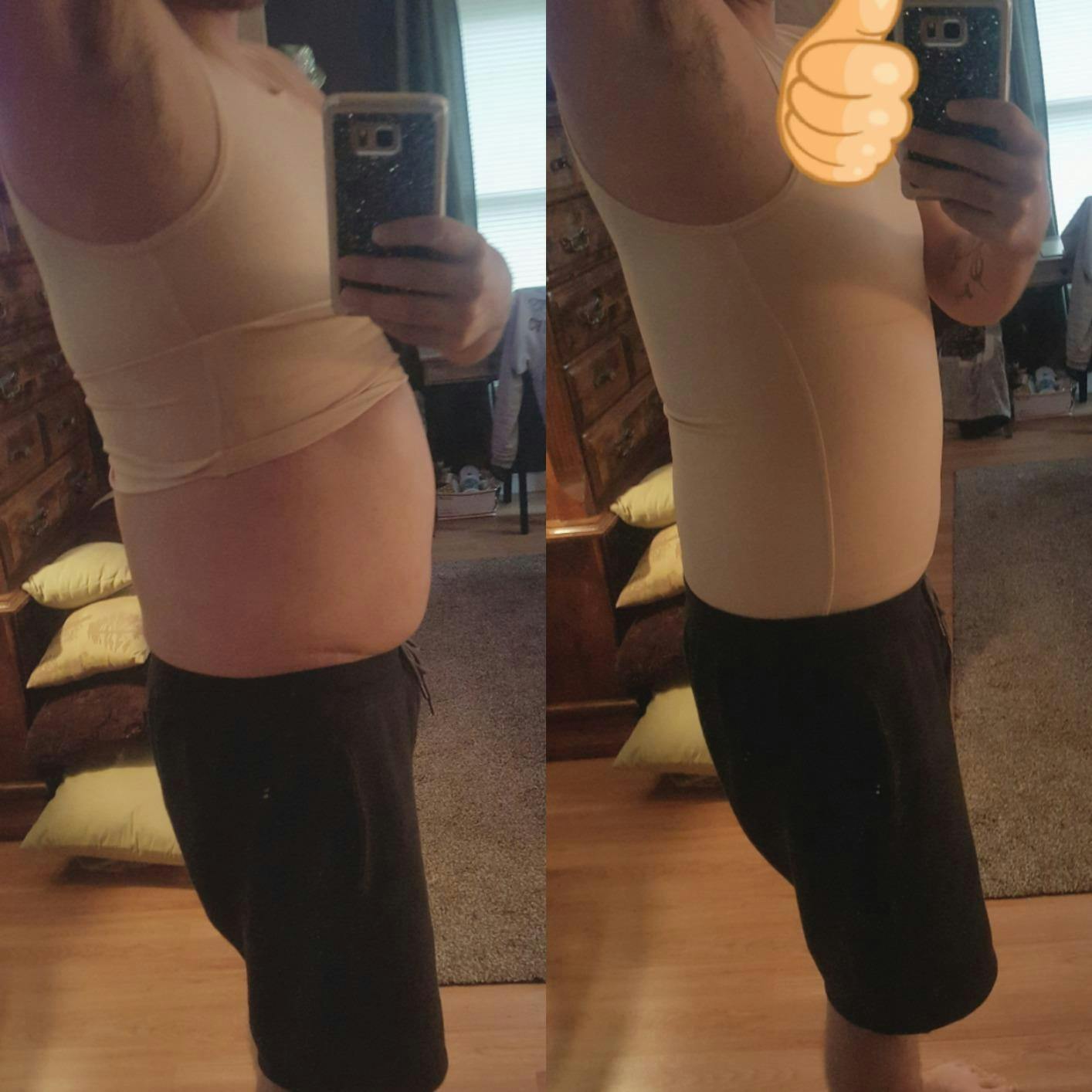
Posture Support & Daily Wear: How Compression Garments Interact with Posture

Posture Support & Daily Wear: How Compression Garments Interact with Posture


Your back aches from hours of sitting. Your shoulders round forward without you noticing. And somewhere along the way, you heard compression gear might help—but no one explained whether it actually does, how it works, or what to expect. This guide answers those questions, drawing from sports medicine research on proprioceptive feedback, occupational health principles for prolonged sitting, and real usage patterns observed across thousands of customers who wear compression garments for postural awareness and daily comfort.

📋 Quick Summary

Compression garments may provide proprioceptive feedback—a sensory signal that makes you aware of your posture—by gently pulling the shoulders back and encouraging better alignment during sitting, standing, and moving. They are not posture correctors in the medical sense. Studies in sports medicine and rehabilitation suggest that external tactile feedback can improve body awareness during static sitting and repetitive movement patterns, but it does not structurally realign the spine. The right garment, worn correctly and for reasonable durations, can make desk work more comfortable and increase awareness of how you carry yourself throughout the day.

📑 In This Guide

Compression wear for posture support refers to form-fitting garments—typically compression tanks, posture belts, and lumbar support bands—that apply gentle, even pressure across the back and shoulders. This pressure provides proprioceptive feedback: a sensory signal that encourages the wearer to maintain a more upright position during sitting, standing, and daily movement. It is a supportive tool for postural awareness, not a medical device for correcting structural spinal conditions.

🔬 Why Proprioceptive Feedback Matters

Proprioception is the body's ability to sense its own position in space. When you close your eyes and touch your nose, proprioception is the system that guides your hand. The same system governs your awareness of spinal alignment and shoulder positioning throughout the day.

During prolonged desk work, this system dulls. You stop noticing that your shoulders have drifted forward or that your lower back has collapsed into a slouch—not because the muscles are weak, but because your brain has stopped receiving novel sensory input from that area. Compression garments work by introducing a new sensory signal: the gentle tension of fabric across your back and shoulders. This tension does not mechanically force your spine into alignment. Instead, it provides a continuous tactile cue that makes you aware of your posture—and awareness is the prerequisite for improvement.

This mechanism is recognized in sports medicine and rehabilitation research. Studies on external tactile feedback suggest that garments providing consistent, low-level sensory input can improve body awareness during static sitting and repetitive movement patterns. Compression garments do not structurally realign the spine, but they may increase awareness of shoulder positioning and slouching behavior—especially during prolonged seated work where postural drift tends to occur without conscious correction.

Key Takeaways

  • Posture support from compression is sensory, not structural. The garment provides proprioceptive feedback—a tactile cue that makes you aware of your posture. It does not physically hold your spine in place like a rigid brace.
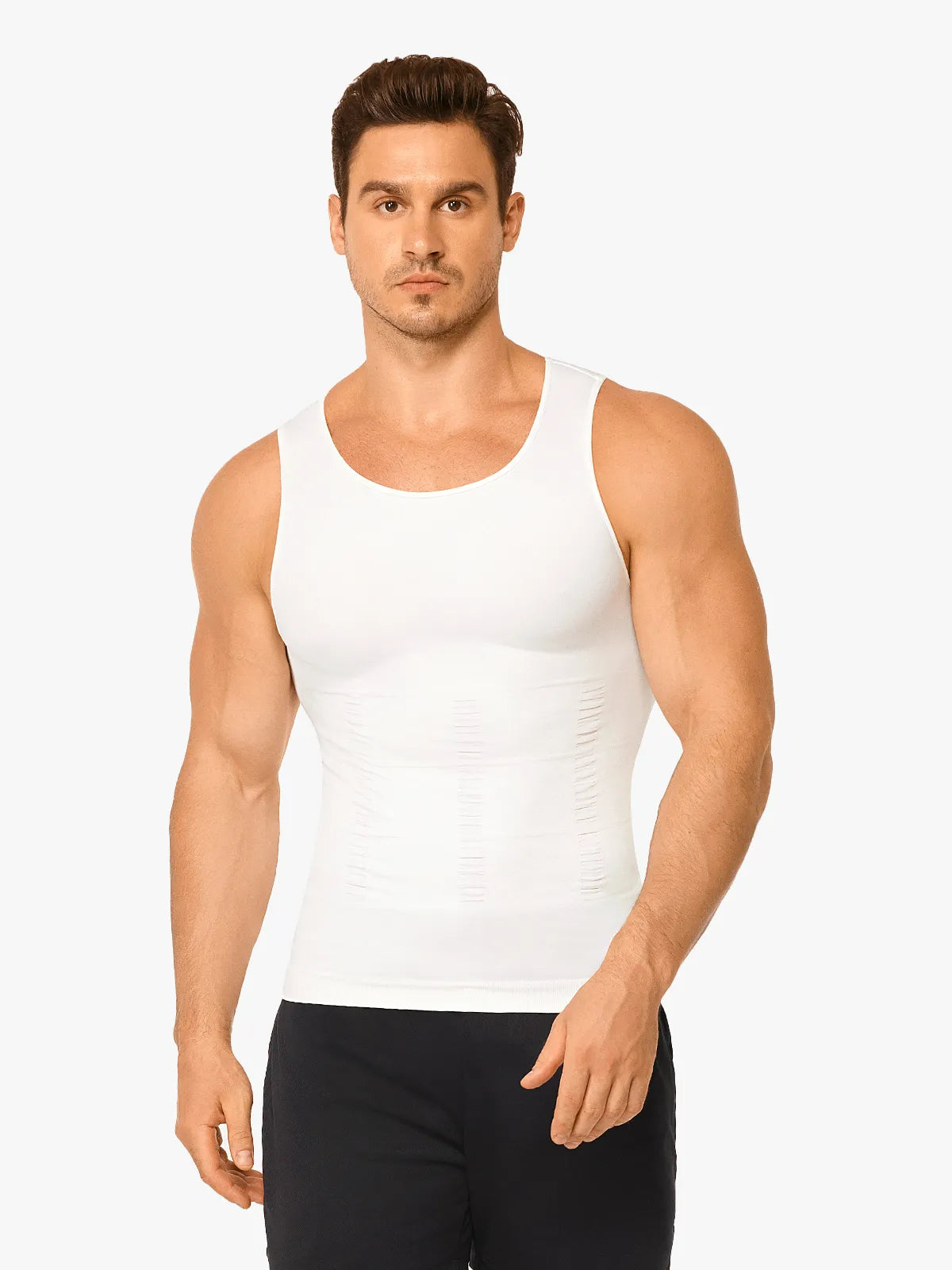
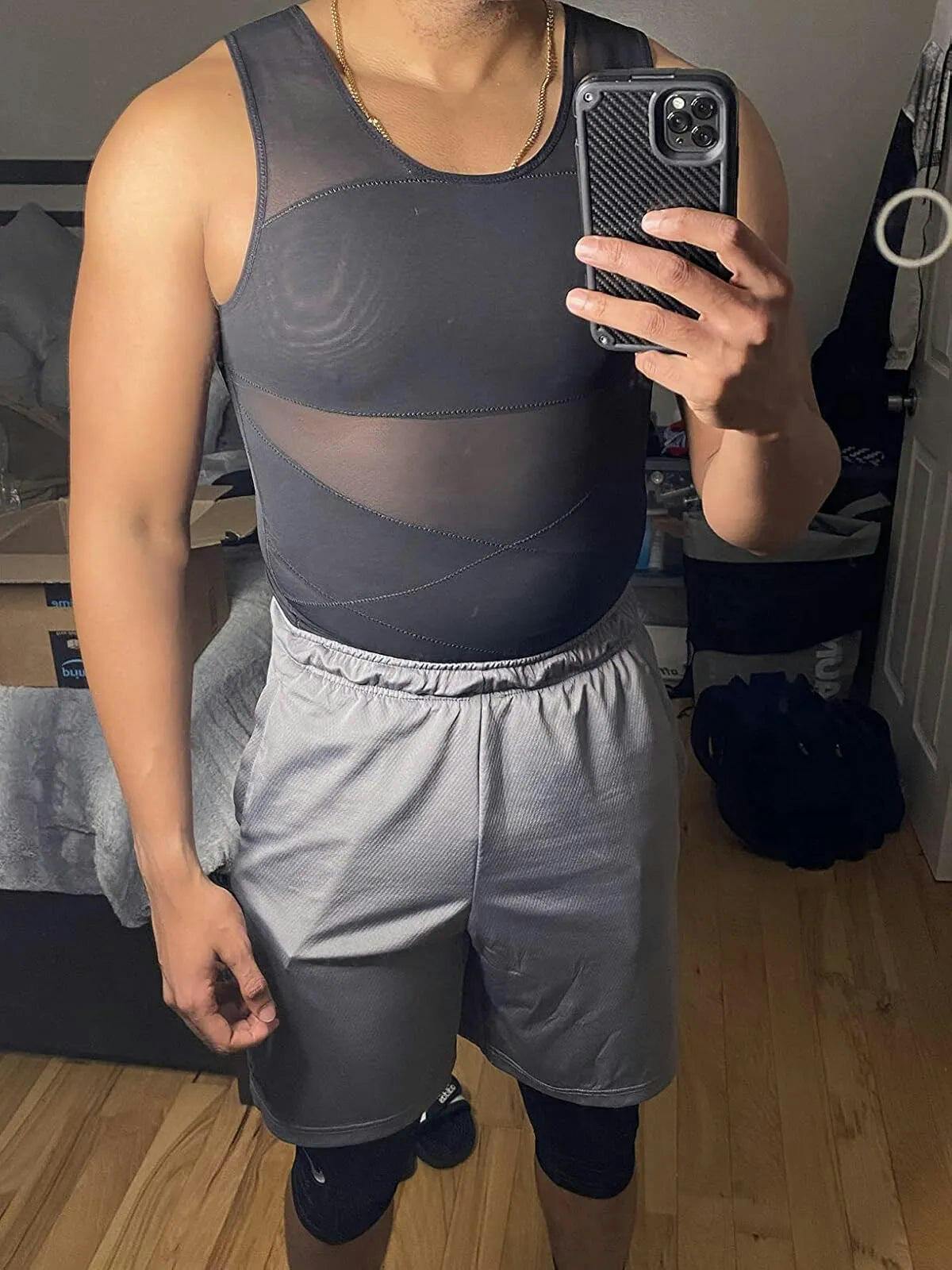
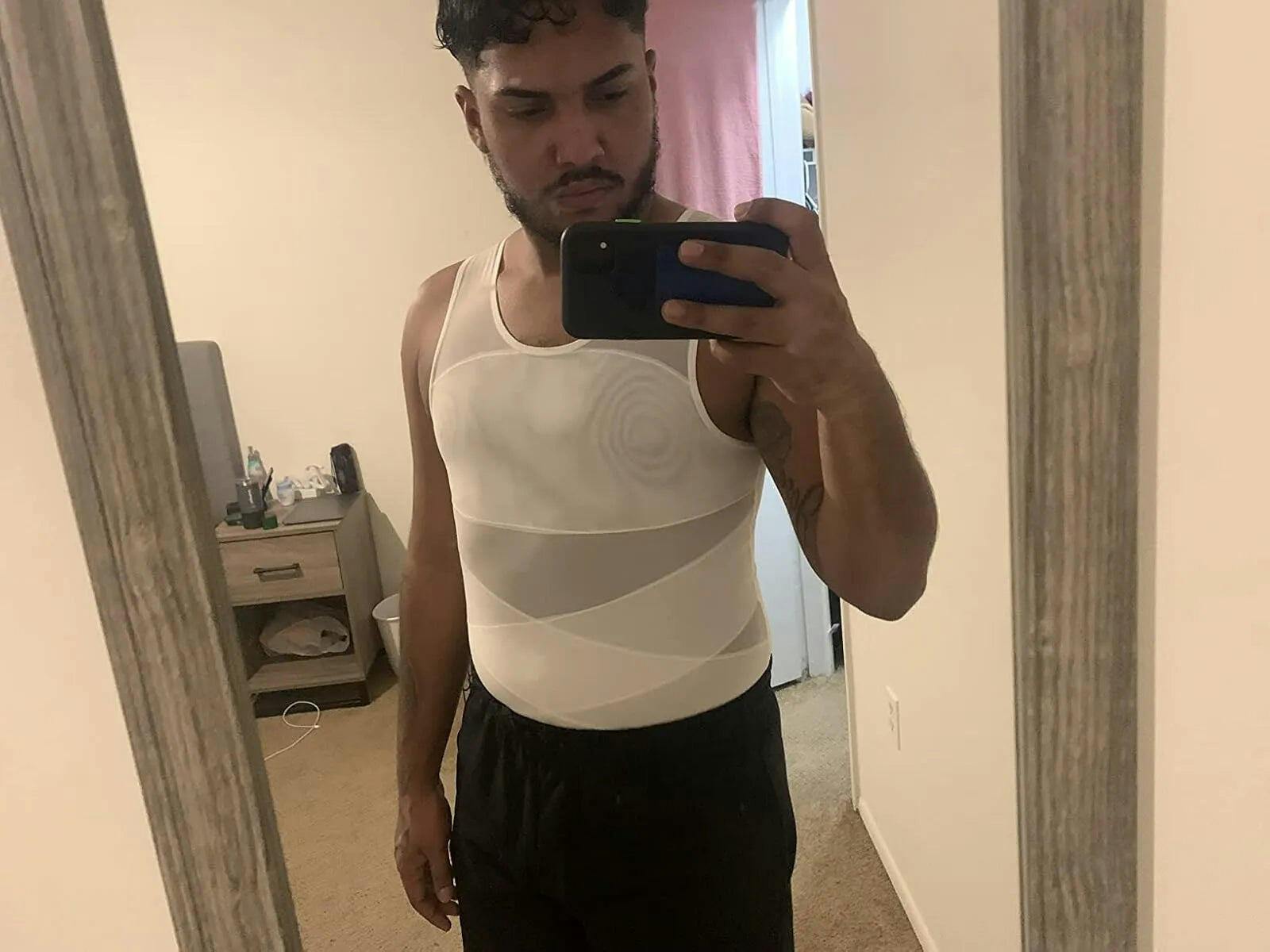
  • Different garments provide different types of feedback. Full-torso Men's Compression Tanks with firm back panels encourage shoulder alignment. Waist Trainers with lumbar support offer targeted lower-back reinforcement.
  • Daily wear requires the right material. Breathable, seamless fabrics are essential for all-day comfort under clothing. Thick neoprene designs are better suited for short workout sessions, not extended desk work.
  • Compression is a tool, not a cure. Lasting posture improvement requires strengthening the muscles that support the spine. A compression garment increases awareness while worn, but it does not build core strength for you.
  • Not a medical device. Compression garments are fitness and posture aids. They are not designed to diagnose, treat, or cure any postural disorder or spinal condition.

🧍 What Posture Support Actually Means

When people talk about "posture support" from compression garments, they are describing proprioceptive feedback—a sensory signal that makes you aware of how you are holding your body. The sensation is one of the fabric pulling the shoulders gently back and encouraging the spine into a more upright position.

It is important to understand what this is not. Compression garments are not rigid braces. They do not immobilize the spine or mechanically force it into alignment. Instead, they provide a gentle, continuous reminder to sit or stand straighter—something especially helpful during long periods of desk work when postural awareness tends to diminish without conscious effort.

Among customer support conversations collected between 2024–2026, the most commonly reported benefit was reduced end-of-day slouching during desk work. Users consistently described the sensation as a "nudge" rather than a "brace"—a light pull that made them more aware of when they were slouching, without feeling restrictive or uncomfortable.

👔 Daily Wear: What to Expect Hour by Hour

If you have never worn a compression garment for postural awareness before, understanding what a typical day feels like can help set realistic expectations. The pattern below is derived from customer feedback data and internal wear-testing observations.

Time Frame What You May Notice Tips
First 30 minutes Noticeable pull on the shoulders; feeling of being "held" upright Stand and walk around to let the garment settle into its natural position
Hours 1–3 Increased awareness of posture; less slouching while seated This is the peak effectiveness window for desk work
Hours 3–6 The sensation becomes less noticeable; body adapts to the feedback Consider a short break without the garment if comfort decreases
After removal Posture awareness may persist for a period; shoulders may gradually return to resting position Pair with light stretching to maintain mobility

← Swipe to compare →

For most users, the sweet spot is consistent daily wear of 3–6 hours, combined with a reasonable break schedule. Garments worn for extremely long continuous periods tend to produce diminishing returns—not because the garment stops working, but because the body habituates to the sensation and the awareness signal becomes less effective. This is a known phenomenon in sensory adaptation research and is not a reflection on garment quality.

🪑 Compression for Desk Workers

Desk workers are the largest single group of compression garment users focused on posture support. The reason is straightforward: prolonged sitting is one of the most reliable causes of forward shoulder posture and lower back discomfort. Occupational health research consistently identifies static sitting as a contributor to postural drift—the gradual, unconscious movement away from an aligned position over time.

Among customer support conversations collected between 2024–2026, desk workers who wore compression garments consistently reported that the most noticeable benefit was not dramatic pain relief—it was the reduction of that end-of-day slump. By hour five or six of a desk-bound workday, most people are leaning forward into their screens without realizing it. A compression garment with back support panels provides a physical cue that makes this forward lean harder to ignore.

For desk workers specifically, material choice matters more than compression intensity. Breathable 3D knit fabrics and seamless designs consistently receive better feedback for all-day wear than thicker neoprene options. The goal is postural awareness, not heat trapping. A garment that makes you overheated by 2 PM is one you will stop wearing within a week.

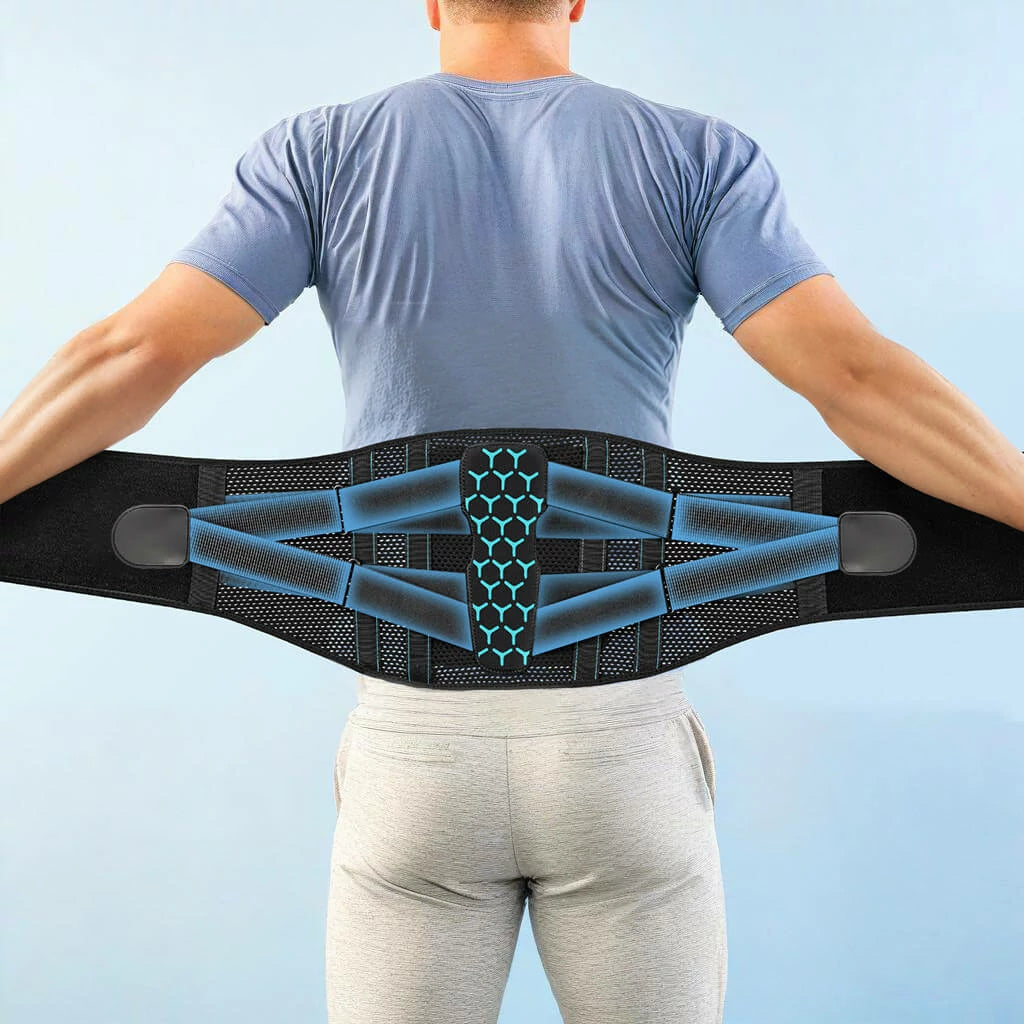
Our Men's 3D Knit Lumbar Support Belt is designed specifically for this scenario—breathable enough for extended desk work, with a removable pad that allows you to customize the level of lumbar reinforcement based on how your back feels that day.

🎁 Compression Wear as a Posture Gift for Dad

One of the most common but least talked-about use cases for posture-supportive compression garments is gifting—specifically, adult children purchasing a compression tank or posture belt for an older parent who has developed rounded shoulders or a noticeable forward lean over the years.

This scenario requires a different approach than self-purchase. The recipient may not have asked for the gift, may be skeptical of anything that feels like a "brace," and may be unfamiliar with compression wear altogether. Based on feedback from customers who have given compression garments as gifts across our 2024–2026 customer base, a few patterns stand out.

First, comfort and ease of use matter far more than maximum support. A garment that is difficult to put on or feels restrictive will not be worn—no matter how well-intentioned the gift. The pulley-based adjustment system on the 3D Knit Lumbar Support Belt, for example, allows the wearer to tighten or loosen the fit with one hand, which removes a significant barrier for older users with limited mobility or grip strength.

Second, framing the gift as a "posture support top" rather than a "back brace" makes a meaningful difference in how the recipient perceives it. The goal is to position it as a comfortable, everyday garment that provides light support—not a medical device that implies something is wrong.

Finally, sizing requires extra care. When purchasing for someone else, waist measurement is essential. Clothing sizes are inconsistent across brands, and guessing based on "he usually wears a large" is the most common cause of a gift that does not fit. Use a soft measuring tape at navel level, or ask the recipient's measurements if the gift is not a surprise.

Our Men's Compression Tanks and Waist Trainers include styles suitable for gifting, with adjustable fits and breathable materials designed for daily comfort.

⚠️ What Compression Cannot Do for Posture

Being clear about the limitations of compression wear is just as important as explaining its benefits. This transparency is not a weakness of the product—it is what separates responsible usage guidance from exaggerated marketing claims.

  • It cannot permanently fix posture. A compression garment provides proprioceptive feedback while worn. It does not strengthen the muscles responsible for maintaining upright posture. Lasting improvement requires core and back strengthening exercises, mobility work, and consistent postural habits.
  • It cannot correct structural spinal conditions. Conditions such as scoliosis, kyphosis, or herniated discs require professional medical evaluation and treatment. Compression garments are not designed for, and should not be used as, a treatment for these conditions.
  • It cannot replace an ergonomic workstation. A posture-supportive garment is a supplement to good sitting habits, not a substitute for a properly adjusted chair, monitor height, and regular movement breaks.
  • It cannot compensate for a sedentary lifestyle. Wearing compression gear for 6 hours while sitting motionless at a desk is not a posture solution—it is a proprioceptive cue that works best when combined with movement, stretching, and strength training.

⚠️ Important Clarification

Compression garments are fitness and posture aids, not medical devices. They are not designed to diagnose, treat, cure, or prevent any medical condition. If you have chronic back pain, a diagnosed spinal condition, or unresolved postural issues, consult a qualified healthcare professional before using any external support garment. The temporary proprioceptive feedback provided by compression wear is not a substitute for professional medical advice or treatment.

💭 Common Myths About Compression and Posture

  • Myth: Compression garments can permanently fix rounded shoulders.
    Reality: The feedback is temporary and lasts only while the garment is worn. Lasting change requires strengthening the muscles that support proper alignment.
  • Myth: Tighter compression means better posture support.
    Reality: Overly tight garments can restrict movement and breathing, which may worsen posture by causing the wearer to lean forward or hunch to relieve pressure.
  • Myth: You need to wear a posture garment all day for it to work.
    Reality: Consistent use of 3–6 hours per day is generally more sustainable and comfortable than attempting to wear it for extremely long continuous periods. Sensory adaptation research indicates that prolonged, unchanging tactile input eventually becomes less noticeable—breaks help maintain the awareness benefit.
  • Myth: Compression wear makes your core muscles weak.
    Reality: Wearing a compression garment for reasonable daily durations does not cause muscle atrophy. Relying on it as a complete substitute for active core engagement during exercise may reduce muscle activation in those specific movements, but normal daily wear does not weaken core muscles.

❓ Frequently Asked Questions

Q: Can compression garments really improve posture?

A: Compression garments with firm back panels may provide proprioceptive feedback—a sensory reminder that encourages you to sit or stand more upright. This effect is temporary and lasts while the garment is worn. It does not permanently correct posture or strengthen postural muscles. For lasting improvement, compression wear should be combined with core strengthening exercises, mobility work, and attention to daily sitting and standing habits.

Q: Which type of compression garment is best for posture support?

A: Full-torso compression tanks with reinforced back panels are commonly used for shoulder and upper-back posture awareness. Lumbar support belts with firm back panels target lower-back reinforcement during sitting and lifting. The best choice depends on whether your primary concern is upper-back rounding, lower-back discomfort, or both. A garment that is comfortable enough to wear consistently is more effective than one that provides maximum support but becomes intolerable after two hours.

Q: Can I wear a posture compression garment all day?

A: Most users wear posture-supportive compression garments for 3–6 hours daily. Wearing it for a full workday is possible once accustomed to the fit, but extended continuous wear may reduce the awareness benefit as the body habituates to the sensation. Taking short breaks and combining the garment with movement and stretching tends to produce better results than attempting to wear it without interruption from morning to evening.

Q: Is a compression tank better than a posture brace for daily wear?

A: A compression tank is generally more practical for daily wear under clothing than a rigid posture brace. Compression tanks are designed to be invisible under dress shirts and provide light, continuous feedback rather than rigid immobilization. A medical-grade posture brace is designed for structural correction under professional supervision and is not typically intended for all-day casual use. These are different tools for different purposes.

Q: Can compression garments help with back pain from sitting?

A: Some users report reduced lower-back discomfort during prolonged sitting when wearing a compression garment with lumbar support. The compression may provide light support and reduce muscle fatigue by encouraging better alignment through proprioceptive feedback. However, compression garments are not medical treatments for back pain, and persistent or severe pain should be evaluated by a healthcare professional.

Q: How do I choose the right size for a posture compression garment?

A: Measure your chest and natural waist with a soft fabric tape while standing relaxed. Do not size down in hopes of getting more compression—an overly tight garment will be uncomfortable, restrict breathing, and you will stop wearing it. When in doubt, size up. A garment that is slightly looser is always better than one that is too tight, especially for all-day posture support where consistency of wear matters more than maximum compression intensity.

Q: Can compression wear be used as a gift for someone with poor posture?

A: Yes. Compression tanks and adjustable support belts are increasingly given as gifts for parents or older relatives with noticeable forward posture. When gifting, prioritize comfort and ease of use over maximum support. Choose breathable materials, adjustable designs, and—if possible—obtain the recipient's waist measurement in advance. Framing the gift as a comfortable posture support top rather than a corrective brace makes a meaningful difference in how it is received.


📘 Related Guides

📋 Evidence & References

Information in this guide draws from multiple domains: sports medicine research on proprioceptive feedback as a mechanism for postural awareness, occupational health principles concerning prolonged static sitting and postural drift, the National Academy of Sports Medicine (NASM) guidelines on proprioception and body awareness during exercise, and the American Council on Exercise (ACE) posture guidelines for prolonged seated work. Compression garments are recognized within these frameworks as temporary posture awareness tools—not as medical devices, structural correctors, or substitutes for professional evaluation of chronic pain or spinal conditions.


About the Author

Written by Alex Chen, Founder of WaistSculpt. Alex has spent more than 10 years researching and evaluating men's compression garments—including compression tanks, posture belts, and lumbar support designs—with internal testing conducted across multiple body types, wear durations, and daily usage scenarios. All posture-related guidance is reviewed against current sports medicine consensus on proprioceptive feedback and occupational health principles for prolonged sitting.

Reviewed by NASM Certified Personal Trainer — informational accuracy reviewed for posture support guidance, proprioception mechanisms, and compression garment safety.

Last reviewed: May 2026

Back to blog

Leave a comment