
Chest Fat or Gland? How to Tell the Difference (Gland-Like Appearance)
Chest Fat or Gland? How to Tell the Difference (Gland-Like Appearance)
One is soft. One may be firm. Here is how to tell.
Quick Answer
Chest fat feels soft and symmetrical — it changes with overall weight. Gland-like tissue may feel firmer, sometimes concentrated under one nipple, and may not change with weight loss. This is sometimes called gynecomastia-like appearance, but only a physician can diagnose gland-related conditions. Compression shirts visually smooth both — but they do not treat or reduce gland tissue. Visual smoothing only. Not a medical device. If you feel a hard lump or persistent pain, consult your physician.
How do I know if it is chest fat or gland?
Fat feels soft and pinchable — like dough. Gland-like tissue may feel firmer or rubbery — sometimes concentrated under the nipple. This is a preliminary guide only. Only a physician can diagnose. If you feel a hard lump, stop self-checking and consult your physician.
Does gland-like tissue change with weight loss?
No. Gland tissue does not shrink with diet or exercise. If your chest bulge stays the same size while the rest of your body loses weight, it may be gland-dominant — not fat.
Can compression shirts help with both?
Yes — visually. Nylon/Spandex elastic recovery force creates even surface pressure that smooths chest contour regardless of whether the tissue is fat or gland. Compression does not treat or reduce gland tissue.
Visual smoothing only. Not a medical device. For persistent body concerns, consult a physician.
Why the Difference Between Chest Fat and Gland-Like Tissue Matters
This distinction determines your entire strategy. Fat-dominant chests shrink with overall weight loss — compression accelerates the visual result. Gland-dominant chests stay the same size regardless of diet — compression smooths visually while you seek medical evaluation.
This is the single most common misdiagnosis we see. Men spend years trying to lose chest fat that is not fat. Recognizing this early saves years of frustration. Compression provides visual smoothing during this process — regardless of the underlying tissue type.
This is the key insight: you do not need a diagnosis to benefit from compression. Fat or gland — the fabric tension works the same way. The difference is in your long-term strategy: fat responds to lifestyle change, gland requires medical evaluation. Compression helps both while you figure it out.
Compare chest fat and gland-like tissue side by side.
Chest Fat vs Gland-Like Tissue: A Side-by-Side Comparison
Use this table to identify your primary type — this is a preliminary guide, not a diagnosis.
← Swipe to compare →
| WHAT TO LOOK FOR |
FAT Chest Fat |
GLAND Gland-Like Tissue |
|---|---|---|
| WHAT IT IS | Soft fatty tissue across the chest — part of overall body fat distribution | Firm, sometimes rubbery tissue — may be concentrated under the nipple area |
| HOW IT FEELS | Soft and doughy when pinched — symmetrical on both sides. Moves freely under the skin | May feel firmer than surrounding fat — sometimes like a rubbery disc. Can be on one side only. Preliminary guide only — only a physician can diagnose |
| DOES IT CHANGE WITH WEIGHT? | Yes — chest size increases with weight gain and decreases with weight loss | No — gland tissue does not shrink with diet or exercise. Chest size stays stable regardless of body weight changes |
| CAN EXERCISE HELP? | Yes — overall body fat reduction through diet and exercise can reduce chest size | No — exercise does not reduce gland tissue. Gland size is hormone-related, not fat-related |
| CAN COMPRESSION HELP? | Yes — Light-Medium compression redistributes soft tissue evenly across the chest surface | Yes for visual smoothing — but compression does not reduce gland size. Visual smoothing only |
| WHEN TO SEE A DOCTOR | Not typically needed — cosmetic concern only | If you feel a hard lump, persistent pain, or notice rapid growth — consult your physician. Only a physician can diagnose gland conditions |
The Most Common Pattern: "I Spent Years Trying to Lose Chest Fat That Was Not Fat"
"Across thousands of customer interactions, the most frustrating pattern we see is men who have spent years dieting and exercising to reduce their chest — with no change. They blame themselves. They think they are not working hard enough. Then they learn about gland-like tissue and everything clicks. The chest bulge that never changed was not fat — it was gland. Compression shirts provide visual smoothing for both. But knowing the difference saves years of frustration. If your chest has not changed with weight loss, it is time to consider the gland possibility — and consult a physician."
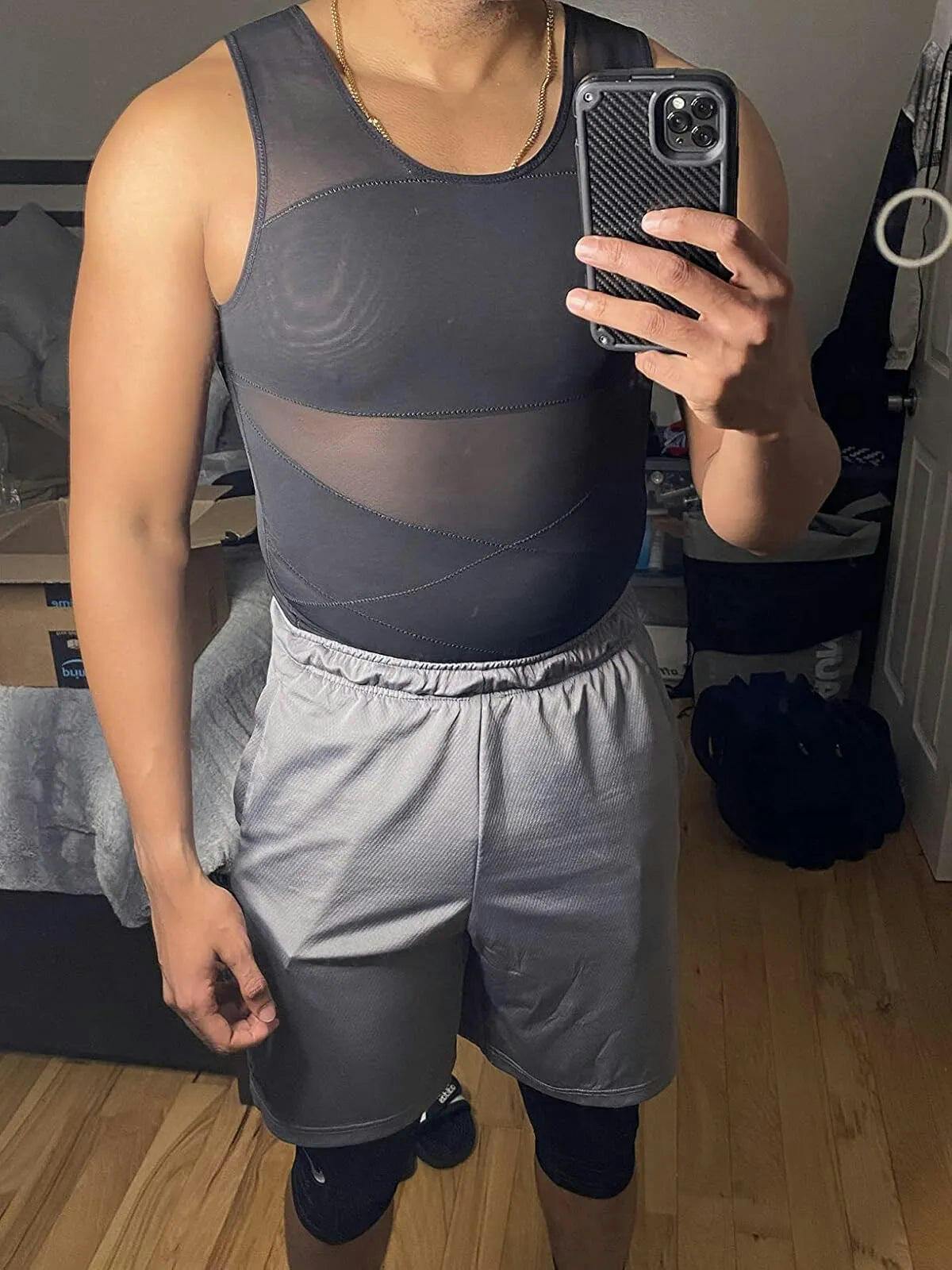
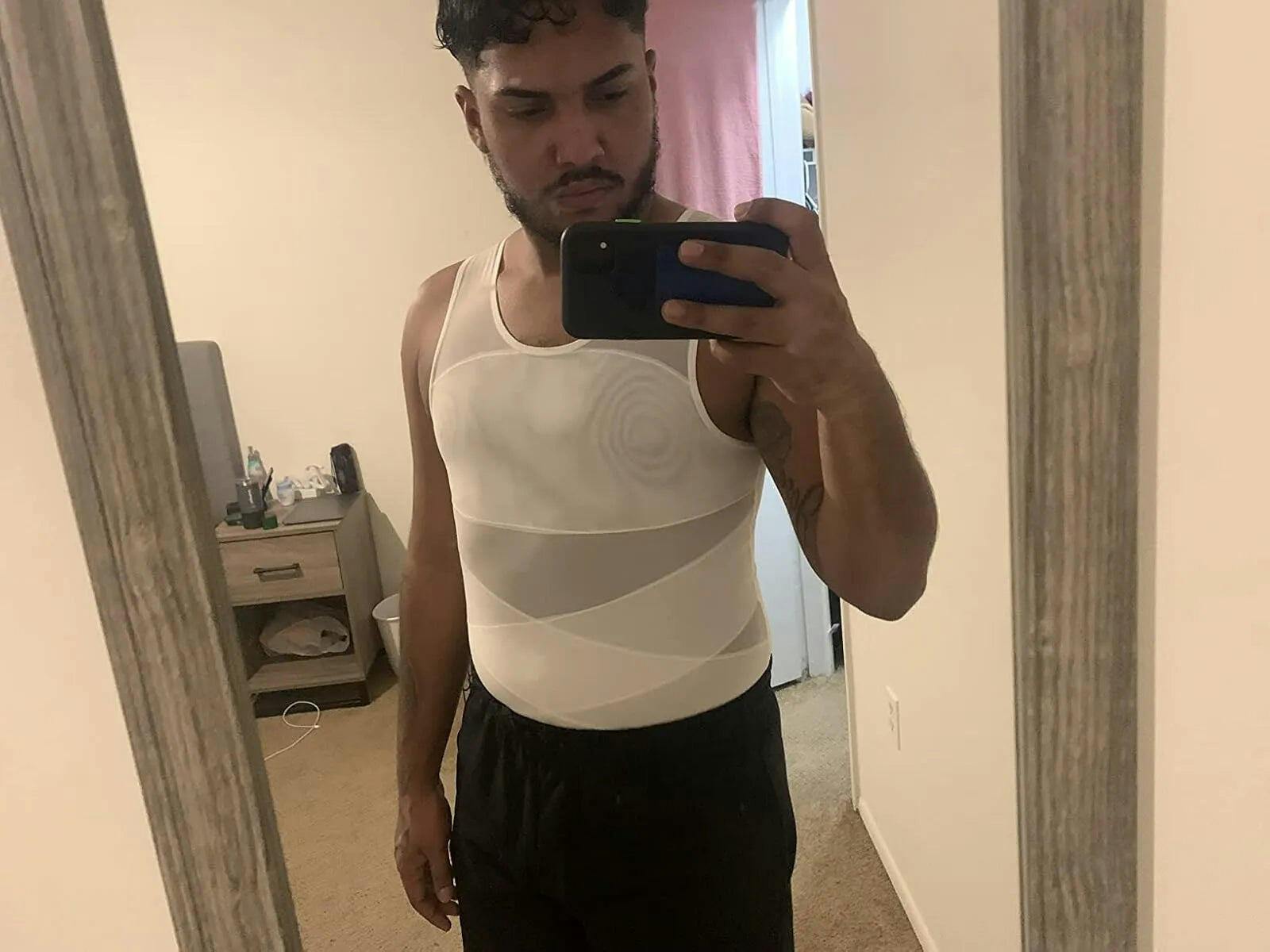
What Men Are Saying About Chest Fat vs Gland Solutions
Real feedback from men who figured out their type — and found the right compression.
← Swipe to see all reviews →
Common Mistakes When Distinguishing Chest Fat from Gland-Like Tissue
If your chest has not changed despite significant weight loss, the bulge may be gland-dominant. Gland tissue does not respond to diet or exercise. Stop blaming yourself — and consult a physician for evaluation.
Only a physician can diagnose gland-related conditions. This guide helps you understand the difference for compression purposes — it is not a diagnostic tool. If you feel a hard lump, persistent pain, or notice rapid growth, stop researching and book an appointment.
Gland-like tissue can be sensitive to pressure. Light to Light-Medium compression is the safest range. Avoid Firm or X-Firm compression if you suspect gland involvement — excessive pressure may cause discomfort.
If you have a hard lump, persistent pain, nipple discharge, or rapid chest growth, stop reading and consult your physician. This guide is for men exploring compression options — not a substitute for medical evaluation. For the medical disclaimer on gland size reduction, see our Does Chest Compression Reduce Gland Size guide. For product recommendations, see the Chest Smoothing product guide.
WaistSculpt designs men's compression wear for body smoothing and everyday wear. Independently reviewed.
Our Top Gentle Compression Picks for Chest Fat and Gland-Like Tissue
← Swipe to see all products →
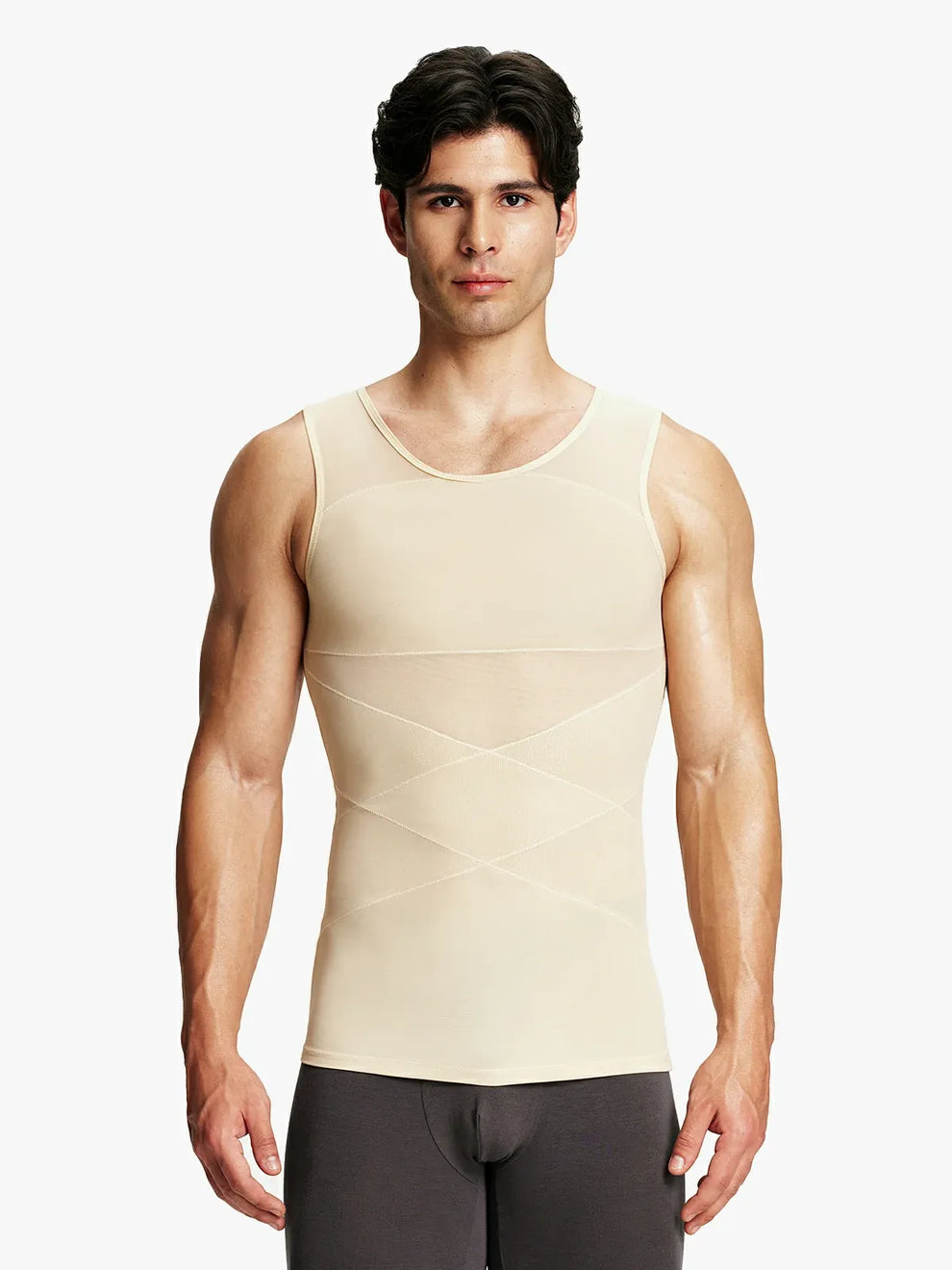
Men's Mesh Compression Tank Top
75% Nylon / 25% Spandex open-knit mesh. Light-medium compression — breathable and flexible. Best for daily wear, hot climates, and moderate loose skin smoothing without overheating.
View Mesh Tank →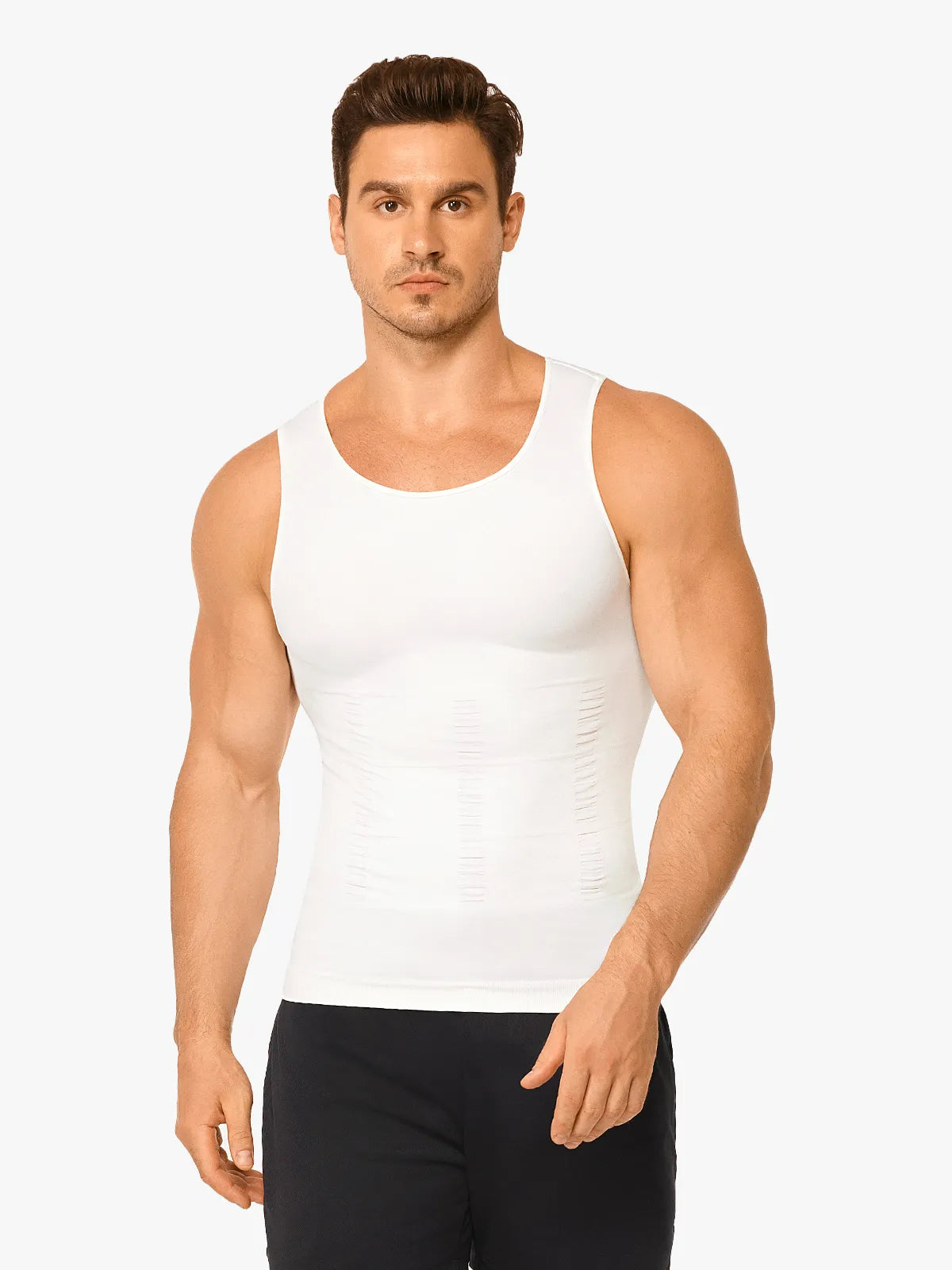
Men's 360° Compression Body Shaper Vest
80% Nylon / 20% Spandex with wide shoulder straps. Light-medium 360° compression provides noticeable smoothing for the chest, belly, back, and sides from every angle. Wide straps stay anchored all day without slipping.
View 360° Body Shaper Vest →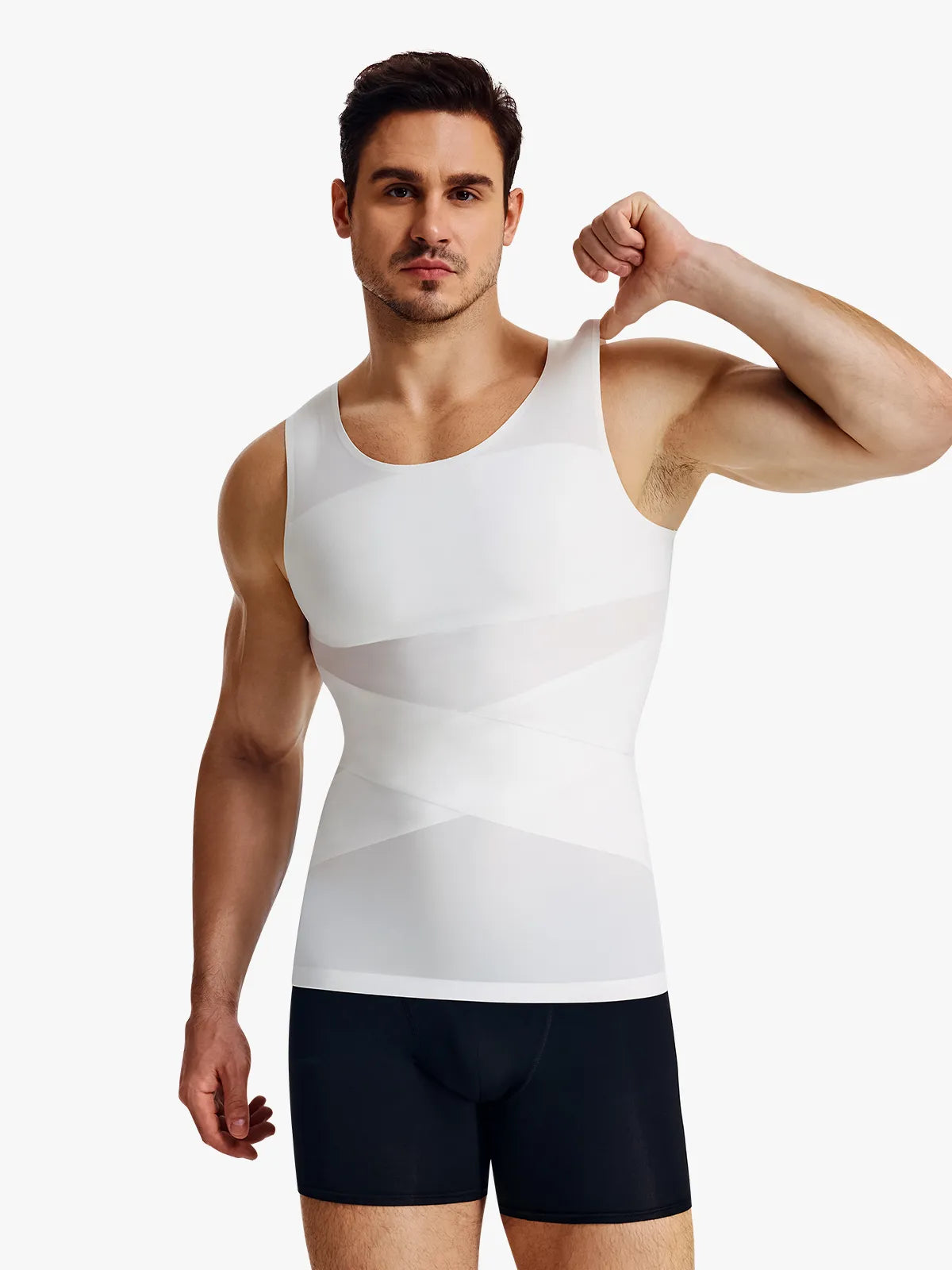
Men's Seamless Breathable Tummy Control Tank Top
49% Nylon / 51% Spandex 4-way stretch seamless knit. Light compression — zero seams, zero hardware, zero visible edges. Best for maximum invisibility under thin fitted t-shirts.
View Seamless Tank →See How Compression Smooths — Regardless of Tissue Type
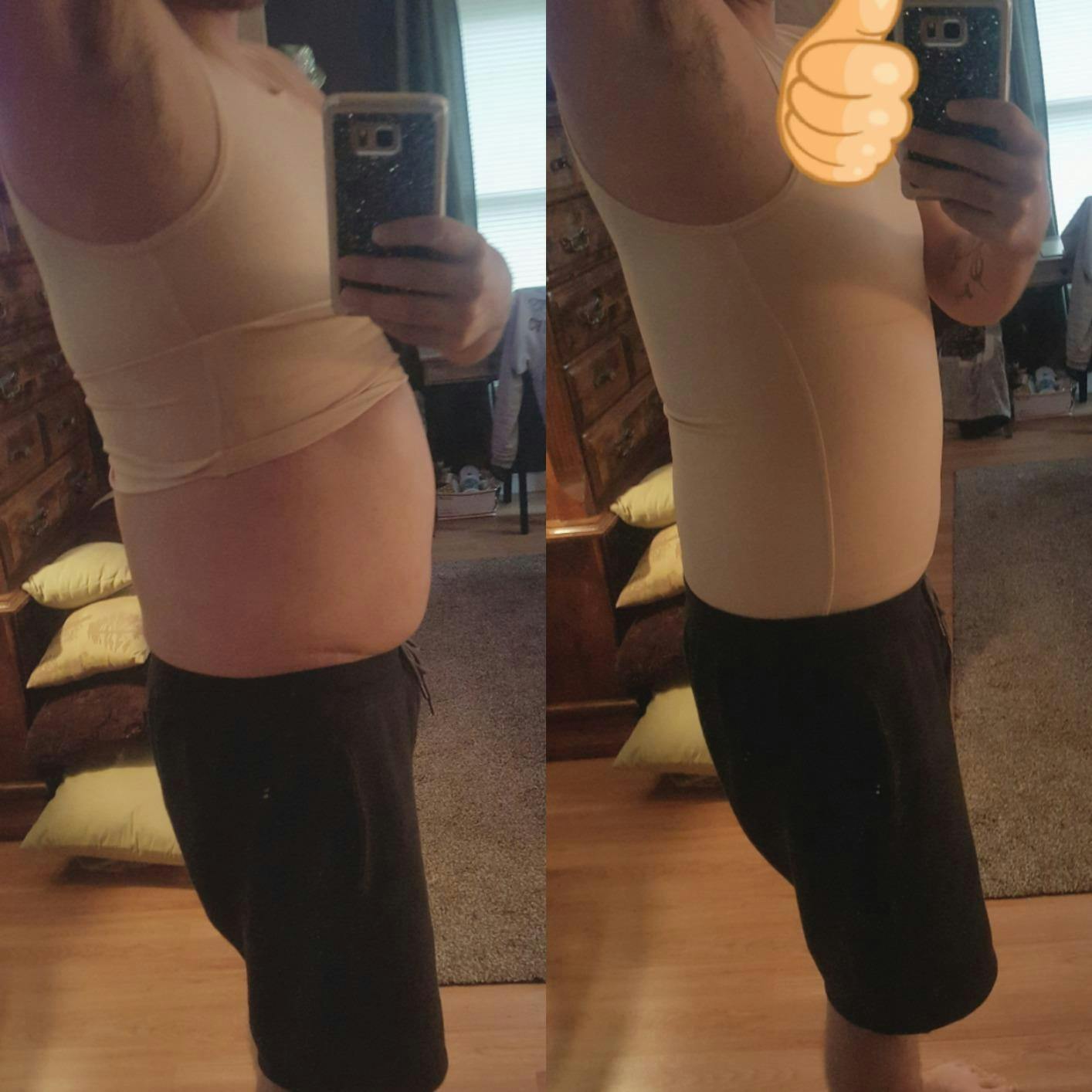
Demonstration images showing garment effect during wear. Compression smooths visually — it does not treat or reduce gland tissue. Individual results vary depending on body composition, skin elasticity, and garment sizing. Same person, same lighting, same angles.

Before & After — Side View · Compression Smoothing
Result: Even surface pressure smooths contour regardless of tissue type

Before & After — Front View Dressed · Compression Under Clothes
Result: Smoother silhouette — invisible under your regular clothes
Your Chest Fat vs Gland Questions Answered
The most common questions about distinguishing chest fat from gland-like tissue — and what to do next. Preliminary guide only. Only a physician can diagnose.
Fat vs Gland
Q: How do I know if my chest bulge is fat or gland?
Q: Can chest fat turn into gland?
Q: Does gland-like tissue change with weight loss?
What Compression Can Do
Q: Can compression shirts smooth gland-like chest tissue?
Q: What compression level is safest for gland-like chest tissue?
Next Steps
Q: Can compression shirts treat gynecomastia?
Q: What should I read next after checking my chest type?
Unsure about your size? Check our Size Guide before ordering. Most returns come from sizing down — order your regular shirt size.
What Compression Can — and Cannot — Do
Compression Can Help With
- Visually smoothing both chest fat and gland-like tissue under clothing
- Providing even surface pressure that redistributes chest contour regardless of tissue type
- Offering a non-surgical, reversible visual smoothing option while you seek medical evaluation
- Helping you feel more confident in your appearance — whether the cause is fat or gland
Compression Cannot
- Permanently tighten or restore skin elasticity
- Replace surgical or medical skin removal procedures
- Burn fat or reduce body weight while worn
- Work identically for all body types and skin conditions
Why We Wrote This
"I thought it was just fat." That is what men tell us — after spending years trying to lose chest tissue that was never fat in the first place. This guide exists because the difference between chest fat and gland-like tissue is invisible to the mirror — but obvious once you know what to look for. Compression shirts smooth both types visually. But your long-term strategy depends on knowing which one you have. Visual smoothing only. Not a medical device. If you feel a hard lump, consult your physician.
Know Your Type? Ready for the Right Compression?
Free shipping. Free returns. Start with a Mesh Tank — Light-Medium compression, the safest starting point for both chest fat and gland-like tissue.
Explore Compression Wear
Explore All Compression Guides
Browse All Compression Guides →Alex Chen, Founder | Updated July 2026
Compression garments are fitness and posture aids, not medical devices.
Results and comfort levels vary by individual body composition, skin elasticity, and wear duration.