
Compression Shirt Materials & Fabrics Guide: What to Look For and What to Avoid
Compression Shirt Materials & Fabrics Guide: What to Look For and What to Avoid
Nylon/Spandex for elastic compression. X-Firm uses Polyester/Spandex with steel bones.
Quick Answer
Compression shirt performance is determined by two things: the Nylon/Spandex ratio and the fabric structure. Higher Spandex means stronger compression but less airflow. Open-knit mesh breathes best for hot weather; double-layer panels smooth most for formal wear; seamless knit stays invisible under thin fitted t-shirts. Here is the full gradient, from lightest to strongest — men's compression wear explained by material.
What fabric is best for compression shirts?
It depends on your priority. Open-knit mesh breathes best. Double-layer panels compress strongest. Seamless knit stays invisible. All three are Nylon/Spandex blends — the ratio and structure determine performance.
What fabrics should I avoid?
100% cotton (absorbs moisture, loses shape, zero compression). Neoprene for daily wear (traps heat and sweat, causing skin irritation). Rough internal seams (visible lines under thin t-shirts).
Visual smoothing only. Not a medical device. For persistent body concerns, consult a physician.
Why Fabric Is the Foundation of Compression Shirt Performance
Nylon provides structure and moisture-wicking. Spandex provides elasticity. The ratio dictates compression level: 51% Spandex delivers light pressure, 30% Spandex delivers medium-firm hold. Trade-off: more Spandex means stronger smoothing but less breathability.
Open-knit mesh uses physical perforations for passive airflow — heat escapes through the holes. Double-layer panels use two fabric layers for stronger smoothing — ideal for formal events. Seamless knit eliminates stitched edges entirely — zero visible lines under thin t-shirts.
100% cotton absorbs moisture and loses all compression within hours. Neoprene — designed for gym waist trainers — traps heat and irritates skin during daily wear. Rough internal seams create visible ridges under fitted shirts. Choose Nylon/Spandex blends with flatlock or seamless construction.
Match your fabric to your priority below.
Compression Shirt Materials Compared: From Light Seamless to X-Firm Structure
Five fabric structures. Five compression levels. One clear choice for your body.
← Swipe to compare all options →
| YOUR SITUATION |
SEAMLESS SEAMLESS TANK |
OPEN-KNIT MESH MESH TANK |
360° SEAMLESS 360° VEST |
DOUBLE-LAYER FIRM UNDERSHIRT |
STEEL + HOOKS ADJ HOOKS |
|---|---|---|---|---|---|
| BEST FOR |
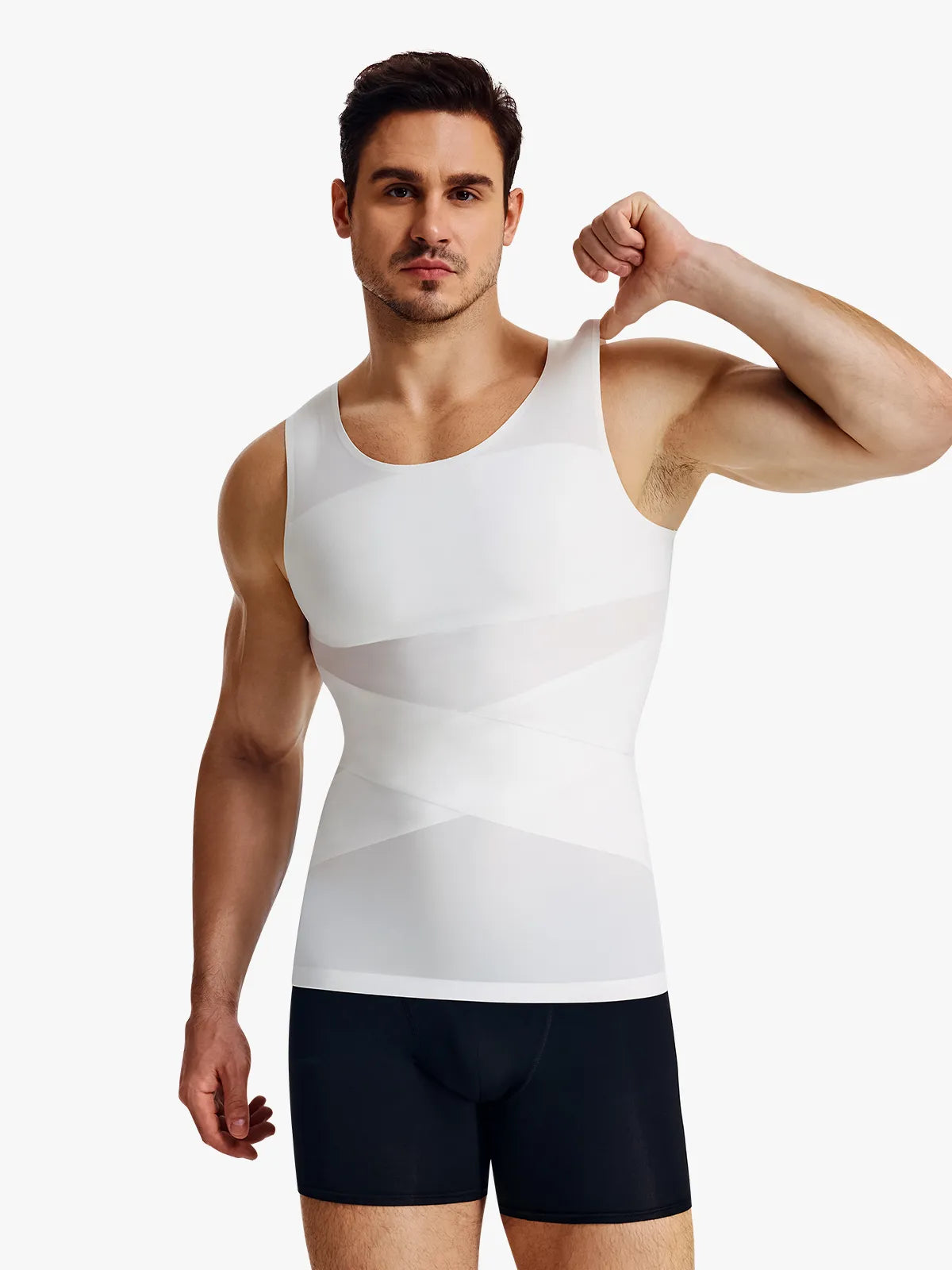 Maximum invisibility under thin fitted t-shirts |
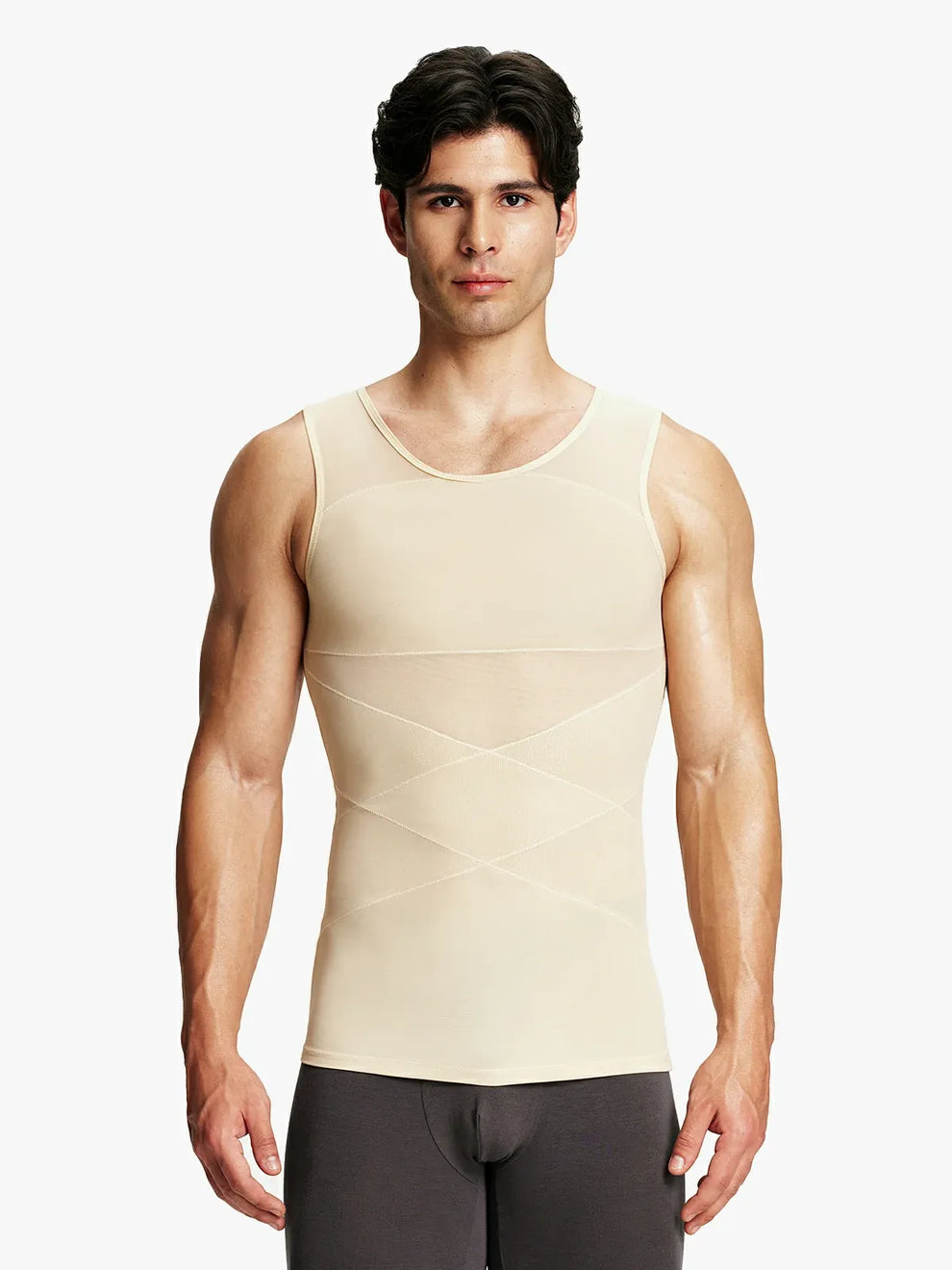 Hot weather, daily wear, moderate smoothing without overheating |
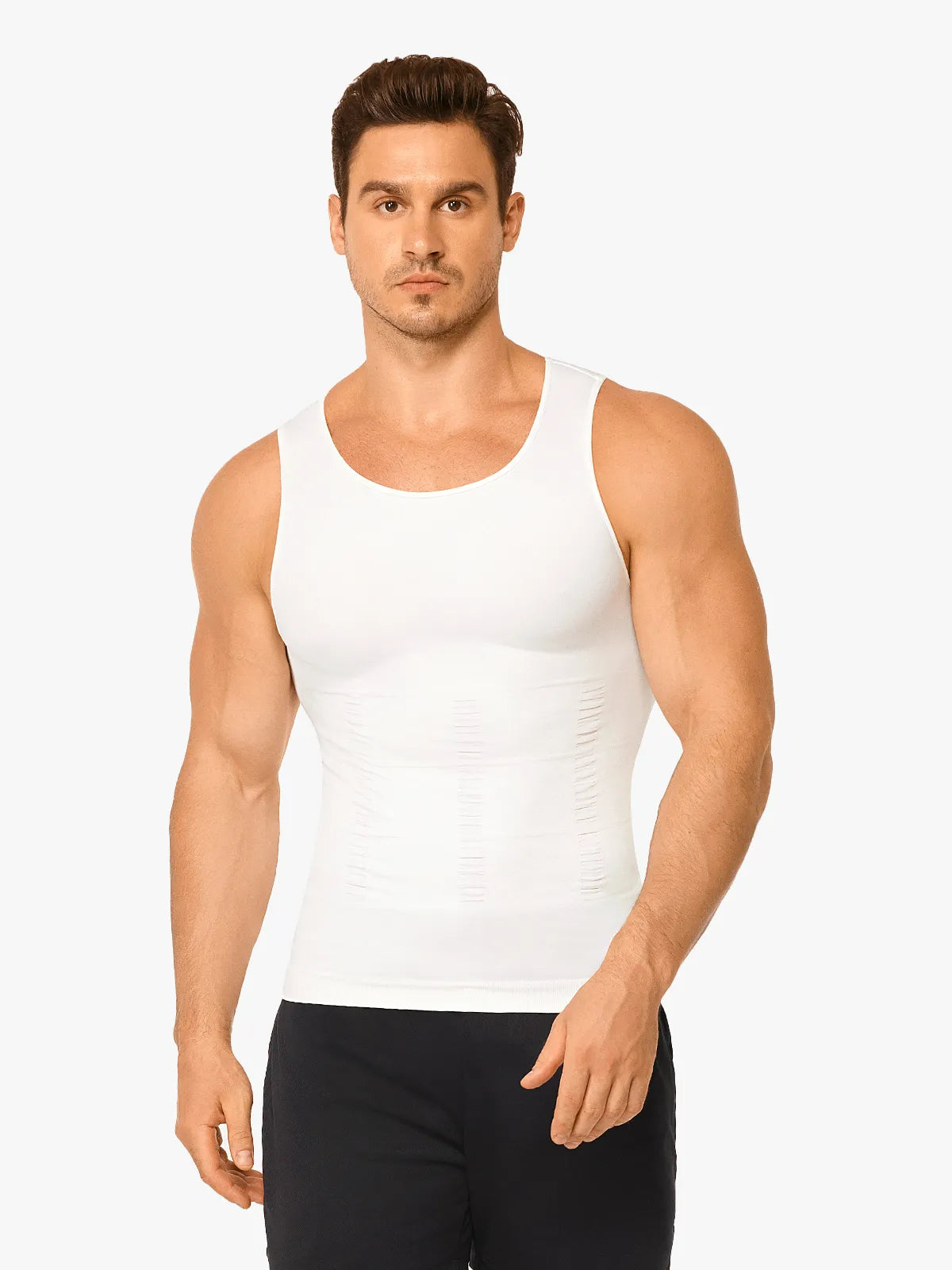 Full-torso smoothing — chest, belly, back, and sides |
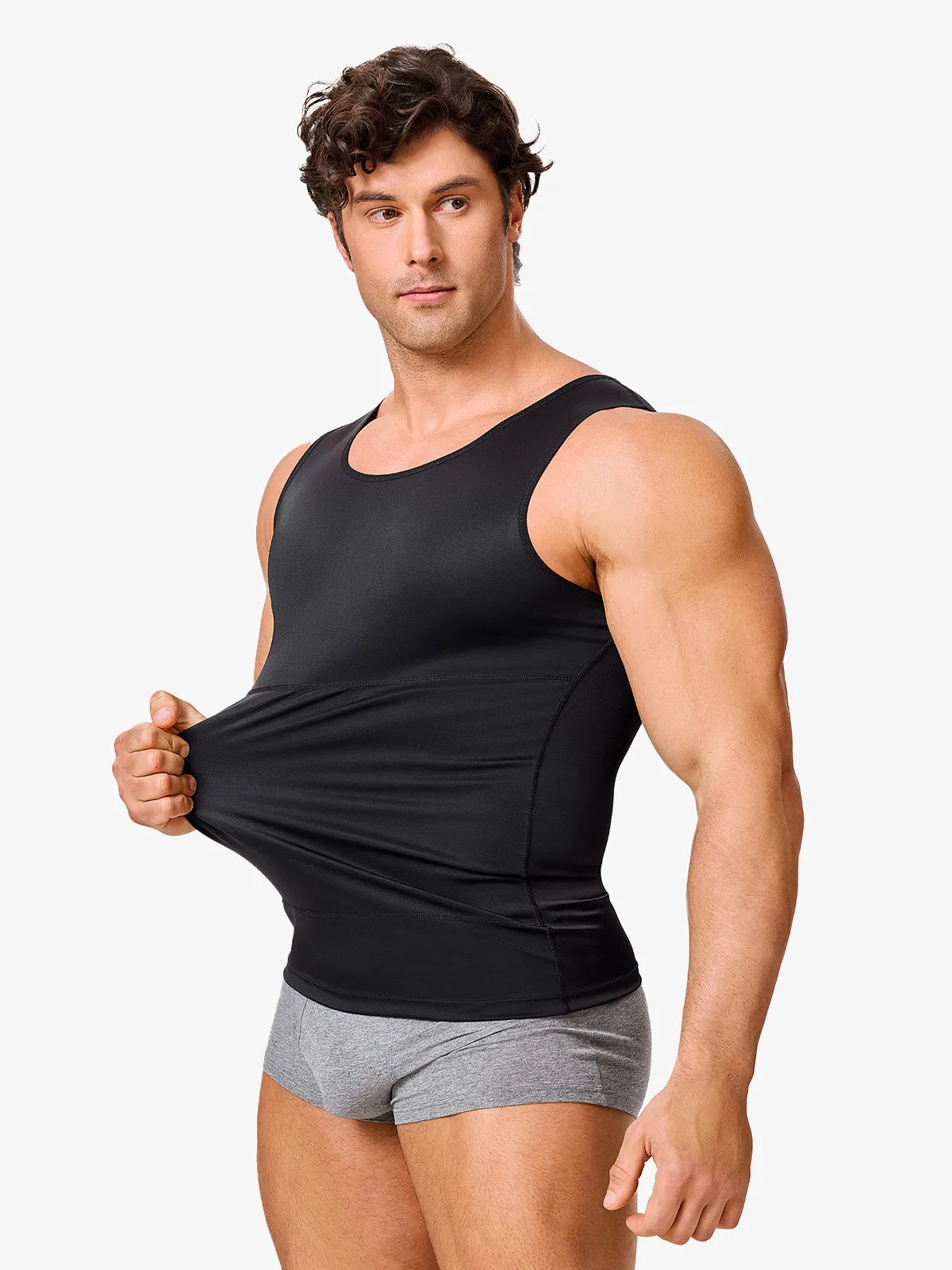 Formal events, office wear, strong smoothing with zero visible lines |
 Maximum tummy control, formal events, posture support |
| COMPRESSION LEVEL | ★☆☆☆☆ Light | ★★☆☆☆ Light-Medium | ★★☆☆☆ Light-Medium | ★★★☆☆ Medium-Firm | ★★★★★ X-Firm |
| BREATHABILITY | High — seamless thin fabric, minimal heat trapping | Highest — open-knit mesh perforations allow passive airflow all day | High — seamless knit, wide straps that do not trap heat | Medium — double-layer fabric provides stronger hold but less airflow | Low — Polyester shell plus steel bones, designed for events not daily wear |
| FEELS LIKE | Second-skin, zero awareness | Open breeze, never clingy | Snug all-around hug, no squeeze | Locked-in hold, still breathable | Rigid control, maximum smoothing |
| WHY | 49% Nylon / 51% Spandex seamless knit. Maximum Spandex ratio in a featherweight construction — zero edges, zero hardware. | 75% Nylon / 25% Spandex open-knit mesh. Physical holes allow heat to escape — highest airflow of any compression fabric. | 80% Nylon / 20% Spandex with wide shoulder straps. 360° seamless knit wraps torso evenly — the only Light-Medium full-coverage option. | 70% Nylon / 30% Spandex double-layer panel. Two fabric layers stacked for stronger compression without any hardware or visible lines. | 90% Polyester / 10% Spandex with steel bones and 3-row hook belt. Rigid mechanical compression — not elastic Nylon/Spandex compression. |
| View Seamless Tank → | View Mesh Tank → | View 360° Vest → | View Firm Undershirt → | View Adj Hooks Undershirt → |
The Most Common Pattern: Men Who Understand Fabric Choose Better Compression Shirts the First Time
"The single biggest predictor of a successful first purchase is whether the customer understands the material before they buy. Men who know that mesh breathes and double-layer compresses rarely return their first shirt. Men who pick based on price or product photo alone — without understanding the fabric — account for most exchanges. The insight is universal: fabric education is the best return-prevention tool we have."
What Men Are Saying About Compression Shirt Materials
Real feedback from men who understand fabric makes the difference.
← Swipe to see all reviews →
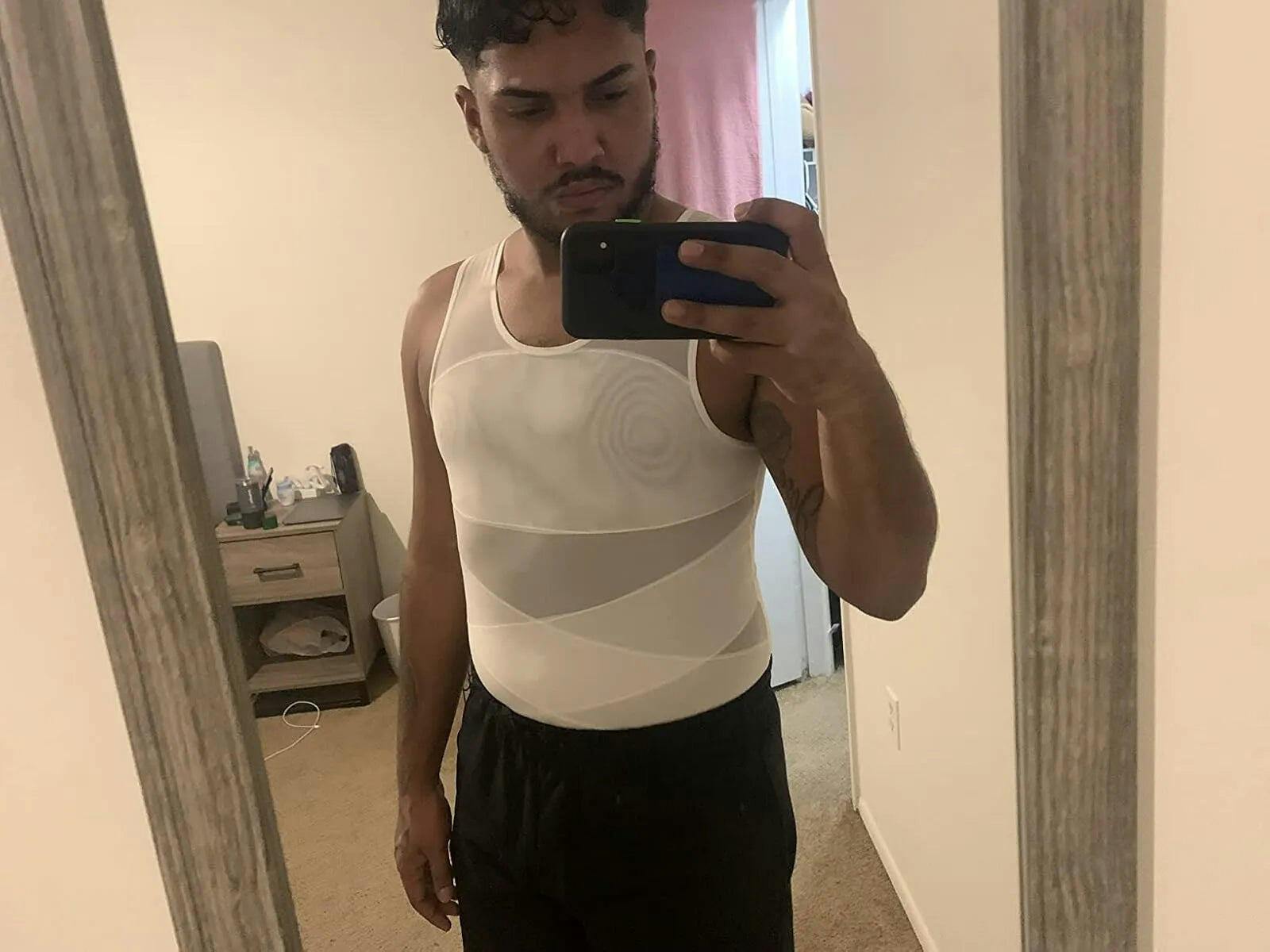
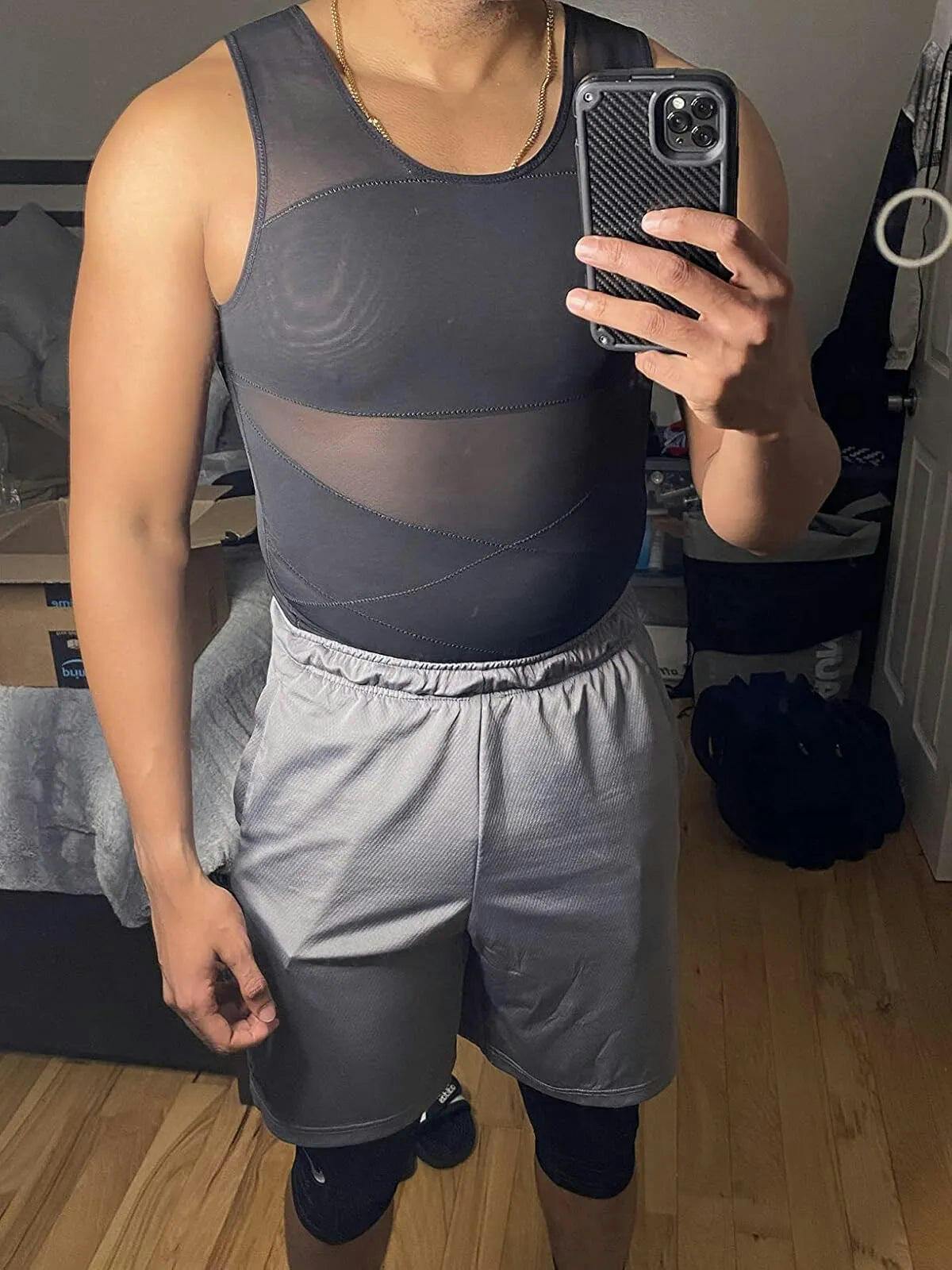
Common Fabric Mistakes When Choosing a Compression Shirt
Cotton absorbs moisture, stretches out, and loses all shape within hours of wear. Cotton cannot compress — only Nylon/Spandex blends provide the elastic recovery required for body smoothing.
Neoprene is a synthetic rubber designed for gym waist trainers — it traps heat and sweat to increase core temperature during workouts. For daily wear under office or casual clothing, neoprene causes skin irritation and visible sweat marks. Stick to breathable Nylon/Spandex blends.
Thick or raised internal seams create visible ridges under thin fitted clothing. Look for flatlock stitching or seamless construction — these sit flush against your skin and leave zero visible lines.
If you need fabric recommendations for medical-grade compression garments, consult a physician or medical supply specialist. WaistSculpt compression shirts are designed for visual smoothing and everyday wear — not medical treatment. For gym-specific waist trainers, see our Shapewear vs Waist Trainer guide.
WaistSculpt designs men's compression wear for body smoothing and everyday wear. Independently reviewed.
Our Top Compression Shirts by Fabric Structure
← Swipe to see all 5 fabric structures →
Men's Seamless Breathable Tummy Control Tank Top
49% Nylon / 51% Spandex 4-way stretch seamless knit. Light compression — zero seams, zero hardware, zero visible edges. Best for maximum invisibility under thin fitted t-shirts.
View Seamless Tank →
Men's Mesh Compression Tank Top
75% Nylon / 25% Spandex open-knit mesh. Light-medium compression — breathable and flexible. Best for daily wear, hot climates, and moderate loose skin smoothing without overheating.
View Mesh Tank →
Men's 360° Compression Body Shaper Vest
80% Nylon / 20% Spandex with wide shoulder straps. Light-medium 360° compression provides noticeable smoothing for the chest, belly, back, and sides from every angle. Wide straps stay anchored all day without slipping.
View 360° Body Shaper Vest →
Men's Firm Compression Undershirt
70% Nylon / 30% Spandex double-layer construction. Medium-firm compression — stronger smoothing than mesh for formal settings. No hardware means zero visible lines under dress shirts.
View Firm Undershirt →
Men's Tummy Control Shapewear Undershirt w/ Adj Hooks
90% Polyester / 10% Spandex with steel bones, front zipper, and adjustable hooks. X-Firm compression — strongest shaping available. Best for formal events and maximum tummy control.
View Adj Hooks Undershirt →See How Compression Shirt Fabric Affects Your Silhouette
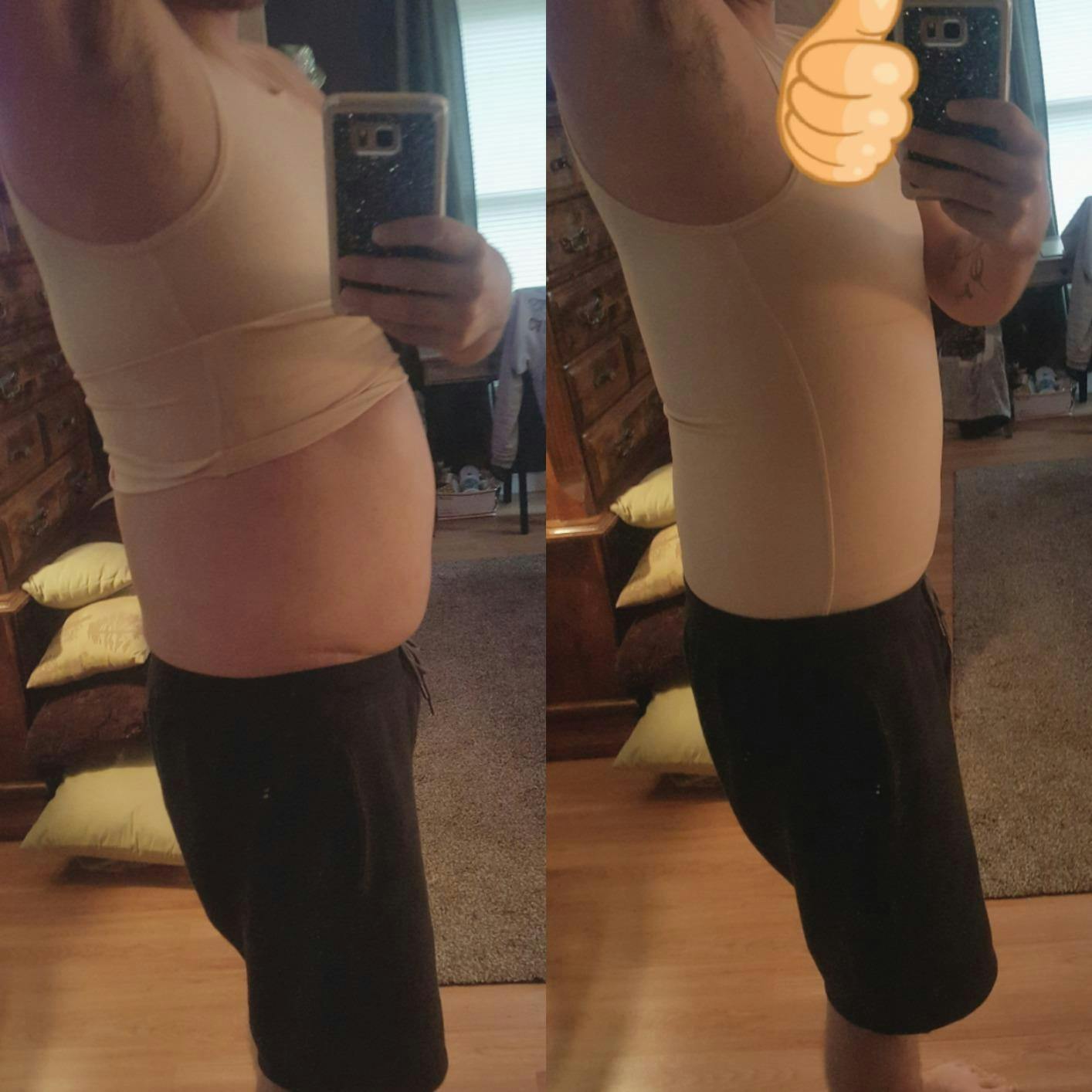
Demonstration images showing garment effect during wear. Individual results vary depending on body composition, skin elasticity, and garment sizing. Same person, same lighting, same angles.

Before & After — Side View · Fabric Compression in Action
Result: Noticeable smoothing from fabric tension alone

Before & After — Front View Dressed · Zero Visible Lines
Result: Clean silhouette with no fabric edges showing
Your Compression Shirt Material Questions Answered
Quick answers to the most common questions about compression shirt fabrics. Not a textile engineering manual — a practical guide.
Materials Basics
Q: What is the best fabric for a compression shirt?
Q: Why do compression shirts use Nylon and Spandex?
Q: Does a higher Spandex percentage mean better compression?
Choosing by Fabric
Q: Which compression shirt material is best for hot weather?
Q: What is the difference between mesh, double-layer, and seamless compression fabrics?
Care & Comfort
Q: What fabric should I avoid for a compression shirt?
Q: How should I care for compression shirt fabric?
Unsure about your size? Check our Size Guide before ordering. Most returns come from sizing down — order your regular shirt size.
What Compression Can — and Cannot — Do
Compression Can Help With
- Providing visual smoothing through fabric tension — from light seamless to X-Firm structure
- Breathable, comfortable all-day wear with open-knit mesh and moisture-wicking Nylon
- Invisible layering under dress shirts and t-shirts with flatlock stitching or seamless construction
- Stronger compression for formal events with double-layer panels and structured support
Compression Cannot
- Permanently tighten or restore skin elasticity
- Replace surgical or medical skin removal procedures
- Burn fat or reduce body weight while worn
- Work identically for all body types and skin conditions
Why We Wrote This
"What fabric should I choose?" is the question men ask after they understand what a compression shirt does, but before they're ready to pick a size. We wrote this guide because fabric is the single biggest predictor of whether your first compression shirt will work for your body and your climate. Mesh, double-layer, seamless — they're not marketing words. They're engineering decisions that determine how you'll feel after 8 hours. Know the material, know what you're buying.
Ready to Pick the Right Fabric for Your Body and Climate?
Free shipping. Free returns. Start with a Mesh Tank if you want maximum breathability — or a Firm Undershirt if you want stronger smoothing for formal settings.
Explore Compression Wear
Explore All Compression Guides
Browse All Compression Guides →Alex Chen, Founder | Updated July 2026
Compression garments are fitness and posture aids, not medical devices.
Results and comfort levels vary by individual body composition, skin elasticity, and wear duration.