
How Tight Should a Compression Shirt Be? Fit, Feel & Signs It's Too Tight
How Tight Should a Compression Shirt Be? Fit, Feel & Signs It's Too Tight
Snug like a second skin — not tight like a bandage. Compression comes from fabric, not a smaller size.
Quick Answer
A compression shirt should feel like a second skin — snug, even pressure, no rolling, no restricted breathing. It should not leave deep red marks lasting more than 10 minutes after removal. Compression comes from the Nylon/Spandex ratio — not from sizing down. If it slides or bunches, the compression level is too light, not the size. If it rolls up or restricts your ribcage, it is too tight. If you have loose skin after weight loss, the fit rules are slightly different — see our Loose Skin Smoothing Hub. Visual smoothing only. Not a medical device.
What does the right tightness feel like?
Snug like a second skin. Even pressure across your torso. No pinching, no rolling, no restricted breathing. You should forget you are wearing it by noon. After removal, no deep red marks lasting more than 10 minutes.
What are the signs it is too tight?
Three signals: hem rolling up, ribcage pressure, and deep skin marks lasting 10+ minutes. Rolling means the bottom band is overstretched. Ribcage pressure means compression exceeds the design range. If you feel it reminding you it is there — it is too tight.
What if it feels too loose?
If the fabric bunches, slides, or fails to smooth — the compression level is too light, not the size. Move up one compression level. For a complete guide to compression levels, see our Compression Level Guide.
Visual smoothing only. Not a medical device. For persistent body concerns, consult a physician.
Why Tightness Comes From Fabric — Not From Sizing Down
75% Nylon / 25% Spandex provides Light-Medium compression. 70% Nylon / 30% Spandex provides Medium-Firm compression. Buying a smaller size does not change the ratio — it only overstretches the fabric. The result: hem rolling, digging straps, and a shirt you cannot wear all day.
After putting it on, you should feel gentle, even compression across your torso. No pinching at the shoulders. No rolling at the hem. No ribcage constriction. After removal, skin should look normal within 10 minutes. If you feel it reminding you it is there all day — it is too tight.
Rolling means the bottom band is overstretched — your body is pushing back. Ribcage pressure means compression exceeds the design range. Deep marks lasting 10+ minutes mean excessive pressure on skin and soft tissue. Any one of these signals means size up or switch to a lighter compression level.
Find your ideal tightness across compression levels below.
How Tight Should Each Compression Level Feel?
From Light to Medium-Firm — the right tightness for your body and your goal.
← Swipe to compare all options →
| YOUR FIT |
LIGHT-MEDIUM MESH TANK |
MEDIUM-FIRM FIRM UNDERSHIRT |
LIGHT SEAMLESS TANK |
|---|---|---|---|
| BEST FOR |
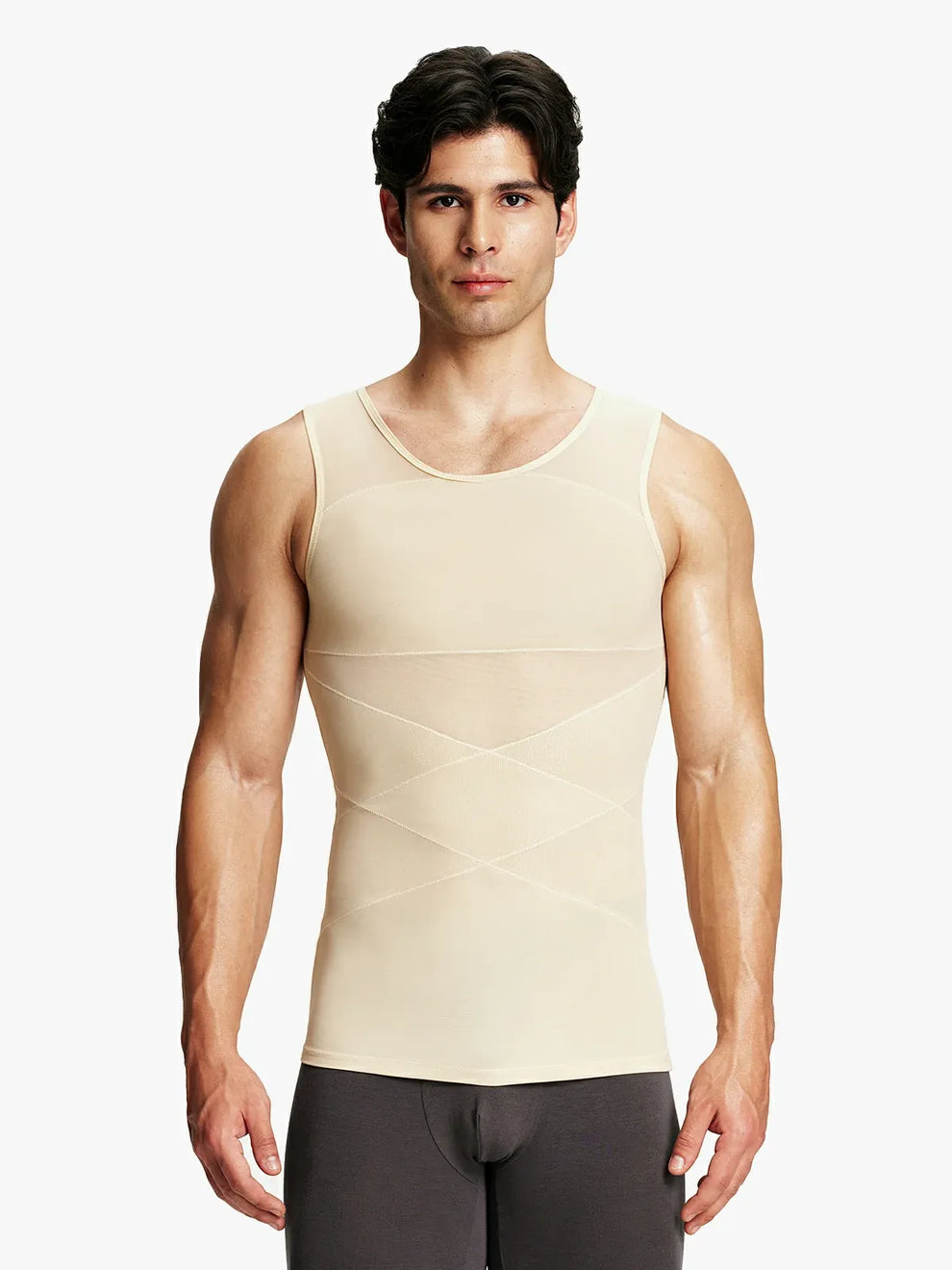 Everyday snug fit — the standard for all-day comfortable compression |
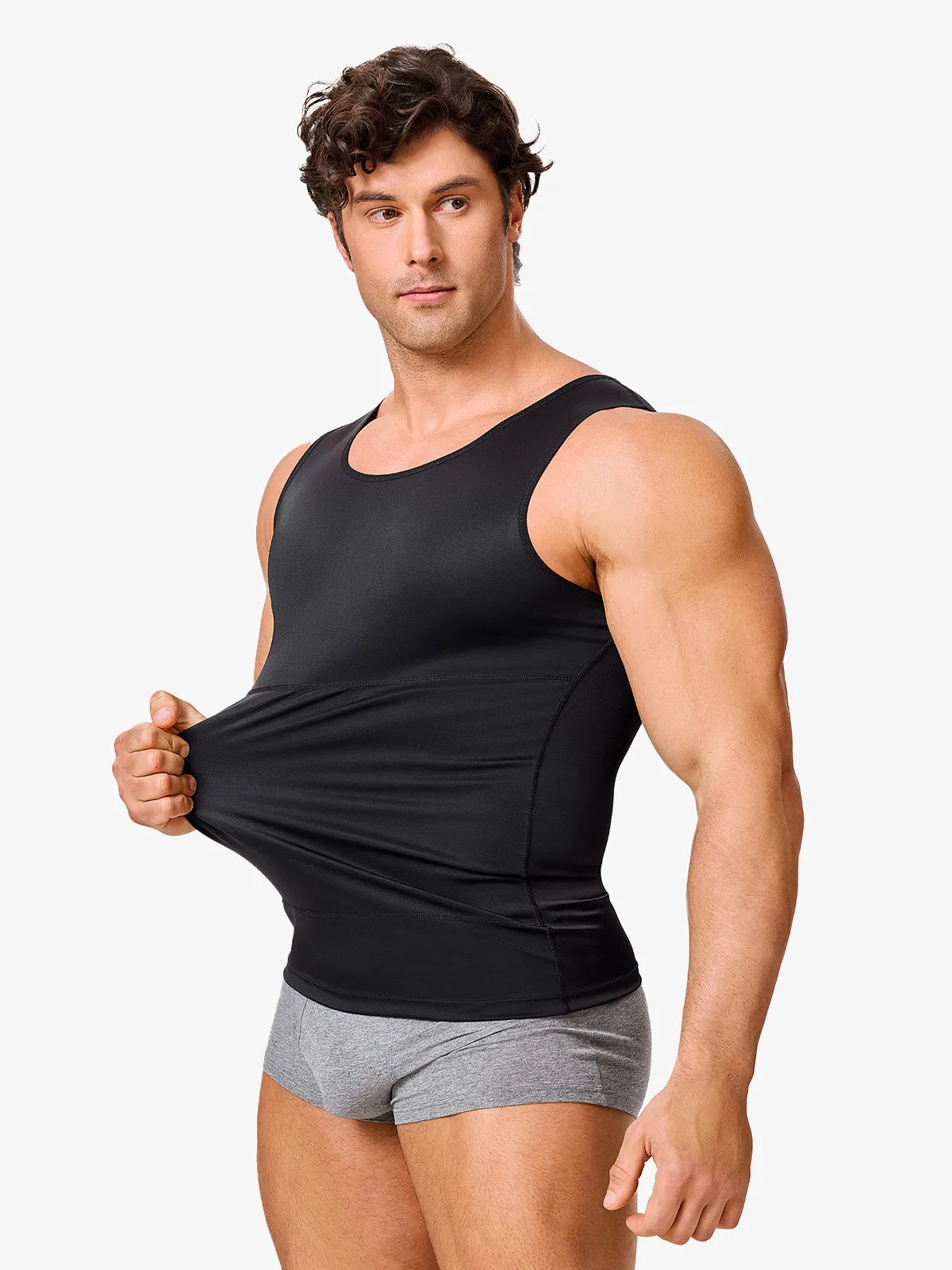 Stronger smoothing for formal events — firm but not restrictive |
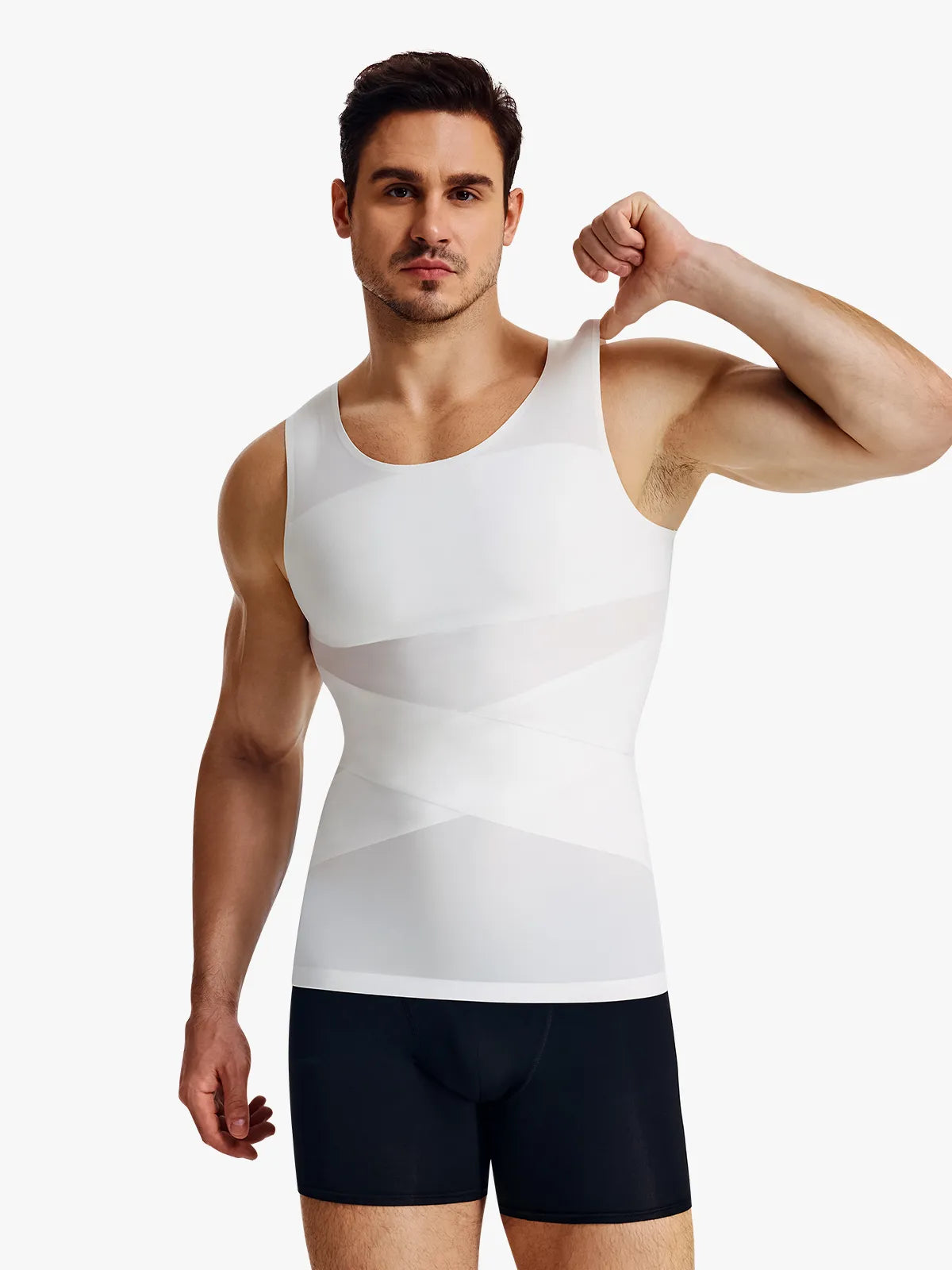 Barely-there compression — maximum invisibility under thin fitted t-shirts |
| COMPRESSION LEVEL | ★★☆☆☆ Light-Medium | ★★★☆☆ Medium-Firm | ★☆☆☆☆ Light |
| HOW IT SHOULD FEEL | Snug like a second skin — even pressure across torso, no pinching, no rolling, no restricted breathing | Firm hug — stronger pressure but still breathable. Present but not painful. No ribcage constriction. | Featherlight wrap — barely there, zero awareness, zero pressure points. Feels like a regular undershirt. |
| FEELS LIKE | Second-skin hug, forgotten by noon | Firm handshake — present, not painful | Barely there, zero awareness |
| TOO TIGHT IF | Bottom hem rolls up. Deep red marks on shoulders. Can feel it digging in after 4+ hours. | Ribcage feels constricted — cannot expand fully. Double-layer creates visible ridge under shirt. | Shoulder straps leave dents in skin. 4-Way Stretch overstretched — fabric becomes translucent. |
| WHY | 75% Nylon / 25% Spandex open-knit mesh. Light-medium elastic recovery provides all-day snugness without restriction. | 70% Nylon / 30% Spandex double-layer panel. Higher Spandex ratio delivers stronger compression — firm but not constricting. | 49% Nylon / 51% Spandex seamless 4-way stretch. Highest Spandex ratio in featherweight construction — lightest compression option. |
| View Mesh Tank → | View Firm Undershirt → | View Seamless Tank → |
The Most Common Pattern: Men Who Understand Tightness Comes From Fabric — Not Size — Stop Returning Shirts
"The single most common reason men return their first compression shirt — across thousands of support interactions — is 'it felt too tight.' In almost every case, the customer ordered the correct size but expected the tightness of a higher compression level — or ordered a smaller size hoping for more compression. Once they understand that tightness comes from the Nylon/Spandex ratio, not the size, the returns stop. The insight is universal: compression is engineered into the fabric — not squeezed out of a smaller size."
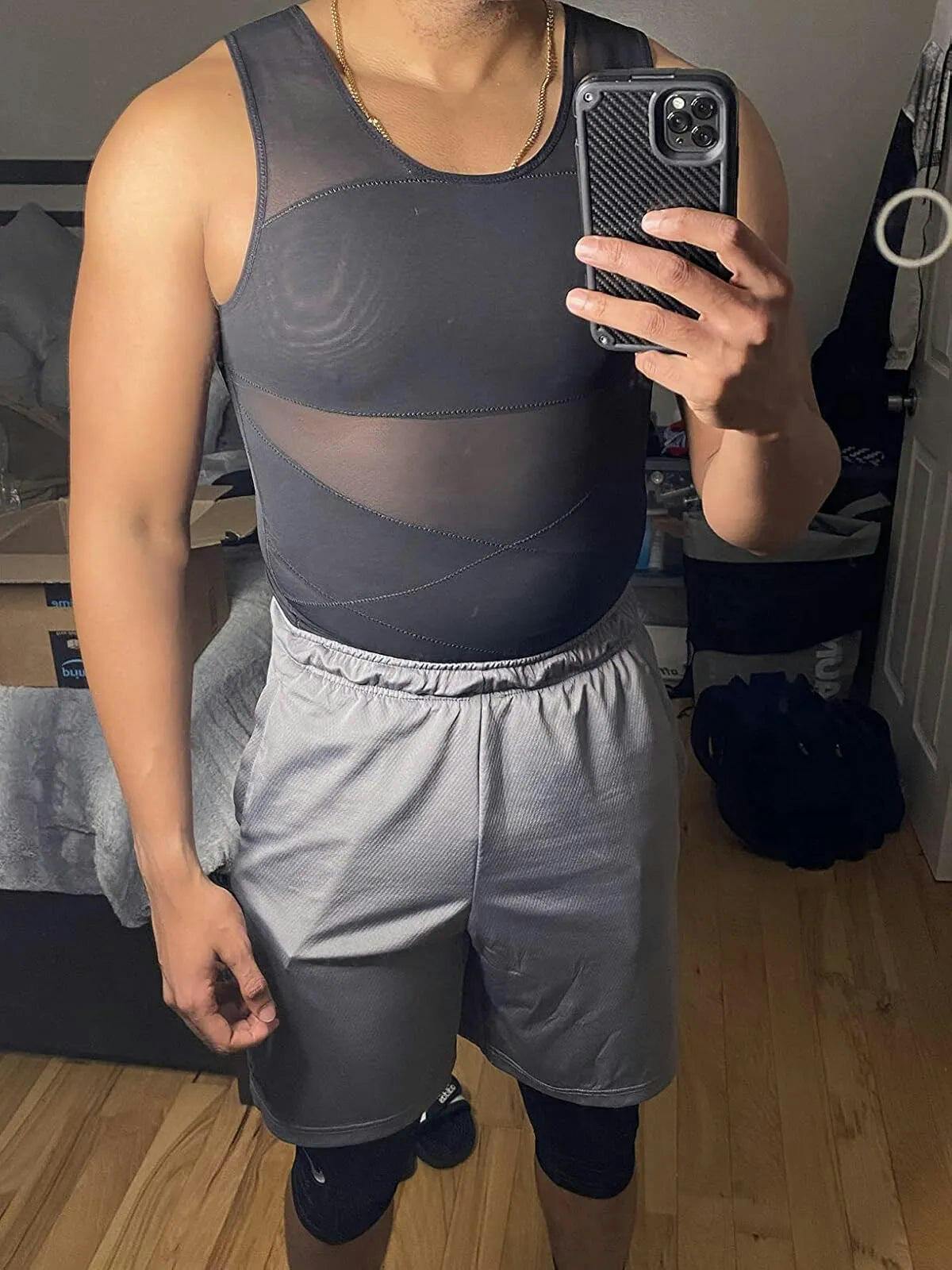
What Men Are Saying About Compression Shirt Fit and Comfort
Real feedback from men who found the right tightness — snug, not restrictive.
← Swipe to see all reviews →
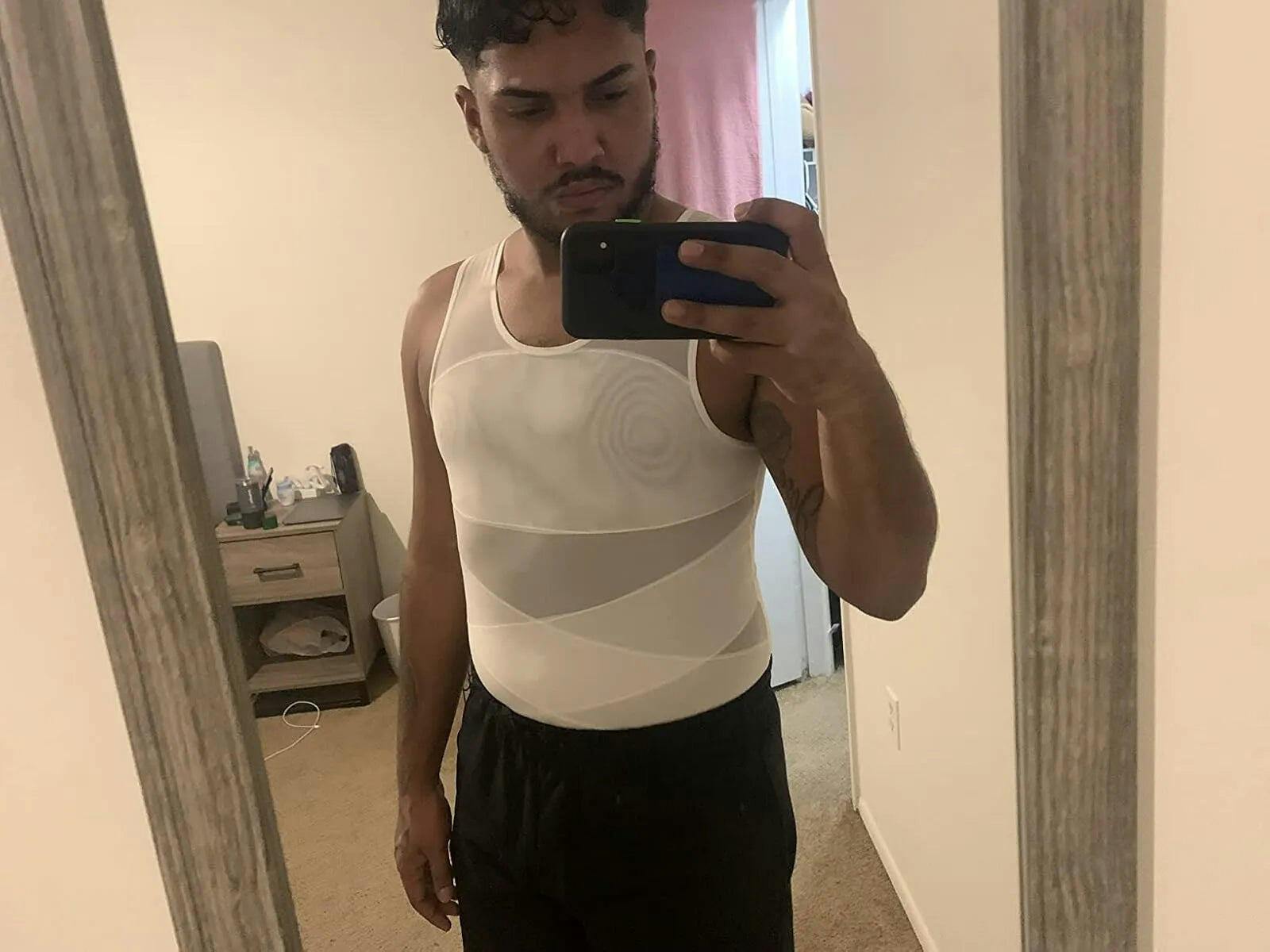
Common Mistakes About Compression Shirt Tightness
Compression comes from the Nylon/Spandex ratio — not the size. A smaller size does not increase compression — it causes hem rolling, digging straps, and visible lines. Order your regular shirt size. If you need more compression, choose a higher compression level.
X-Firm compression is designed for formal events and maximum tummy control — not daily wear. Start with Light-Medium for everyday use. Move up only if you need stronger smoothing. Tightness should match your goal, not your fear of it not working.
Pain, rolling, skin indentations, and restricted breathing are not signs of effective compression — they are signs the shirt does not fit. Effective compression is snug, even, and comfortable enough to wear all day. If you cannot wear it for 8 hours, it is the wrong tightness.
If you need medical-grade compression for circulatory or post-surgical reasons, consult a physician. WaistSculpt compression shirts are designed for visual smoothing and everyday wear — not medical treatment. For sizing guidance, see our Compression Shirt Size Guide. For help choosing the right compression level, see our How to Choose a Compression Shirt guide.
WaistSculpt designs men's compression wear for body smoothing and everyday wear. Independently reviewed.
Our Top Compression Shirts by Tightness and Feel
← Swipe to see all products →
Men's Mesh Compression Tank Top
75% Nylon / 25% Spandex open-knit mesh. Light-medium compression — breathable and flexible. Best for daily wear, hot climates, and moderate loose skin smoothing without overheating.
View Mesh Tank →
Men's Firm Compression Undershirt
70% Nylon / 30% Spandex double-layer construction. Medium-firm compression — stronger smoothing than mesh for formal settings. No hardware means zero visible lines under dress shirts.
View Firm Undershirt →
Men's Seamless Breathable Tummy Control Tank Top
49% Nylon / 51% Spandex 4-way stretch seamless knit. Light compression — zero seams, zero hardware, zero visible edges. Best for maximum invisibility under thin fitted t-shirts.
View Seamless Tank →See How the Right Tightness Looks on Your Body
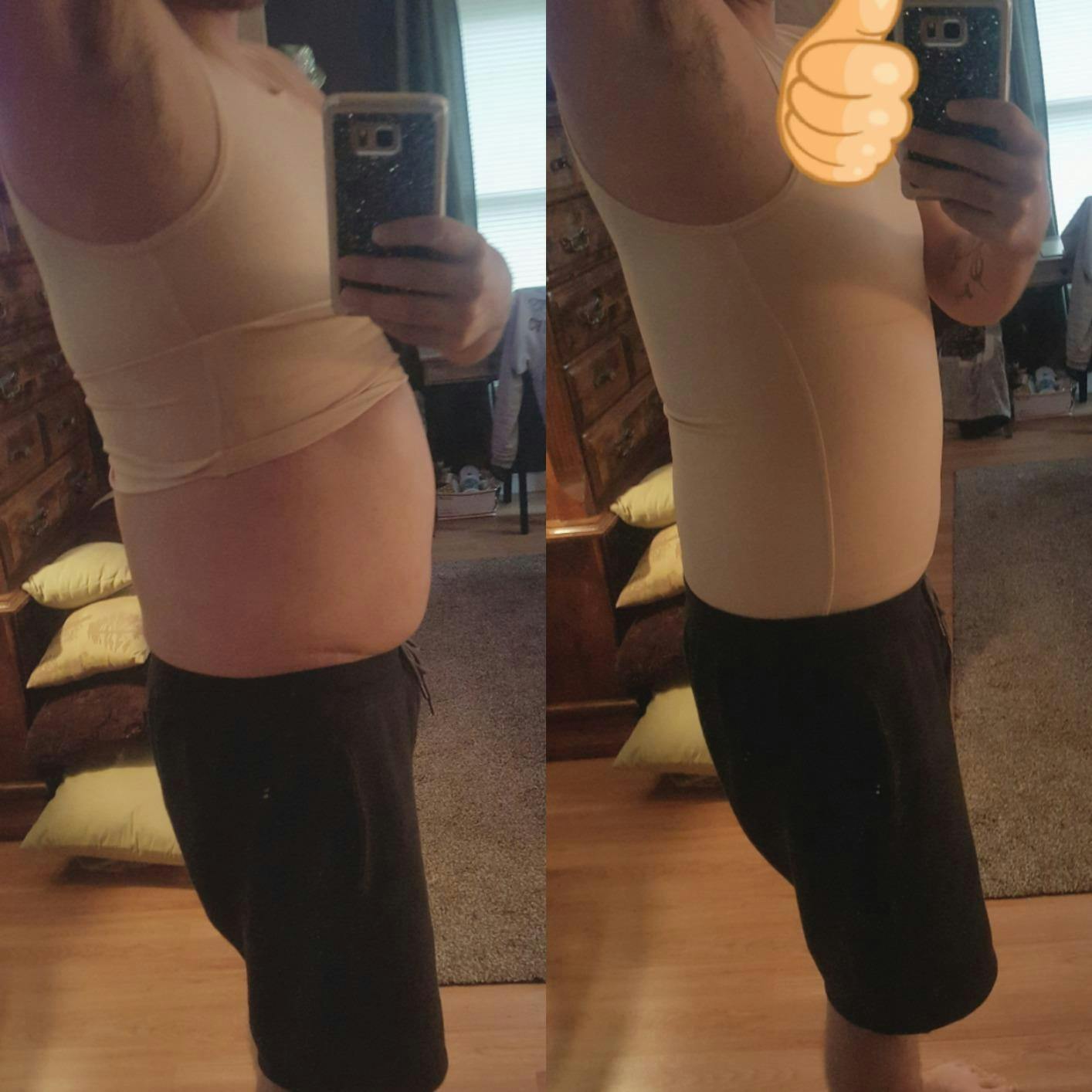
Demonstration images showing a correctly fitted compression shirt — snug, smooth, no rolling. If your shirt rolls up, leaves deep marks, or restricts your ribcage, it is too tight — size up or choose a lighter compression level. Individual results vary depending on body composition, skin elasticity, and garment sizing. Same person, same lighting, same angles.

Before & After — Side View · Correct Fit: Smooth Without Over-Tightening
Result: Snug, even compression — no rolling, no digging, no discomfort

Before & After — Front View Dressed · Correct Fit: No Rolling, No Visible Lines
Result: The right tightness disappears under your clothes — forgotten by noon
Your Compression Shirt Tightness Questions Answered
Quick answers to the most common questions about how tight a compression shirt should feel. Objective standards — not subjective opinions.
How Tight
Q: How tight should a compression shirt be?
Q: Should a compression shirt be tight?
Q: Does sizing down give more compression?
Signs It's Wrong
Q: Is my compression shirt too tight or too loose?
Q: Why does my compression shirt roll up at the bottom?
Fit & Sizing
Q: How do I know if I need a different compression level instead of a different size?
Q: Is the tightness different if I have loose skin after weight loss?
Unsure about your size? Check our Size Guide before ordering. Most returns come from sizing down — order your regular shirt size.
What Compression Can — and Cannot — Do
Compression Can Help With
- Providing snug, even pressure that smooths your silhouette — without pain or restriction
- All-day comfortable wear with the right compression level — forgotten by noon
- Stronger smoothing with higher Spandex ratios — firm but not constricting
- Multiple compression levels to match your comfort and smoothing goals
Compression Cannot
- Permanently tighten or restore skin elasticity
- Replace surgical or medical skin removal procedures
- Burn fat or reduce body weight while worn
- Work identically for all body types and skin conditions
Why We Wrote This
"It felt too tight" is the most common reason men return their first compression shirt. We wrote this guide because tightness is the most misunderstood part of compression wear. Most men confuse "tight" with "effective" — and end up sizing down, causing rolling, discomfort, and a shirt they cannot wear. The truth: compression comes from the fabric, not the size. Know the difference, and your first shirt will fit right.
Ready to Find Your Perfect Tightness — Snug, Not Restrictive?
Free shipping. Free returns. Start with a Mesh Tank for everyday snugness — Light-Medium compression, breathable all-day comfort.
Explore Compression Wear
Explore All Compression Guides
Browse All Compression Guides →Alex Chen, Founder | Updated July 2026
Compression garments are fitness and posture aids, not medical devices.
Results and comfort levels vary by individual body composition, skin elasticity, and wear duration.