
How to Choose the Right Compression Shirt
How to Choose the Right Compression Shirt
Five factors — compression level, structure, coverage, hardware, neckline.
Quick Answer
Choosing the right compression shirt — also called men's compression wear — comes down to five factors: compression level, physical structure, coverage, hardware, and neckline. Don't choose by body type — choose by what you need the shirt to do. The five compression levels below map directly to our five picks, from Light to X-Firm. Visual smoothing only. Not a medical device.
How do I know which compression level I need?
Start with Light for maximum invisibility under thin tees. Light-Medium for daily wear and first-timers. Medium-Firm for office and formal settings. Firm and X-Firm for maximum shaping at weddings and events.
What are the five factors I should check?
Compression level. Physical structure. Coverage. Hardware. Neckline. Check all five — not just one — before you buy. Each factor changes what the shirt feels like and looks like under clothes.
Visual smoothing only. Not a medical device. For persistent body concerns, consult a physician.
Why These Five Factors Determine the Right Compression Shirt
Light (49% Nylon / 51% Spandex seamless knit) provides zero-edge invisibility under thin tees. Light-Medium (25% spandex open-knit mesh) gives gentle daily smoothing. Firm compression (40% spandex with belt and steel bones) delivers maximum shaping for weddings. Start light, step up when needed.
Light seamless knit disappears under thin tees — zero seams, zero edges. Open-knit mesh maximizes airflow for hot weather. Double-layer panels add targeted abdominal pressure. Belts and steel bones provide customizable, maximum hold for formal events. Match the structure to your priority.
A deep U-neck disappears under button-ups and polos. Seamless designs leave zero visible edges under thin or white fabrics. A front zipper lets you control pressure but can create visible lines under lightweight shirts. The right neckline means nobody knows you're wearing compression.
Use these five factors to decide.
Which Compression Shirt Matches Your Five Factors?
Compare all five options by compression level, structure, hardware, and feel.
← Swipe to compare all options →
| YOUR SITUATION |
LIGHT SEAMLESS TANK |
LIGHT-MEDIUM MESH TANK |
MEDIUM-FIRM FIRM UNDERSHIRT |
FIRM BODY SHAPER VEST |
X-FIRM ADJ HOOKS UNDERSHIRT |
|---|---|---|---|---|---|
| BEST FOR |
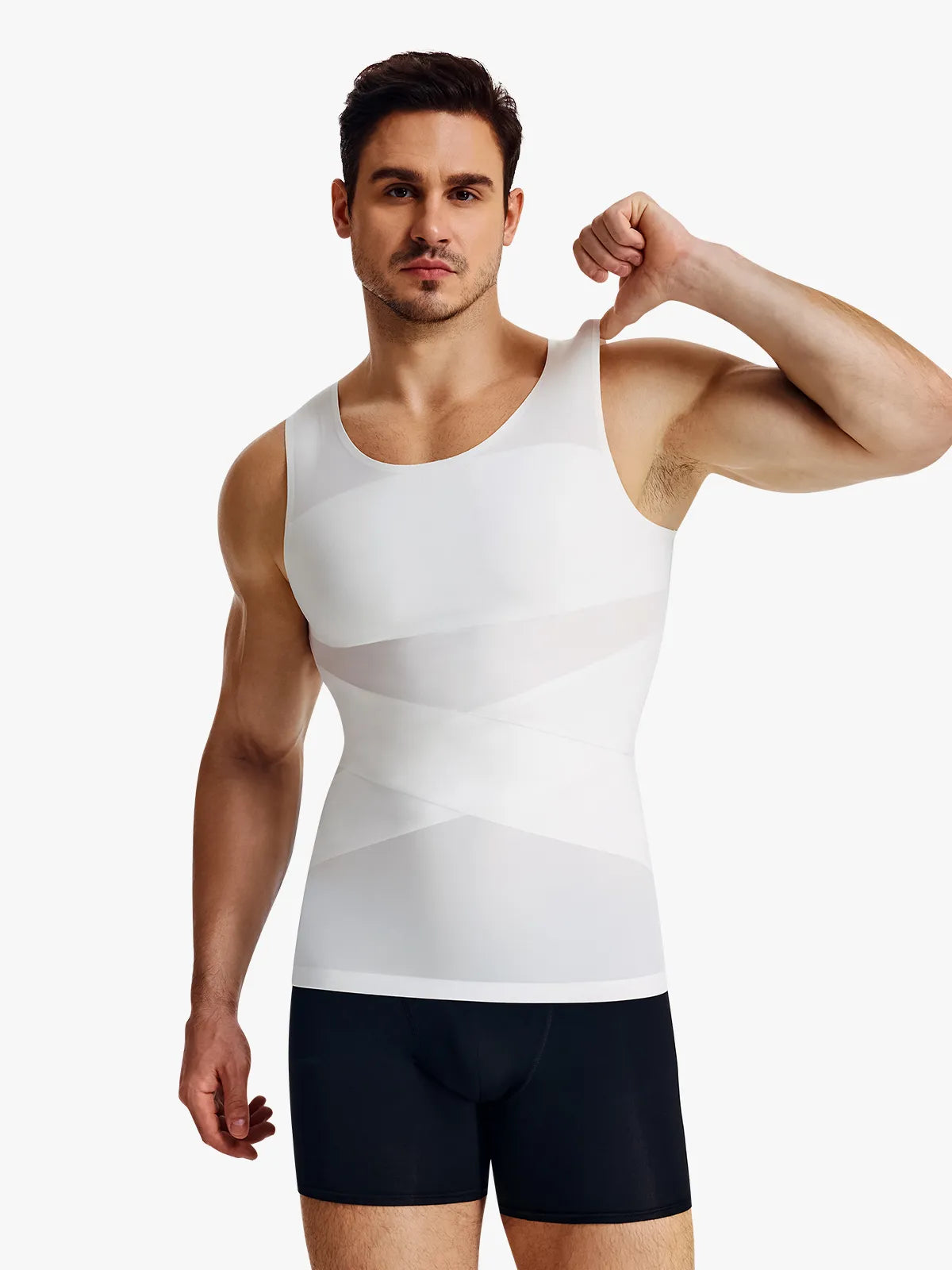 Maximum invisibility under thin tees — zero seams, zero hardware, zero visible edges |
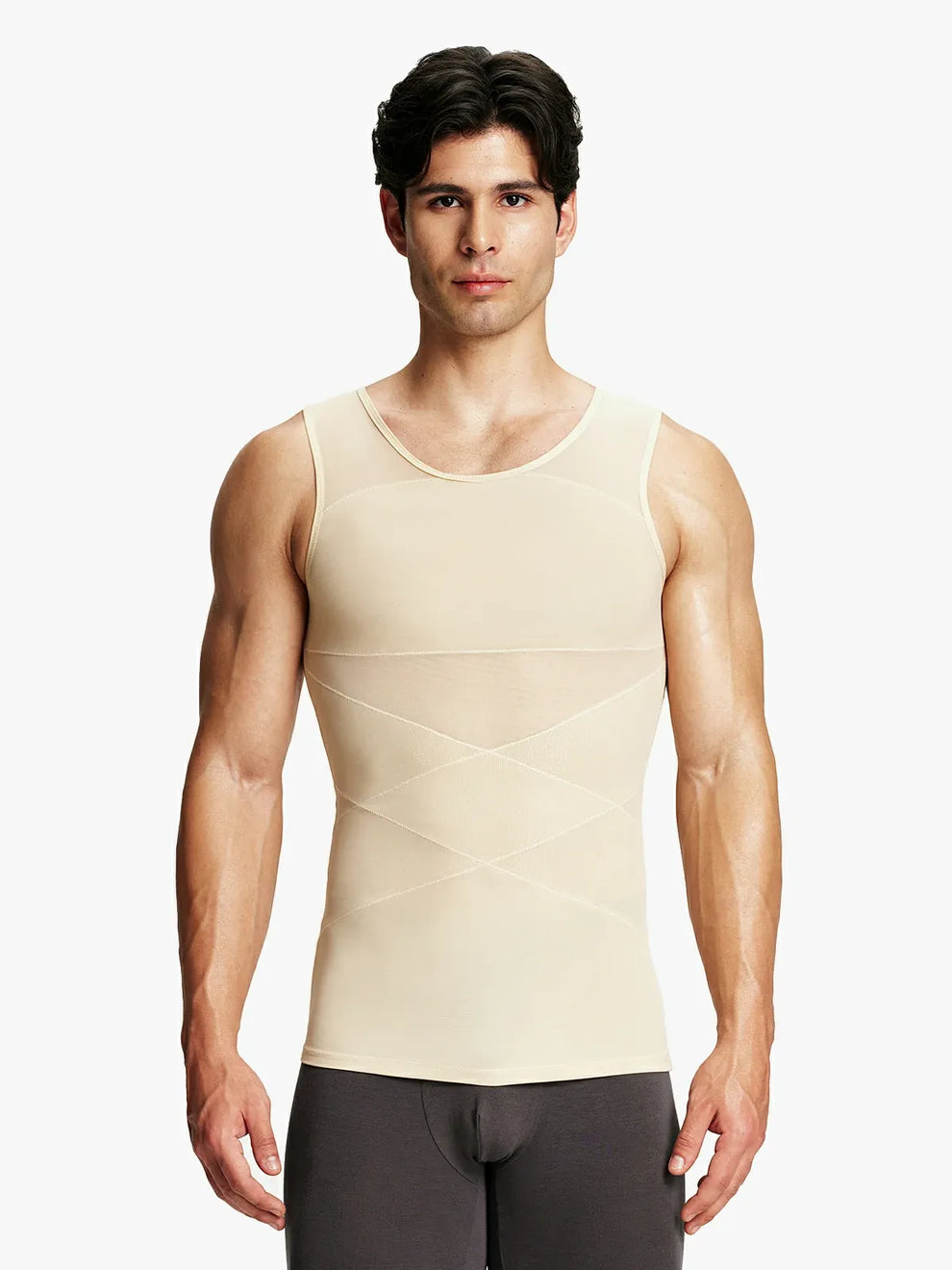 First-timers, daily wear, hot climates — light smoothing, maximum breathability |
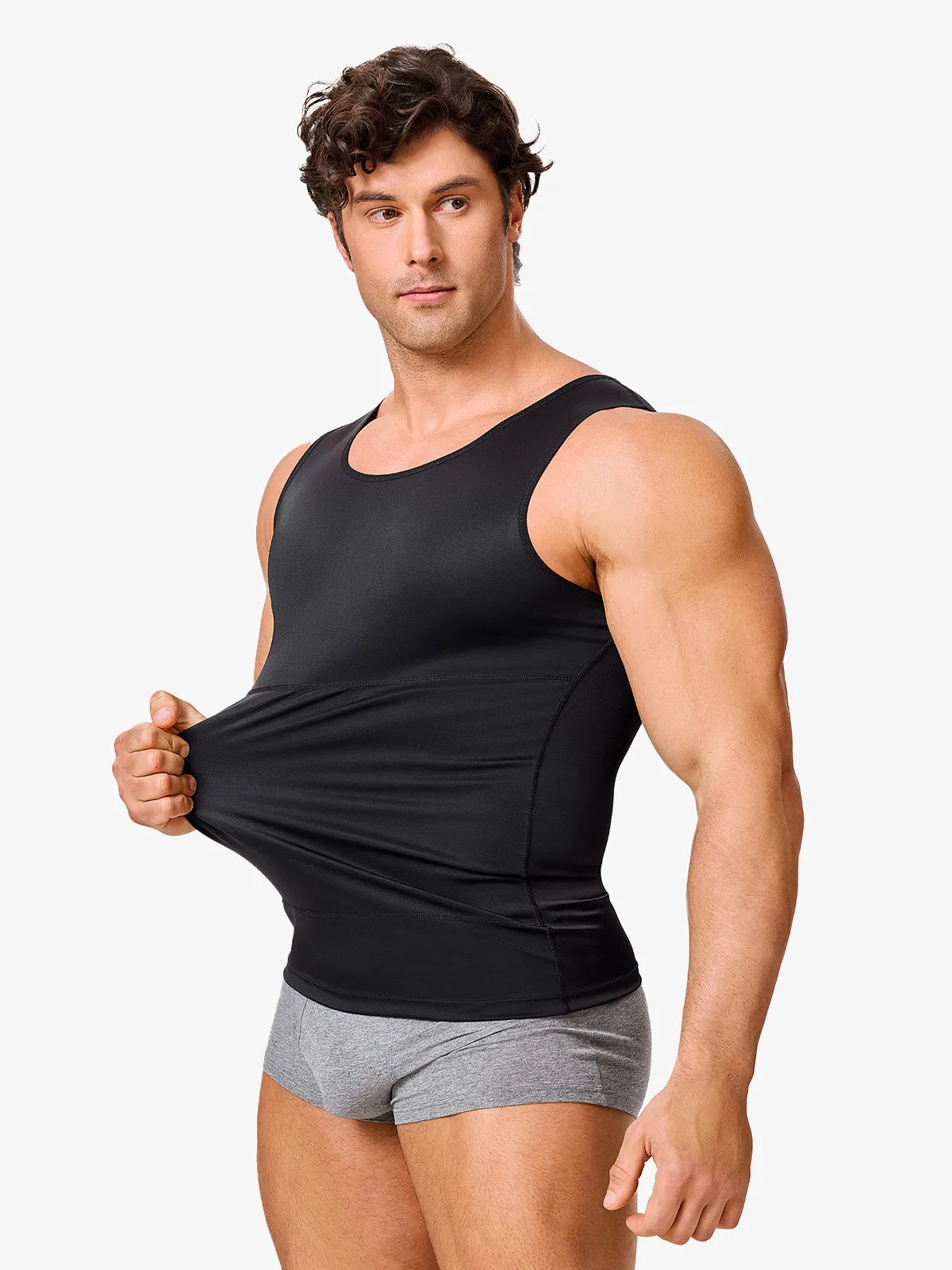 Office, formal settings — stronger smoothing, zero hardware, zero visible lines |
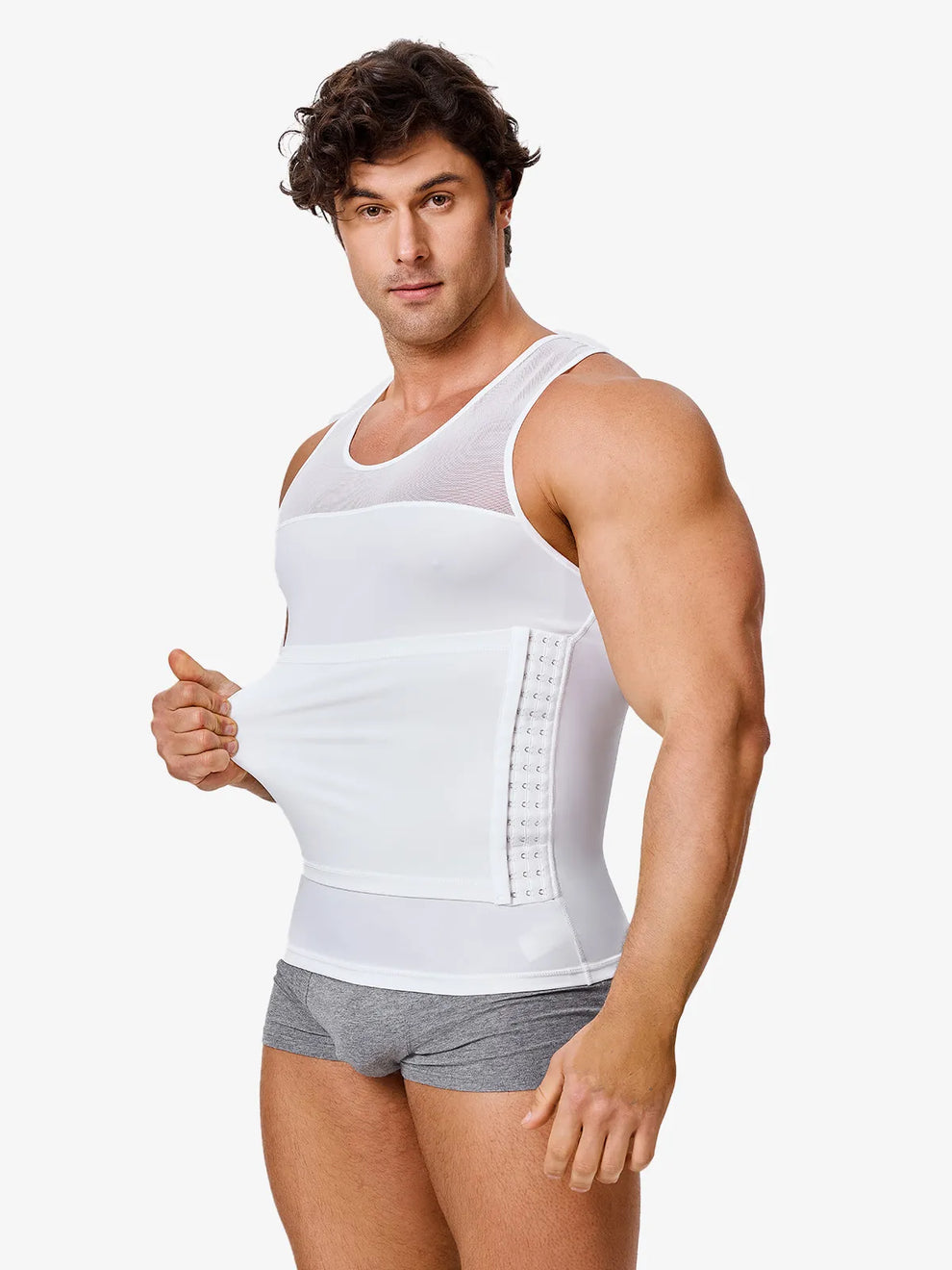 Maximum control — adjustable belt and steel bones for customizable pressure |
 Weddings, formal events — zipper, hooks, steel bones for ultimate shaping |
| COMPRESSION LEVEL | ★☆☆☆☆ Light | ★★☆☆☆ Light-Medium | ★★★☆☆ Medium-Firm | ★★★★☆ Firm | ★★★★★ X-Firm |
| BEST WHEN YOU NEED | Zero-show — invisible under thin, white, or fitted t-shirts | Breathability first — hot days, gym, casual wear under polos | Stronger hold without hardware — beer belly and chest bulges under a button-up, office, formal | Adjustable belt for love handles, muffin top, spare tire, and jiggle — customizable pressure | Ultimate shaping — weddings, maximum dad bod, beer belly, and chest bulges control |
| HARDWARE | None — seamless fabric only | None — fabric only | None — double-layer panel | 3-Row Hook Belt + 2 Steel Bones | Front Zipper + 3-Row Hook Belt + Steel Bones |
| FEELS LIKE | Second skin — zero edges, zero pressure points | Snug but breathable — forget you're wearing it | Firm, locked-in — shirt buttons stay flat | Tight, structured — maximum hold for high-stakes events | Rigid, powerful — strongest shaping available |
| WHY | 49% Nylon / 51% Spandex 4-way stretch seamless knit. Light compression with zero seams, zero hardware, zero visible edges. | 75% Nylon / 25% Spandex open-knit mesh. Light-medium compression with maximum airflow. Deep U-neck stays hidden. | 70% Nylon / 30% Spandex double-layer construction. Stronger smoothing than mesh. No hardware, zero visible lines. | 60% Nylon / 40% Spandex Mesh with 3-row hook belt and 2 steel bones. Structured compression for maximum shaping. | 90% Polyester / 10% Spandex with front zipper, 3-row hook belt, and steel bones. Rigid mechanical compression. |
| View Seamless Tank → | View Mesh Tank → | View Firm Undershirt → | View Body Shaper Vest → | View Adj Hooks Undershirt → |
The Most Common Pattern: Men Who Check All Five Factors Make Better First-Choice Purchases
"The overwhelming pattern from thousands of support interactions: men who check only compression level often end up with the wrong structure for their needs. A Light seamless tank feels completely different from a Light-Medium mesh tank — same general category, different coverage, different feel. The men who check all five factors — level, structure, coverage, hardware, and neckline — almost never return their first purchase. The universal insight: one factor is not enough."
What Men Are Saying After Making the Right Choice
Real feedback from men who found the right compression shirt by checking all five factors.
← Swipe to see all reviews →
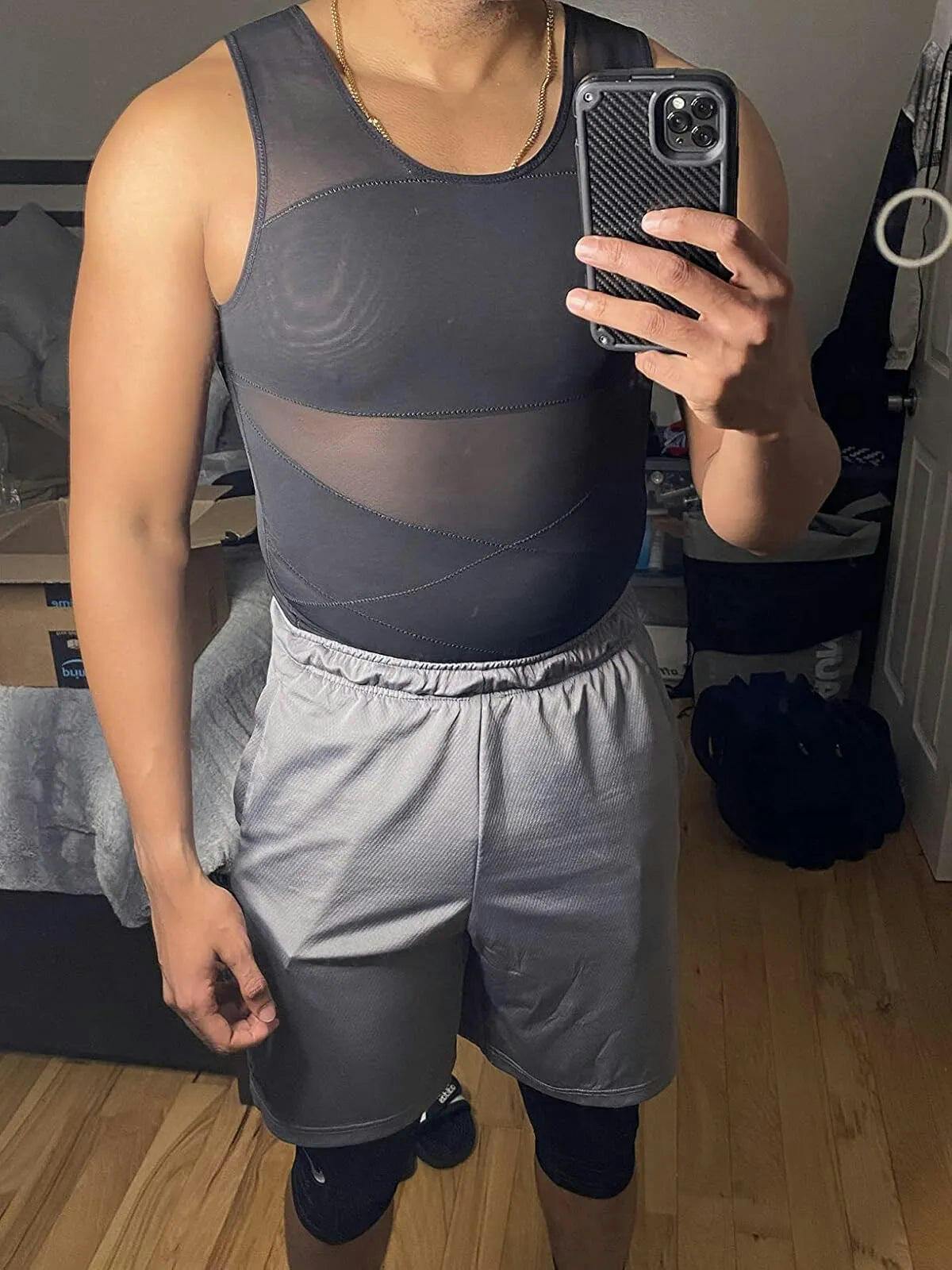
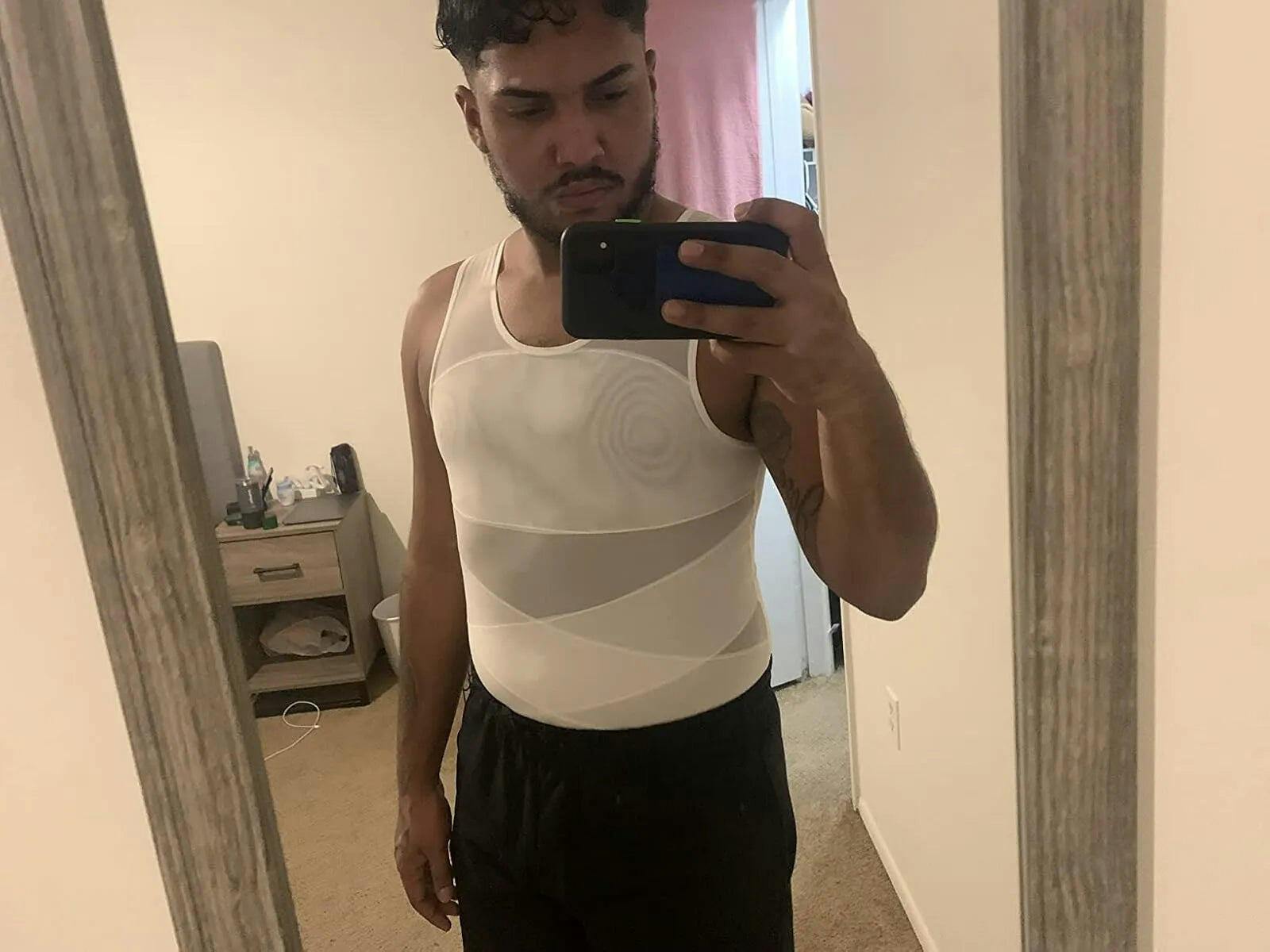
Common Mistakes When Choosing a Compression Shirt
A Light seamless tank and a Light-Medium mesh tank feel completely different — same general category, different coverage. Check all five factors: compression level, structure, coverage, hardware, and neckline. One factor is not enough.
Firm compression with belts and steel bones is for maximum shaping at formal events — not daily wear. Start with Light or Light-Medium for everyday use. Step up to Firm only when the occasion demands it.
A high crew neck peeks out under button-ups. A front zipper creates visible lines under thin fabrics. Match the neckline to your outer shirt — deep U-neck for dress shirts, seamless edges for thin tees.
This guide covers shirt-specific decision factors — not body-type matching. For a full-category approach that matches compression wear to your build, see our Men's Shapewear Hub. For medical-grade compression, consult your physician.
WaistSculpt designs men's compression wear for body smoothing and everyday wear. Independently reviewed.
Five Compression Shirts — Matched to Your Five Factors
← Swipe to see all products →
Men's Seamless Breathable Tummy Control Tank Top
49% Nylon / 51% Spandex 4-way stretch seamless knit. Light compression — zero seams, zero hardware, zero visible edges. Best for maximum invisibility under thin fitted t-shirts.
View Seamless Tank →
Men's Mesh Compression Tank Top
75% Nylon / 25% Spandex open-knit mesh. Light-medium compression — breathable and flexible. Best for first-timers, hot climates, and daily wear where breathability matters most.
View Mesh Tank →
Men's Firm Compression Undershirt
70% Nylon / 30% Spandex double-layer construction. Medium-firm compression — stronger smoothing than mesh for formal settings. No hardware means zero visible lines under dress shirts.
View Firm Undershirt →
Men's Compression Body Shaper Vest With Waist Trimmer Belt
60% Nylon / 40% Spandex mesh with built-in adjustable belt. Firm compression with full-torso coverage, 3-row hook belt for customizable pressure, and steel bones for posture support.
View Body Shaper Vest →
Men's Tummy Control Shapewear Undershirt w/ Adj Hooks
90% Polyester / 10% Spandex with steel bones, front zipper, and adjustable hooks. X-Firm compression — strongest shaping available. Best for formal events, posture correction, and maximum tummy control.
View Adj Hooks Undershirt →See the Difference the Right Compression Shirt Makes
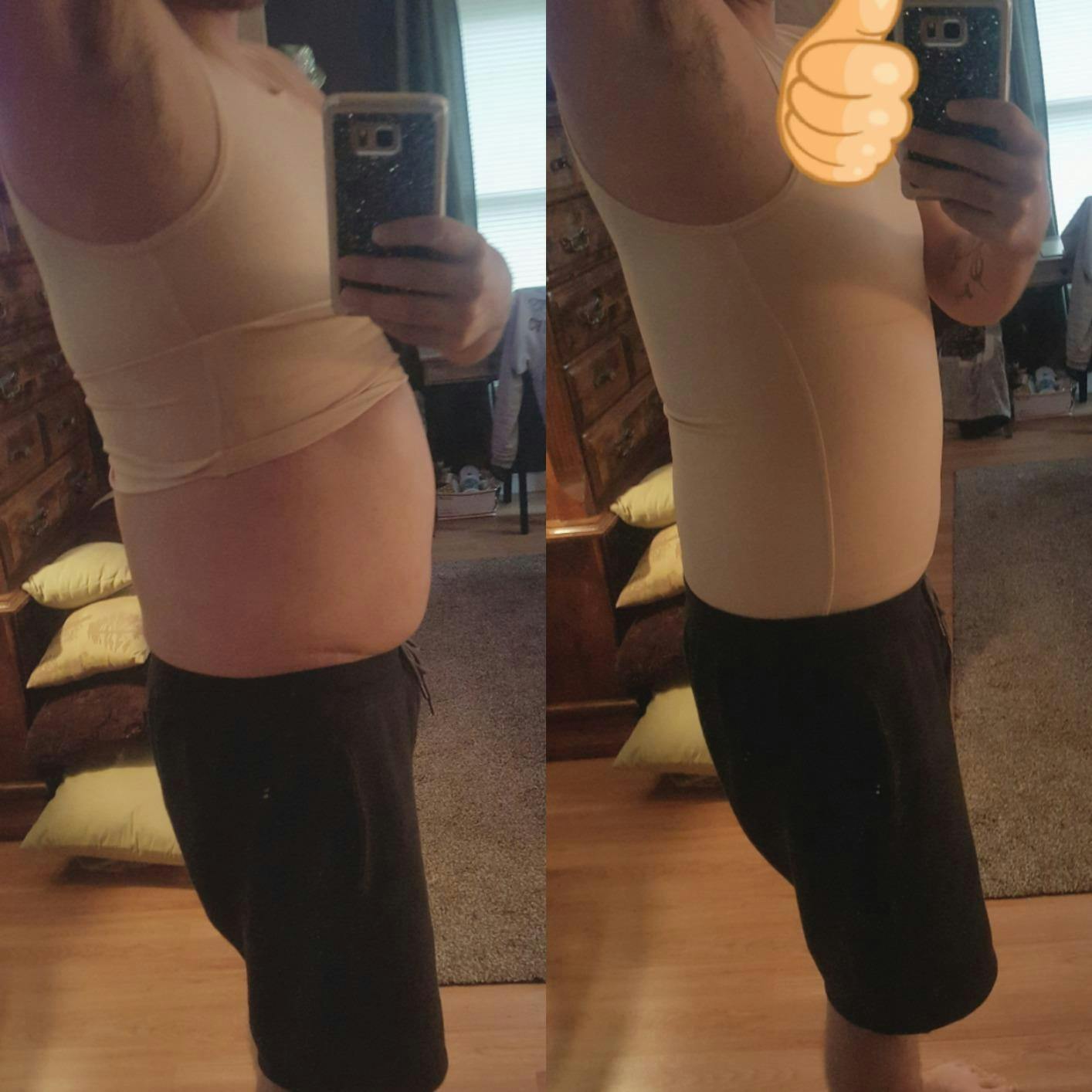
Demonstration images showing garment effect during wear. Individual results vary depending on body composition, skin elasticity, and garment sizing. Same person, same lighting, same angles.

Before & After — Side View
Result: Cleaner silhouette and more upright stance

Before & After — Front View Dressed
Result: Improved clothing drape under a dress shirt
Your Compression Shirt Decision Questions Answered
Quick answers to the most common questions about choosing the right compression shirt.
Compression Level
Q: How do I know which compression level I need?
Q: Can I start with firm compression if I've never worn one before?
Structure & Hardware
Q: Seamless vs open-knit mesh — which structure is right for me?
Q: Do I need a compression shirt with a belt and steel bones?
Neckline & Decision Process
Q: Which neckline stays invisible under a dress shirt?
Q: What are the five things I should check before buying a compression shirt?
Q: How is this guide different from choosing by body type?
Unsure about your size? Check our Size Guide before ordering. Most returns come from sizing down — order your regular shirt size.
What Compression Can — and Cannot — Do
Compression Can Help With
- Providing five distinct compression levels — from Light to X-Firm — for different needs
- Offering multiple physical structures — seamless, open-knit mesh, double-layer, and hardware-enhanced
- Staying invisible under dress shirts when you match the right neckline and cut
- Helping you choose the right shirt by checking five factors — not just one
Compression Cannot
- Permanently tighten or restore skin elasticity
- Replace surgical or medical skin removal procedures
- Burn fat or reduce body weight while worn
- Work identically for all body types and skin conditions
Why We Wrote This
"How do I choose?" is the question that comes after you understand what compression shirts are — and most answers online only tell you to look at compression level. We built this guide around five factors — not one — because level alone doesn't tell you how the shirt feels, what it covers, or whether it shows under your collar. Check all five, make a better first choice.
Ready to Choose Your Compression Shirt?
Free shipping. Free returns. Check your five factors — compression level, structure, coverage, hardware, and neckline — and find the right shirt.
Explore Compression Wear
Explore All Compression Guides
Browse All Compression Guides →Alex Chen, Founder | Updated July 2026
Compression garments are fitness and posture aids, not medical devices.
Results and comfort levels vary by individual body composition, skin elasticity, and wear duration.