
Types of Men's Compression Shirts
Types of Men's Compression Shirts
Three structures. Three coverage patterns. Three compression levels — find your type.
Quick Answer
Men's compression shirts — also called men's compression wear — come in three main structures, three coverage patterns, and three compression levels. Open-knit mesh tanks maximize breathability. 360° compression vests with wide shoulder straps smooth your entire torso from every angle. Double-layer panel undershirts provide stronger, hardware-free hold for formal settings. Visual smoothing only. Not a medical device.
What are the main types by structure, coverage, and level?
Open-knit mesh for maximum breathability. 360° compression with wide straps for full-torso smoothing — chest, belly, back, and sides. Double-layer panels for stronger, hardware-free hold under dress shirts.
What compression levels are there?
Light-Medium for daily wear and first-timers. Medium-Firm for stronger smoothing under dress shirts. Firm with adjustable belts and steel bones for maximum control at formal events.
Hardware or no hardware?
Most compression shirts use only fabric tension — no zippers, no belts. Advanced options add adjustable belts and steel bones for extra shaping power when the occasion demands it.
Visual smoothing only. Not a medical device. For persistent body concerns, consult a physician.
Why Physical Structure, Coverage, and Compression Level Define Every Compression Shirt
Open-knit mesh has visible perforations for maximum airflow. 360° seamless knit wraps your entire torso evenly with no weak spots. Double-layer panels add targeted pressure across the abdomen without affecting the rest of the garment. Each structure creates a different wearing experience.
Front-focused compression smooths your chest and belly. 360° compression wraps your entire torso — chest, belly, back, and sides — creating a cleaner silhouette from every angle. If you want your back and love handles smoothed under a fitted shirt, front-focused coverage is not enough.
Light-Medium compression provides gentle smoothing you forget you're wearing. Medium-Firm adds double-layer panels for visible hold under dress shirts. Jumping straight to firm can feel restrictive if you've never worn compression. Match the level to your goal, not your insecurity.
Find your structure and level below.
Compression Shirt Types at a Glance
Compare by physical structure, coverage, and how each one feels.
← Swipe to compare all options →
| YOUR SITUATION |
OPEN-KNIT MESH MESH TANK |
360° + WIDE STRAPS 360° VEST |
DOUBLE-LAYER PANEL FIRM UNDERSHIRT |
|---|---|---|---|
| BEST FOR |
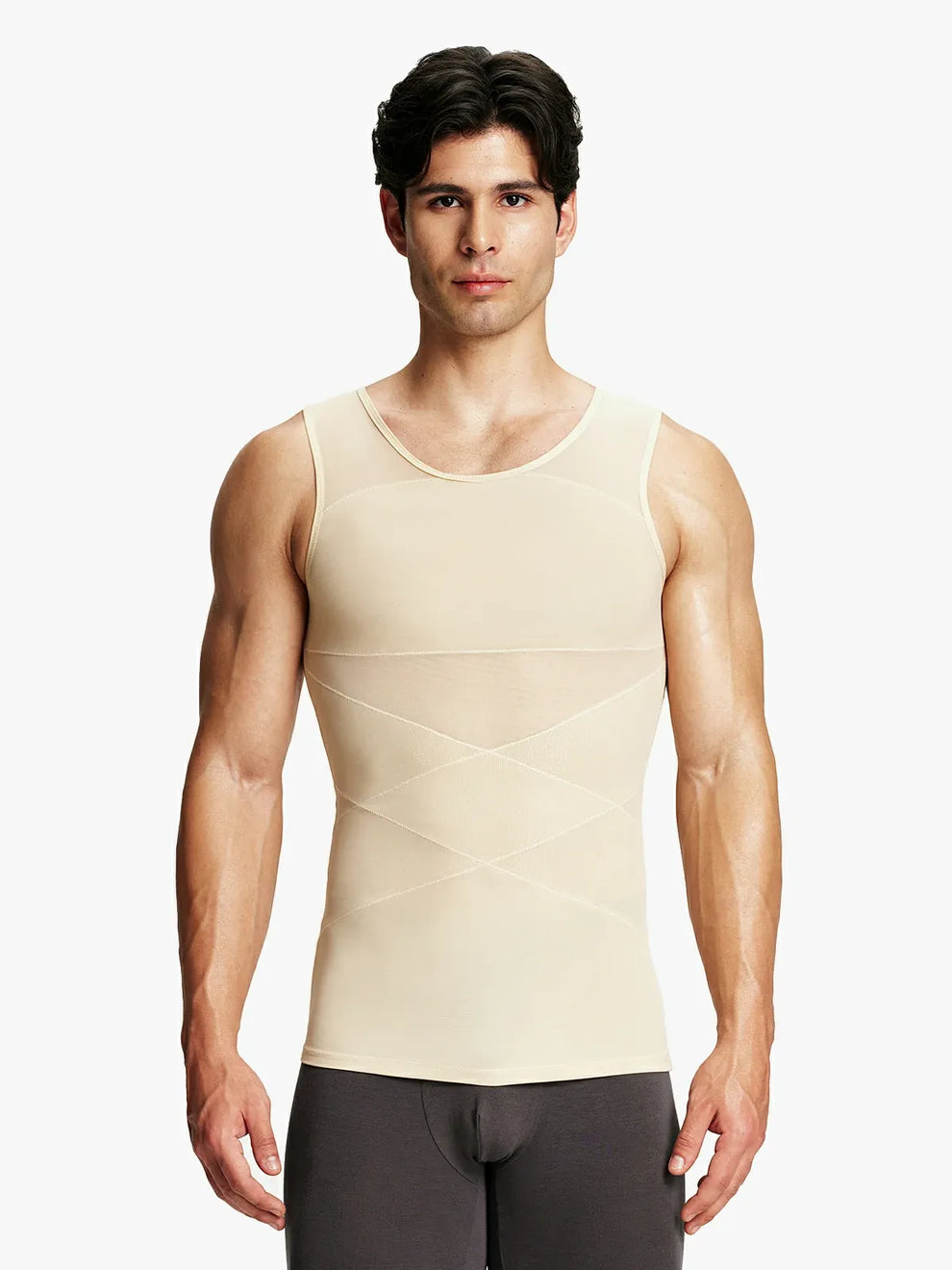 Maximum breathability — hot weather, gym, first-timers, casual daily wear |
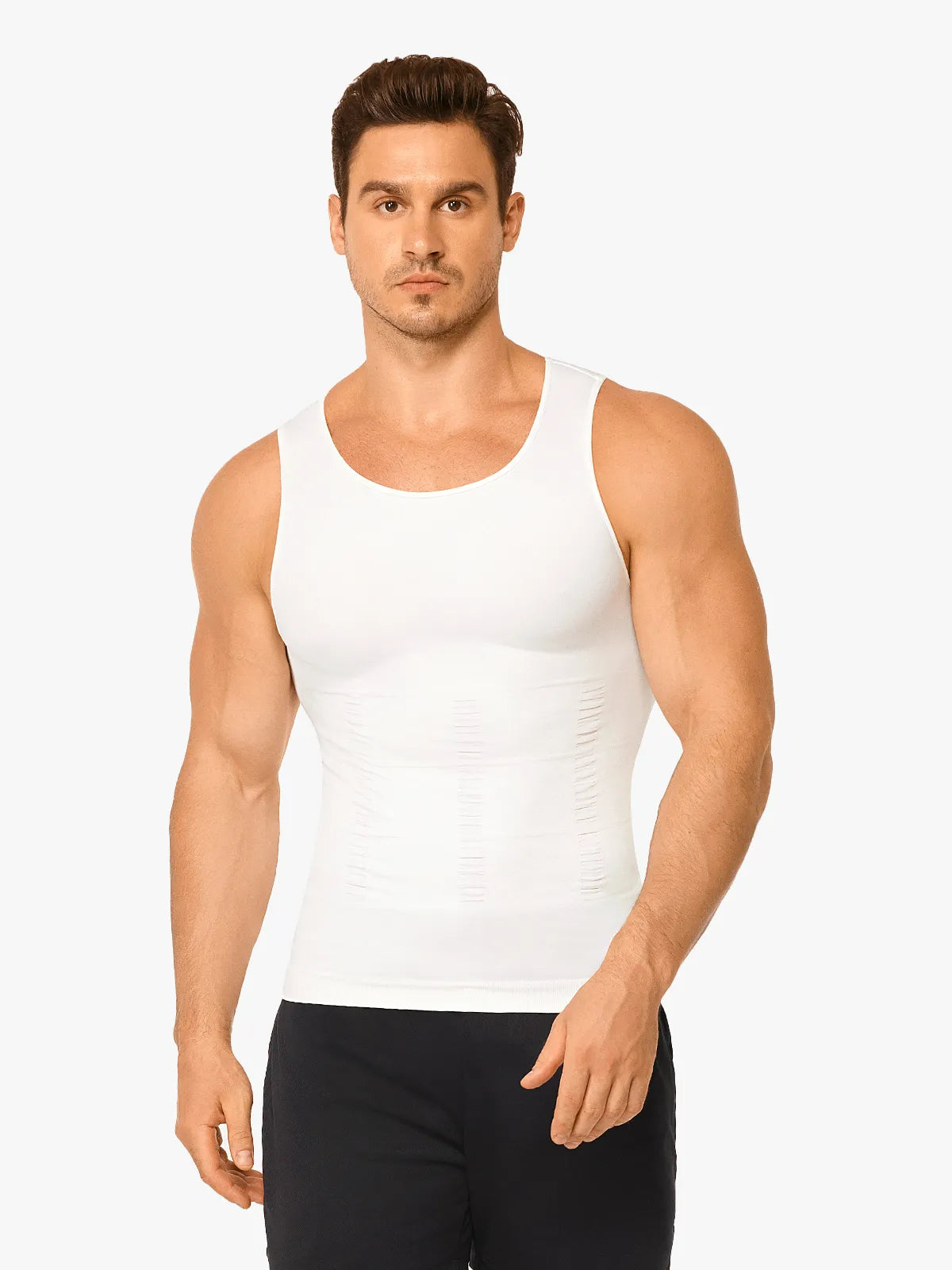 Full-torso smoothing — wide straps stay anchored, 360° coverage for chest, belly, back, and sides |
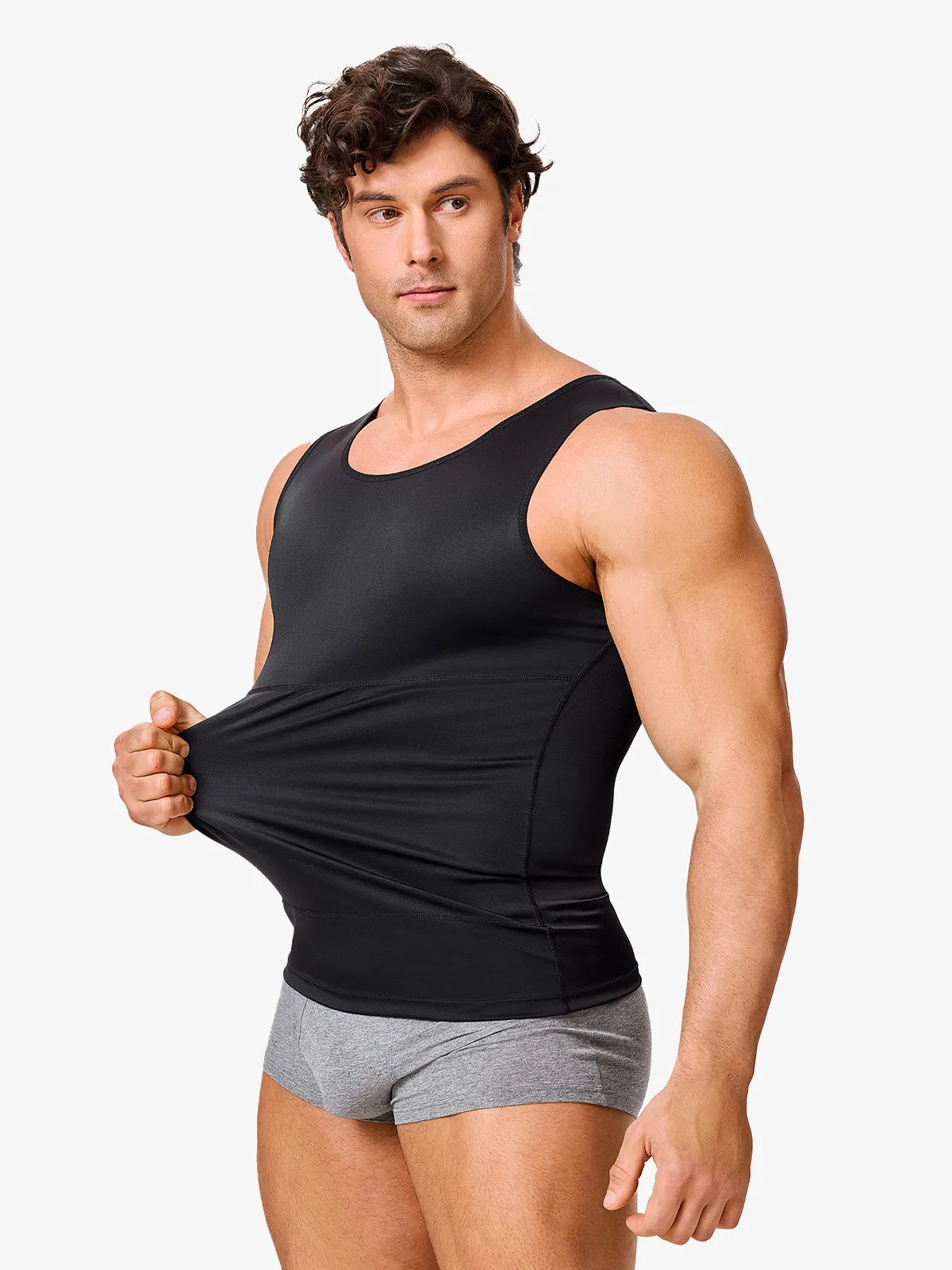 Stronger hold — double-layer panel stops button gaping, zero hardware means zero visible lines |
| COMPRESSION LEVEL | ★★☆☆☆ Light-Medium | ★★☆☆☆ Light-Medium | ★★★☆☆ Medium-Firm |
| COVERAGE | Front-focused — chest and abdomen | 360° Full-Torso — chest, belly, back, and sides | Front-focused — chest and abdomen with targeted abdominal pressure |
| FEELS LIKE | Snug but breathable — forget you're wearing it | Held from every angle — straps stay put all day | Firm, locked-in — shirt buttons stay flat |
| WHY | 75% Nylon / 25% Spandex open-knit mesh provides light-medium compression with maximum airflow. Deep U-neck stays hidden under any collar. | 80% Nylon / 20% Spandex with wide shoulder straps delivers 360° torso smoothing. No hardware, no seams — invisible under fitted shirts. | 70% Nylon / 30% Spandex double-layer construction delivers stronger smoothing than mesh. No hardware means zero visible lines under dress shirts. |
| View Mesh Tank → | View 360° Body Shaper Vest → | View Firm Undershirt → |
The Most Common Realization: Compression Shirts Aren't One Thing
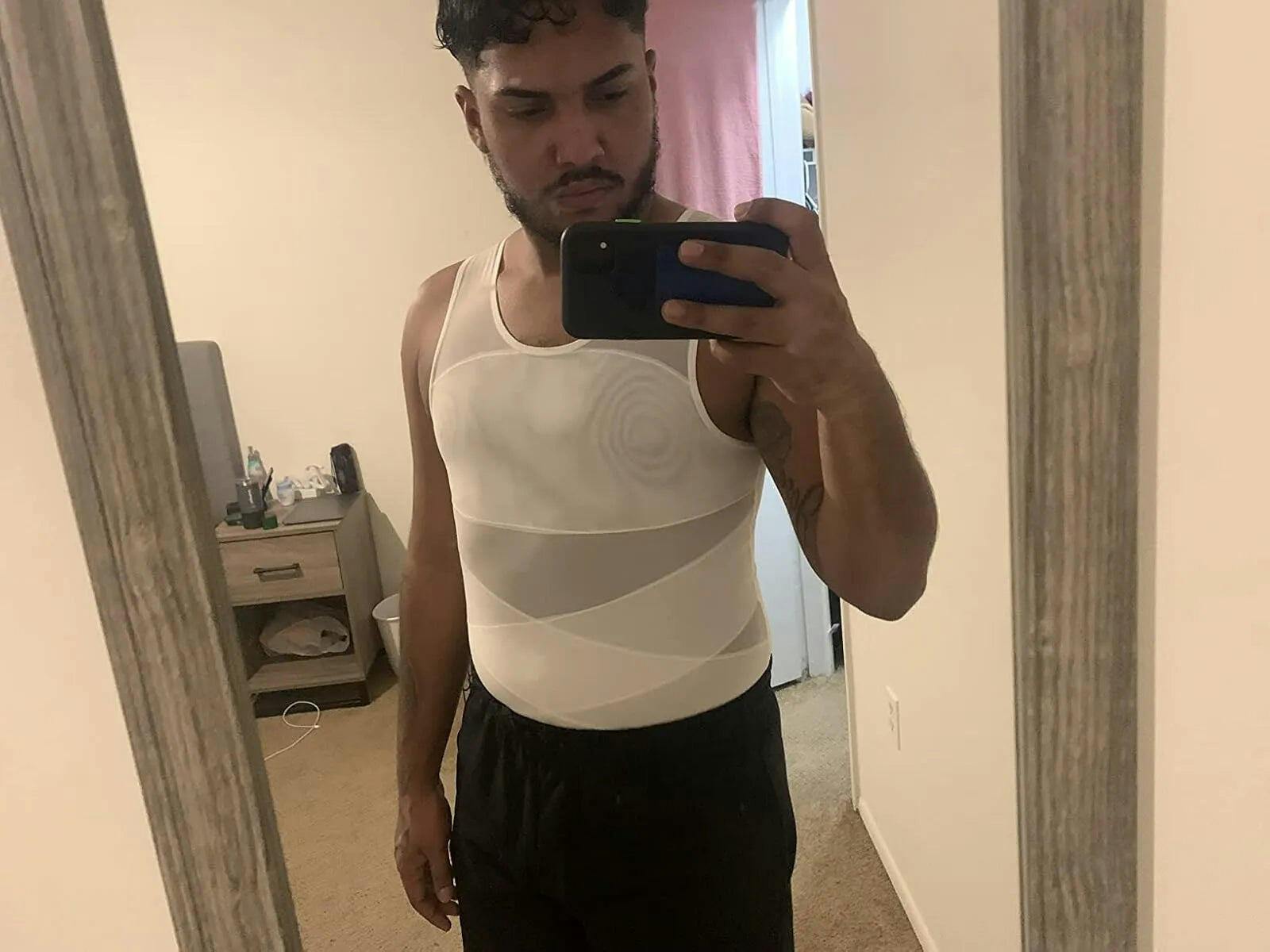
"The overwhelming pattern from thousands of support interactions: men who buy their first compression shirt often don't realize there are different types. An open-knit mesh tank breathes differently than a 360° vest. A double-layer undershirt holds differently than a seamless knit. The most common follow-up purchase: a second type — because one structure cannot cover every scenario. The universal insight: compression shirts are a category, not a single product."
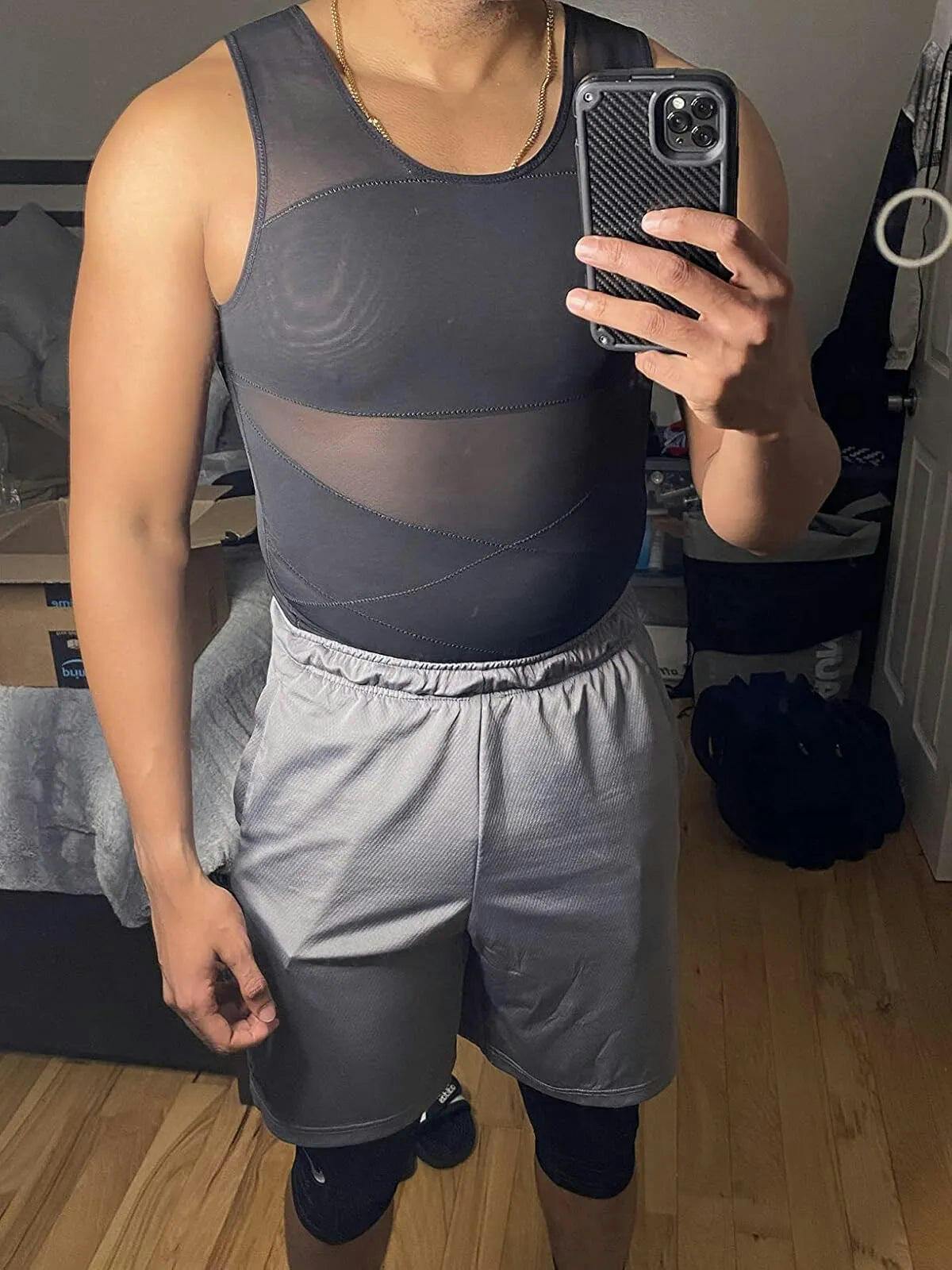
What Men Are Saying Across Different Types
Real feedback on finding the right type of compression shirt.
← Swipe to see all reviews →
Common Mistakes When Choosing a Compression Shirt Type
An open-knit mesh tank looks minimal but won't provide the full-torso coverage of a 360° vest. A double-layer undershirt looks like a regular tank but holds significantly stronger. Match the structure to your goal — breathability, full-torso coverage, or stronger hold — not which one looks better on the product page.
Front-focused compression only smooths your chest and belly — your back and sides get standard elastic, not active compression. If you want your back and love handles smoothed under a fitted shirt, you need 360° full-torso coverage.
Firm compression with belts and steel bones is for maximum shaping at formal events — not daily office wear. Start with Light-Medium if you've never worn compression. You can always step up later.
If you need medical-grade compression for post-surgical recovery or a diagnosed condition, consult your physician. WaistSculpt compression shirts are designed for visual smoothing and daily wear — not medical treatment.
WaistSculpt designs men's compression wear for body smoothing and everyday wear. Independently reviewed.
Three Compression Shirt Types — Three Starting Points
← Swipe to see all products →
Men's Mesh Compression Tank Top
75% Nylon / 25% Spandex open-knit mesh. Light-medium compression — breathable and flexible. Best for maximum breathability — the go-to tank for first-timers, hot climates, and casual daily wear.
View Mesh Tank →
Men's 360° Compression Body Shaper Vest
80% Nylon / 20% Spandex with wide shoulder straps. Light-medium 360° compression — smooths chest, belly, back, and sides from every angle. Wide straps stay anchored all day without slipping. Best for all-day office wear and full-torso smoothing.
View 360° Body Shaper Vest →
Men's Firm Compression Undershirt
70% Nylon / 30% Spandex double-layer construction. Medium-firm compression — stronger smoothing than mesh for formal settings. No hardware means zero visible lines under dress shirts.
View Firm Undershirt →See the Difference Compression Shirts Make Under Clothing
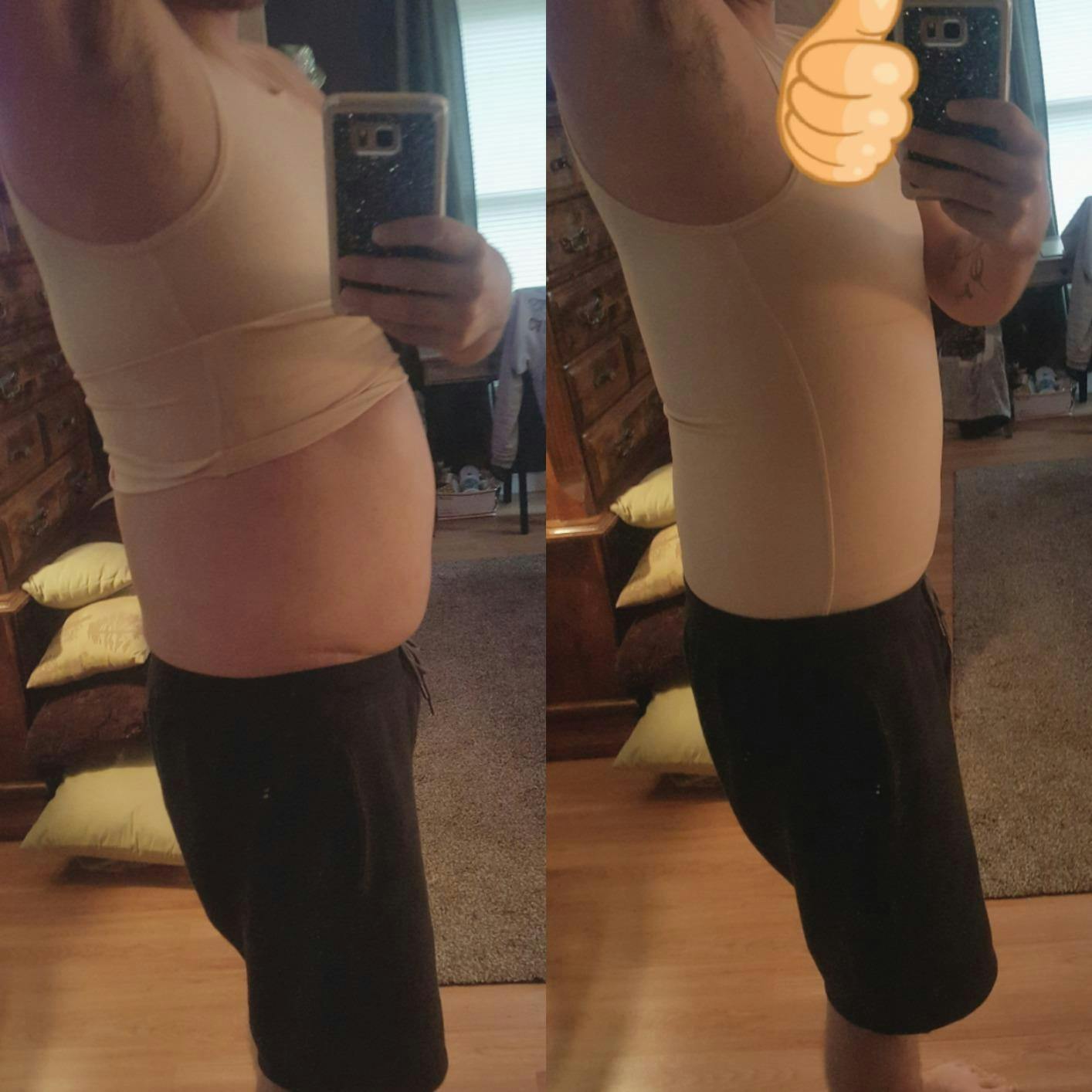
Demonstration images showing garment effect during wear. Individual results vary depending on body composition, skin elasticity, and garment sizing. Same person, same lighting, same angles.

Before & After — Side View
Result: Cleaner silhouette and more upright stance

Before & After — Front View Dressed
Result: Improved clothing drape under a dress shirt
Your Compression Shirt Type Questions Answered
Quick answers to the most common questions about compression shirt types, structures, and levels.
Types & Structures
Q: What are the main types of men's compression shirts?
Q: Open-knit mesh vs 360° compression vs double-layer panel — which structure is right for me?
Q: What's the difference between open-knit mesh and seamless knit?
Compression Levels & Hardware
Q: How do I know which compression level I need?
Q: Can I wear light-medium compression under a dress shirt?
Q: Do I need a compression shirt with a belt and steel bones?
Q: Are hardware-free compression shirts strong enough for a larger stomach?
Unsure about your size? Check our Size Guide before ordering. Most returns come from sizing down — order your regular shirt size.
What Compression Can — and Cannot — Do
Compression Can Help With
- Providing three distinct physical structures — open-knit mesh, 360° knit, and double-layer panels — for different needs
- Offering two coverage patterns — front-focused for breathability, 360° full-torso for all-angle smoothing
- Delivering graduated compression levels from Light-Medium to Firm with structural support
- Matching your compression type to your goal — breathability, full-torso coverage, or stronger hold
Compression Cannot
- Permanently tighten or restore skin elasticity
- Replace surgical or medical skin removal procedures
- Burn fat or reduce body weight while worn
- Work identically for all body types and skin conditions
Why We Wrote This
Most first-time buyers don't realize compression shirts come in different types — and end up with the wrong structure or compression level for their needs. We wrote this guide to break down the three main structures, two coverage patterns, and three compression levels — so you can match the type to your goal, not your insecurity.
Ready to Find Your Compression Shirt Type?
Free shipping. Free returns. Start with open-knit mesh for breathability, 360° compression for full-torso coverage, or a double-layer undershirt for stronger hold — your type is here.
Explore Compression Wear
Explore All Compression Guides
Browse All Compression Guides →Alex Chen, Founder | Updated July 2026
Compression garments are fitness and posture aids, not medical devices.
Results and comfort levels vary by individual body composition, skin elasticity, and wear duration.