
Waist Trainer vs Compression Shirt: Which to Buy?
Waist Trainer vs Compression Shirt: Which to Buy?
One braces your core for training. The other smooths your torso for daily wear. Here is how to choose.
Quick Answer
Waist trainers and compression shirts look similar but serve different purposes. A waist trainer is for targeted core support during workouts — it braces your midsection with polymer bones and multi-lock closures. A compression shirt is for full-torso smoothing under everyday clothes — it creates an even silhouette using elastic fabric. If you train heavy, get a waist trainer. If you want a smoother look under clothes, get a compression shirt. If you sit at a desk in formal wear, get shapewear shorts. Both are types of men's compression wear. Visual smoothing only. Not a medical device.
When should I choose a waist trainer?
If you train heavy — squats, deadlifts, HIIT, boxing. A waist trainer braces your core with polymer bones and multi-lock closures that stay anchored during rapid movement.
When should I choose a compression shirt?
If you want a smoother silhouette under everyday clothes — office, dates, formal events. A compression shirt smooths your full torso invisibly under any shirt.
When should I choose shapewear shorts?
If you sit at a desk in formal wear — the firm compression and grip-inner waistband smooth love handles and hold loose skin under suits all day.
Visual smoothing only. Not a medical device. For persistent body concerns, consult a physician.
Why Waist Trainers, Compression Shirts, and Shapewear Shorts Solve Different Problems
One braces. One smooths. One firms.
Waist Trainer vs Compression Shirt vs Shapewear Shorts — Which Matches Your Needs?
Three choices — each for a different goal.
← Swipe to compare all options →
| YOUR GOAL |
CORE SUPPORT WAIST TRAINER CORSET |
DAILY SMOOTHING MESH COMPRESSION TANK |
LOWER BODY FIRMING SHAPEWEAR SHORTS |
|---|---|---|---|
| BEST FOR |
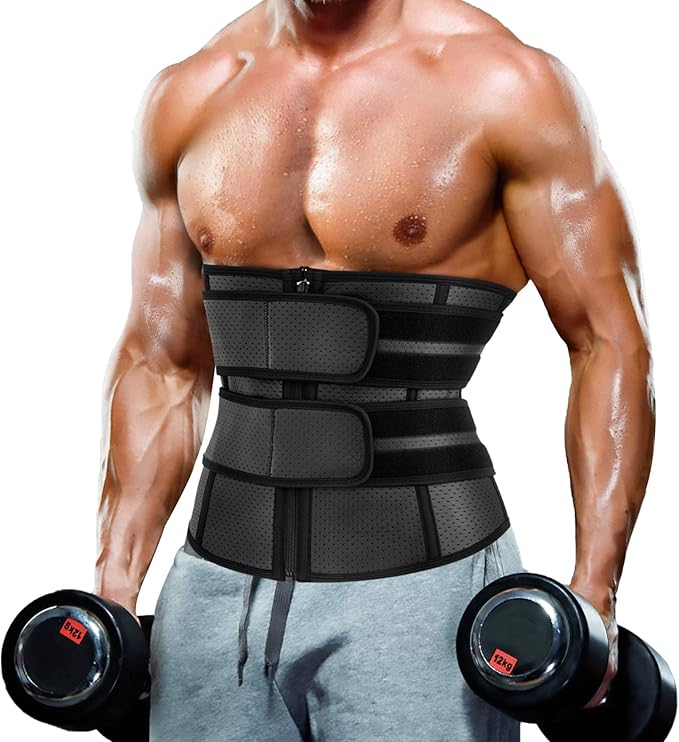 Heavy lifts, HIIT, boxing — core bracing during training |
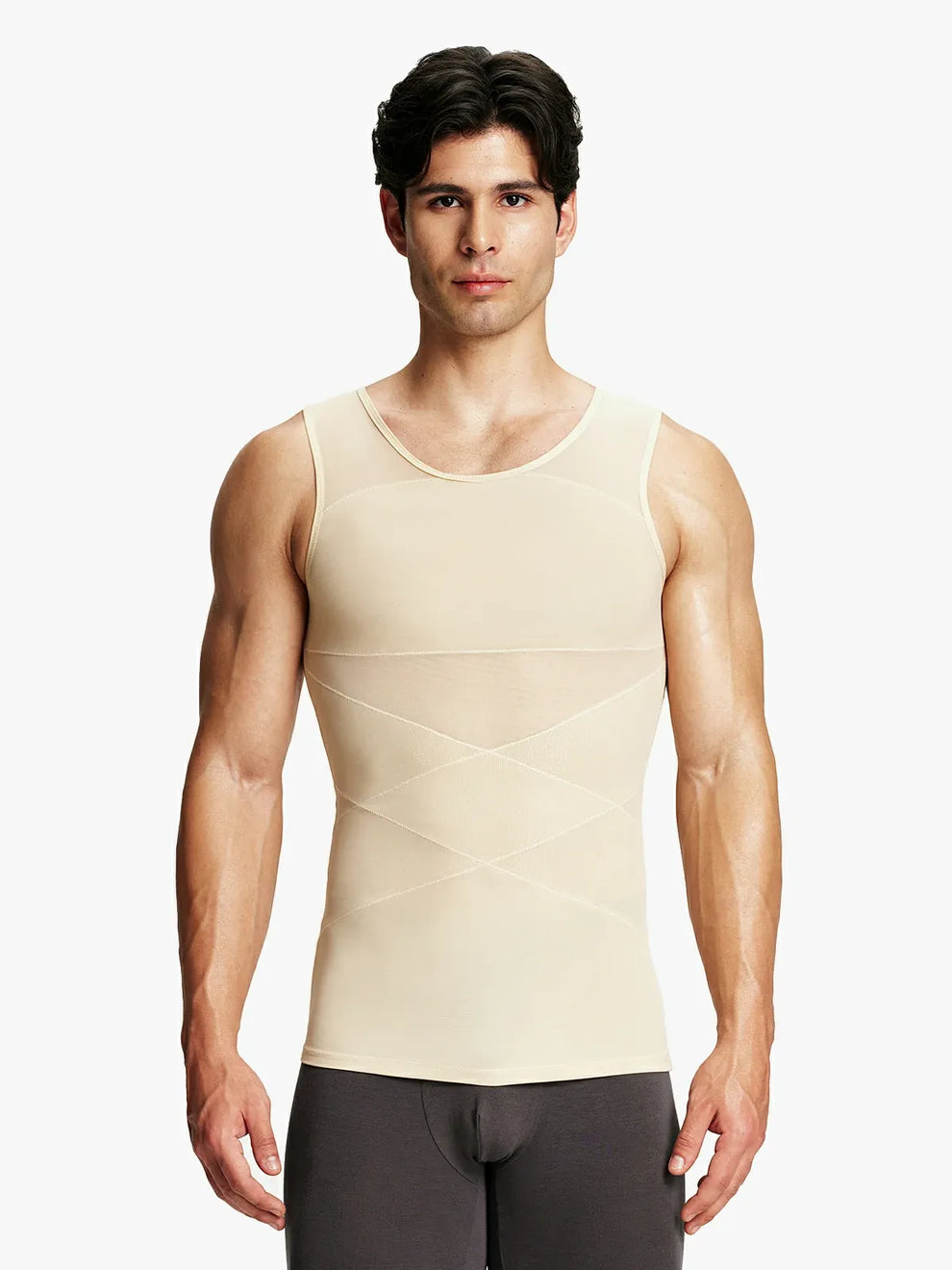 Office, dates, formal events — invisible smoothing under shirts |
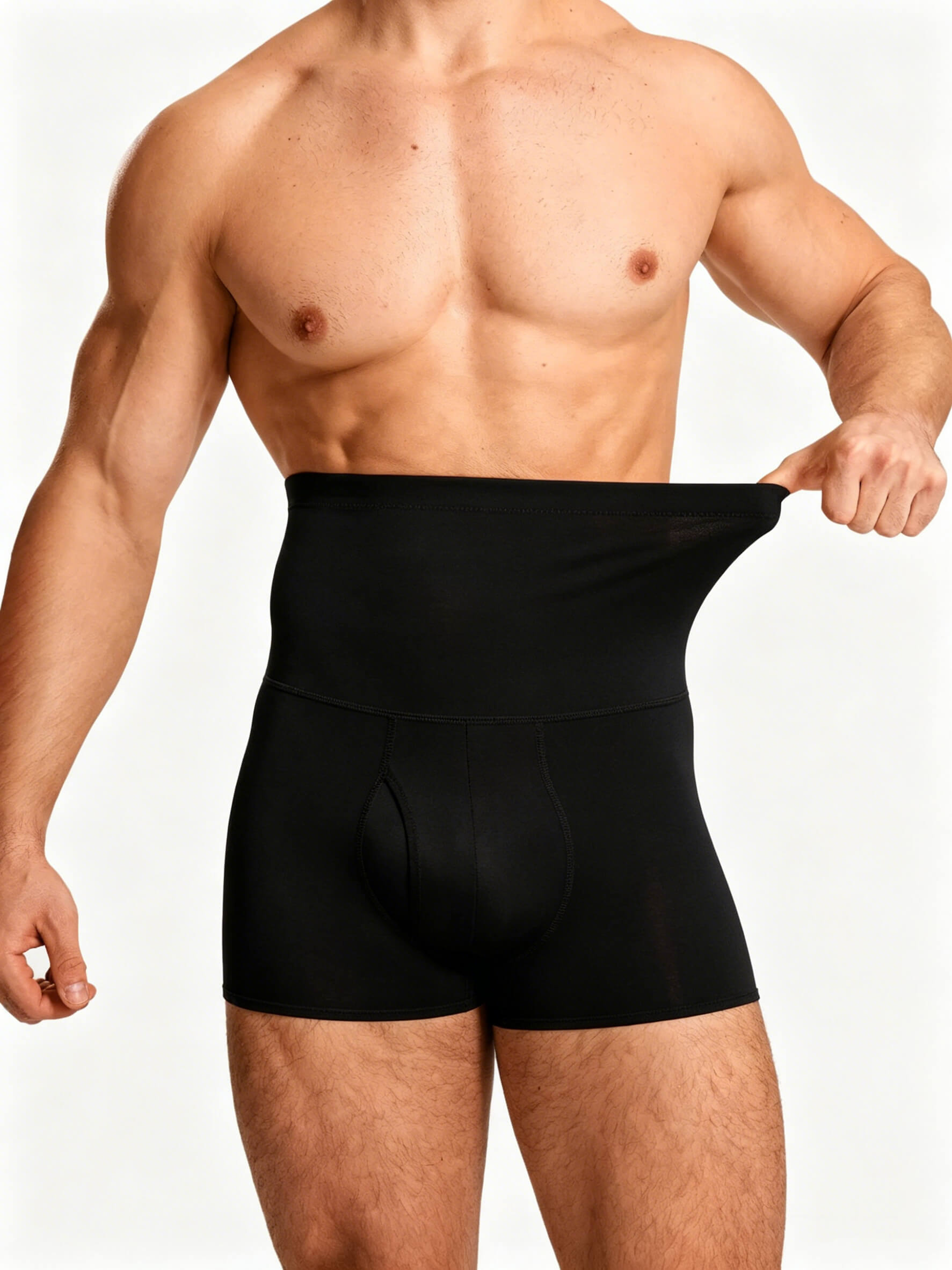 Desk work, suits, formal events — firm smoothing for love handles and loose skin |
| HOW IT WORKS | 5× Polymer Bones + 4-Point Lock — rigid core bracing that stays anchored through burpees and sprawls | 75/25 Nylon/Spandex open-knit mesh — flexible, breathable, invisible under any shirt | Grip-inner waistband + 40% spandex — firm compression that won't roll, invisible under trousers |
| WEAR IT FOR | Training sessions — 30–60 min | All-day wear — 8+ hours | All-day wear — 8+ hours at a desk or under a suit |
| WHY | 90/10 Poly/Spandex + 5 Polymer Bones. Four closure points brace your core during heavy lifts and rapid movement. | 75/25 Nylon/Spandex open-knit mesh. Light-Medium compression smooths your torso invisibly under everyday clothes. | 60/40 Nylon/Spandex + Grip-Inner Waistband. Firm compression smooths love handles and holds loose skin without rolling. |
| View Waist Trainer Corset → | View Mesh Tank → | View Shapewear Shorts → |
"I Thought a Waist Trainer Would Smooth My Belly Under a Dress Shirt — It Did Not."
"The most common confusion we see is guys buying a waist trainer for daily wear — then returning it because it is too bulky under clothes. A waist trainer is built for the gym. It braces your core with polymer bones and multi-lock closures. That rigidity is perfect for squats and deadlifts — but it shows under a dress shirt. For daily smoothing, a compression shirt is designed specifically for that job. It uses elastic fabric to create an even silhouette that disappears under any shirt. The two are not interchangeable — and that is okay. They were never meant to be."
What Men Are Saying About Waist Trainers, Compression Shirts, and Shapewear Shorts
Real feedback from men who use different compression wear for different purposes.
← Swipe to see all reviews →


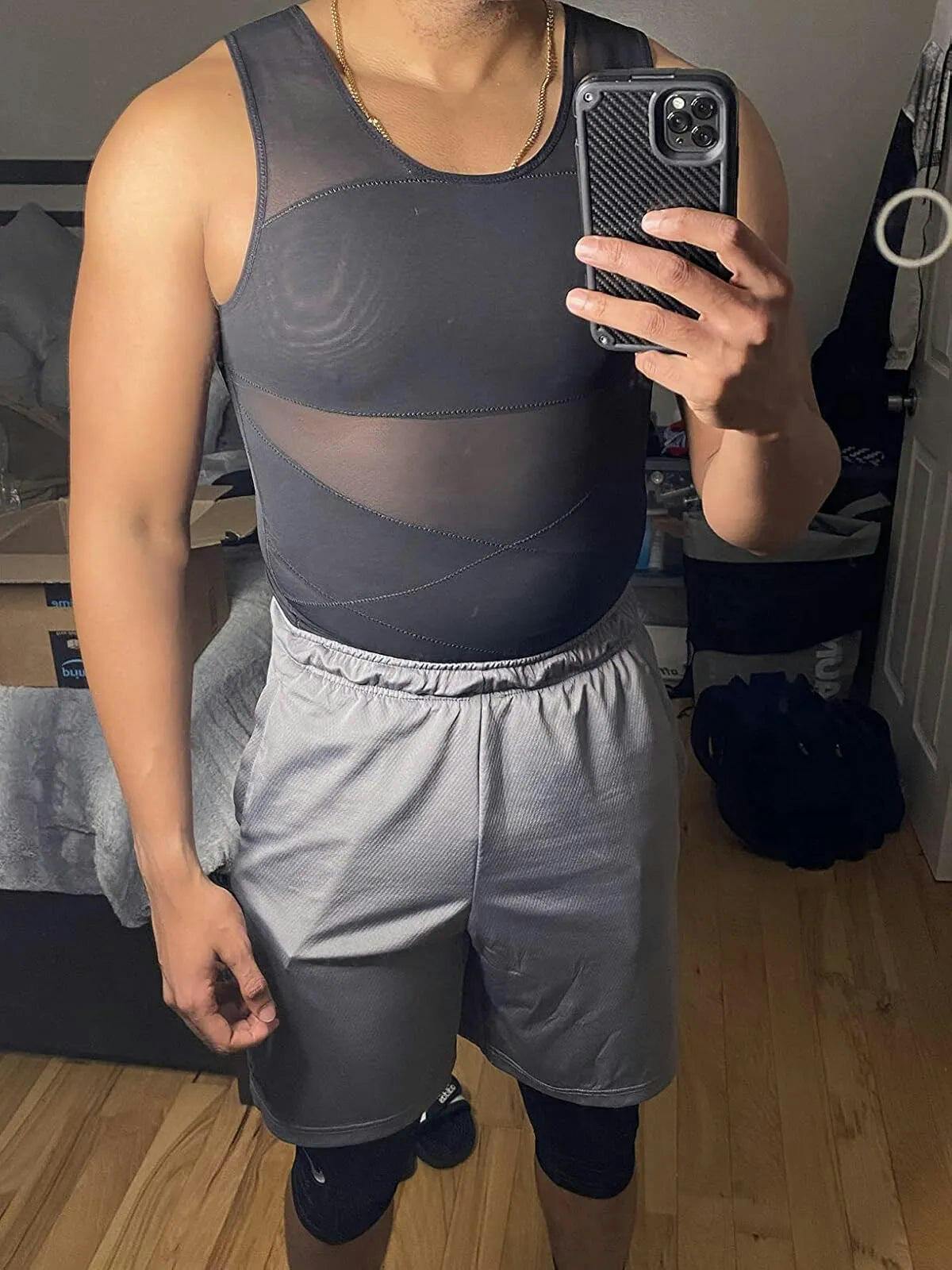
Common Mistakes When Choosing Compression Wear
Waist trainers are built with polymer bones and rigid closures for training — they are not designed for invisible daily wear. For a smooth silhouette under clothes, a compression shirt is the right tool.
Compression shirts smooth your torso but do not brace your core during heavy lifts. For squats, deadlifts, and HIIT, a waist trainer provides the rigid support you need.
Standard shapewear without a grip-inner waistband slides down during desk work. Firm compression shorts with a grip-inner waistband lock in place and stay smooth under trousers.
If you already know which type you need and want help choosing a specific model, see our Waist Trainer Selection Guide. If you want to explore all compression options, see our Men's Shapewear Hub.
WaistSculpt designs men's compression wear — including waist trainers for core support during workouts, compression shirts for daily smoothing, and shapewear shorts for lower-body firming. Independently reviewed.
Our Top Picks for Core Support, Daily Smoothing, and Lower-Body Firming
← Swipe to see all products →
Men's Neoprene Waist Trainer Corset
90% Polyester / 10% Spandex with 5 polymer bones. Hooks, zipper, and dual belts — four closure points lock your fit for HIIT and circuit training.
View Waist Trainer Corset →
Men's Mesh Compression Tank Top
75% Nylon / 25% Spandex open-knit mesh. Light-medium compression — breathable, flexible, invisible under any shirt. Deep U-Neck, no hardware.
View Mesh Tank →
Men's High Waist Tummy Control Shapewear Shorts
60% Nylon / 40% Spandex with grip-inner waistband. Firm compression — smooths love handles and holds loose skin all day under suits.
View Shapewear Shorts →See How Different Compression Wear Works for Different Goals
Demonstration images showing garment effect during wear. Compression garments provide visual smoothing only — they do not burn fat or cause permanent body changes. Individual results vary depending on body composition, skin elasticity, and garment sizing. Same person, same lighting, same angles.

Waist Trainer — Side View · Core Support for Training
Result: Targeted core bracing during workouts — polymer bones and multi-lock closure

Compression Shirt — Side View · Full-Torso Smoothing
Result: Invisible full-body smoothing under everyday clothes — elastic fabric, no hardware
Your Waist Trainer vs Compression Shirt Questions Answered
The most common questions about choosing between these types of compression wear.
The Core Difference
Q: What is the difference between a waist trainer and a compression shirt?
Q: Can I wear a waist trainer instead of a compression shirt?
Q: Can I wear a compression shirt during workouts instead of a waist trainer?
Making Your Decision
Q: Should I buy both a waist trainer and a compression shirt?
Q: When should I choose shapewear shorts instead?
Safety and Next Steps
Q: Is a waist trainer safer than a compression shirt?
Q: How is this different from a general shapewear guide?
Unsure about your size? Check our Size Guide before ordering. Most returns come from sizing down — order your regular shirt size.
What Waist Trainers and Compression Shirts Can — and Cannot — Do
They Can Help With
- Bracing your core during heavy lifts
- Smoothing your torso invisibly under everyday clothes
- Firming your lower torso under suits and formal wear
- Providing all-day comfort with breathable designs
They Cannot
- Permanently tighten or restore skin elasticity
- Replace surgical or medical skin removal procedures
- Burn fat or reduce body weight while worn
- Work identically for all body types and conditions
Why We Wrote This
"I thought a waist trainer would smooth my belly under a dress shirt." We hear this every week — and it is always the same confusion. Waist trainers and compression shirts look similar but serve completely different purposes. This guide exists so you understand the difference — and choose the right tool for your goal. Visual smoothing only. Not a medical device.
Ready to Choose the Right Tool?
Free shipping. Free returns. Core support, full-body smoothing, or lower-body firming.
Explore Compression Wear

Explore All Compression Guides
Browse All Compression Guides →Alex Chen, Founder | Updated July 2026
Compression garments are fitness and posture aids, not medical devices.
Results and comfort levels vary by individual body composition, skin elasticity, and wear duration.