
After Weight Loss, Why Do My Clothes Still Feel Wrong?
After Weight Loss, Why Do My Clothes Still Feel Wrong?
Nobody prepares you for this part. You hit the goal weight — and your shirts still do not fit the way you expected. Here is why.
Quick Answer
WaistSculpt customers report that after significant weight loss, loose skin changes how fabric hangs, folds, and moves across the body. Clothing brands design for firm bodies, not post-weight-loss body composition. Compression wear creates a smooth, stable surface that helps clothes fit the way they should. Visual smoothing only. Not a medical device. Compression wear is a type of men's shapewear designed for body smoothing under everyday clothing.
Why does fabric behave differently on my body now?
Loose skin shifts when you sit, folds when you bend, and creates uneven tension underneath fabric. Most clothing is not designed around this.
Can compression wear help?
Yes — a compression base layer creates a smooth surface. Fabric drapes evenly. Your existing clothes fit closer to how you expected.
Where should I go from here?
Understand the full picture below. Ready for solutions? See our guides on compression for loose skin.
🔍 Want the full picture? Loose skin under clothes — why it shows and how to fix it →
Visual smoothing only. Not a medical device. For persistent body concerns, consult a physician.
Why Your Clothes Feel Different After Weight Loss
Two paths forward — choose yours below.
Understand Why, or Find a Solution?
Choose your next step based on what you need right now.
| YOUR NEED | I WANT SOLUTIONS | I WANT TO UNDERSTAND MORE |
|---|---|---|
| BEST FOR | Ready to fix how your clothes fit — see compression options that work | Still processing — want the full picture of loose skin and clothing |
| GO TO | How to Hide Excess Skin Under Clothes → | Loose Skin Under Clothes: Why It Shows → |
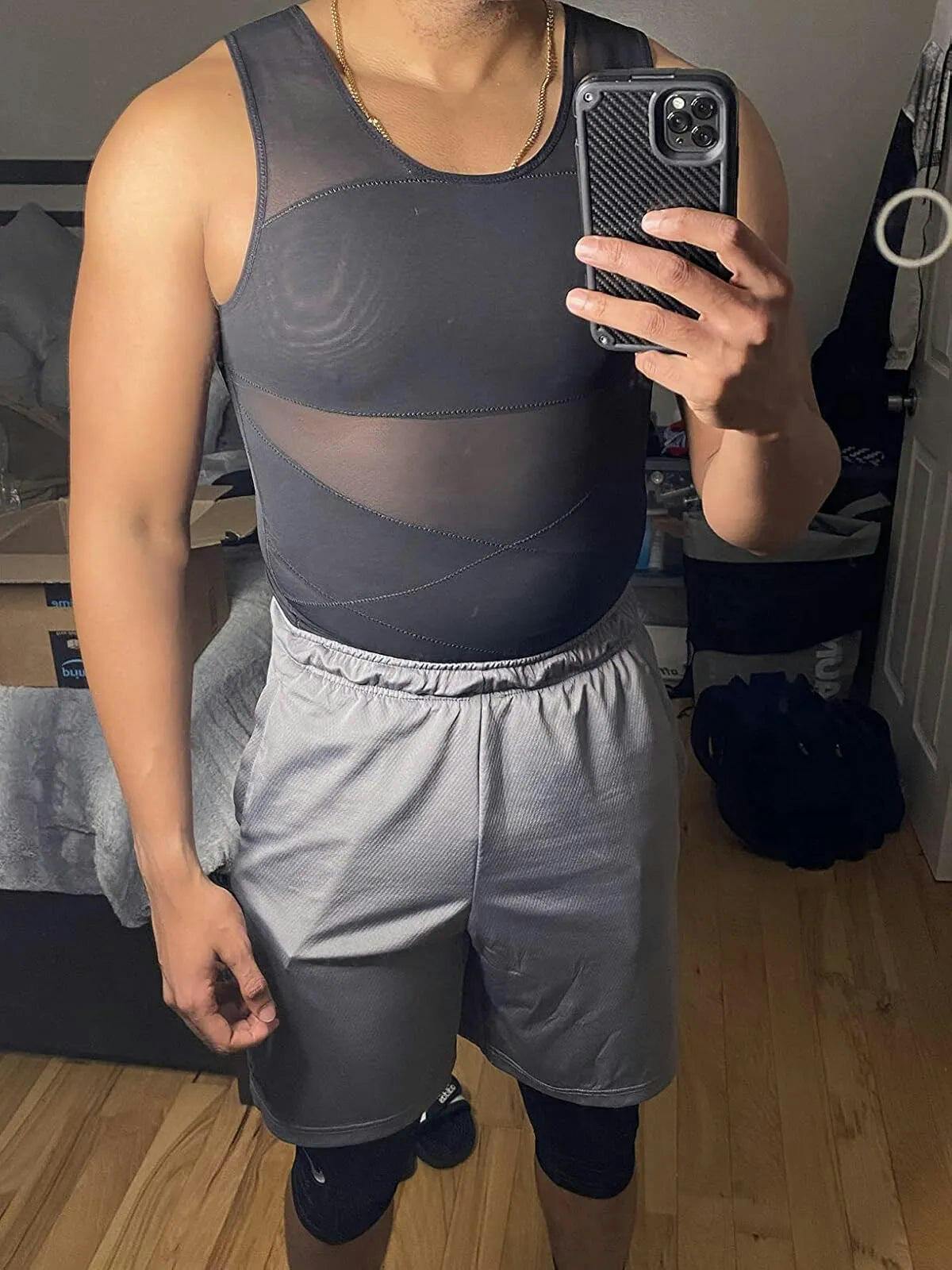
"I'm 6'2". I Lost 120 Pounds. After All That Work, I Still Couldn't Wear Fitted Shirts."
"The loose skin made me look like I was wearing a swimming ring under my clothes. This shirt did not change my body. It just made my clothes fit normally again. That was all I wanted." People rarely want maximum compression. What they want is balance — enough support to smooth movement, enough breathability to wear all day, and enough comfort to stop constantly thinking about the garment itself. The right compression is the one you forget you are wearing.
What Men Say About Clothes After Weight Loss
Real feedback from men who lost weight and found a way to make their clothes fit again.
← Swipe to see all reviews →

Common Mistakes After Weight Loss
Excessive compression creates rolling, bunching, overheating, and constant adjustment. A compression garment only works if you can comfortably wear it for hours without fighting it. Start with your normal size.
A smaller shirt over loose skin creates more visible tension, not less. Wear your correct size with a compression base layer. The combination works better than sizing down either piece.
Compression creates temporary smoothing while worn. It does not change your body after removal. Think of it as a clothing tool — not a body transformation tool.
If you are looking for a comprehensive guide to hiding loose skin under clothes, start with our How to Hide Excess Skin Under Clothes guide. If you want to understand the full picture of why loose skin shows under fabric, see our Loose Skin Under Clothes guide.
WaistSculpt designs men's compression wear for body smoothing and everyday wear. Independently reviewed.
Compression That Helps Clothes Fit Again
← Swipe to see all products →
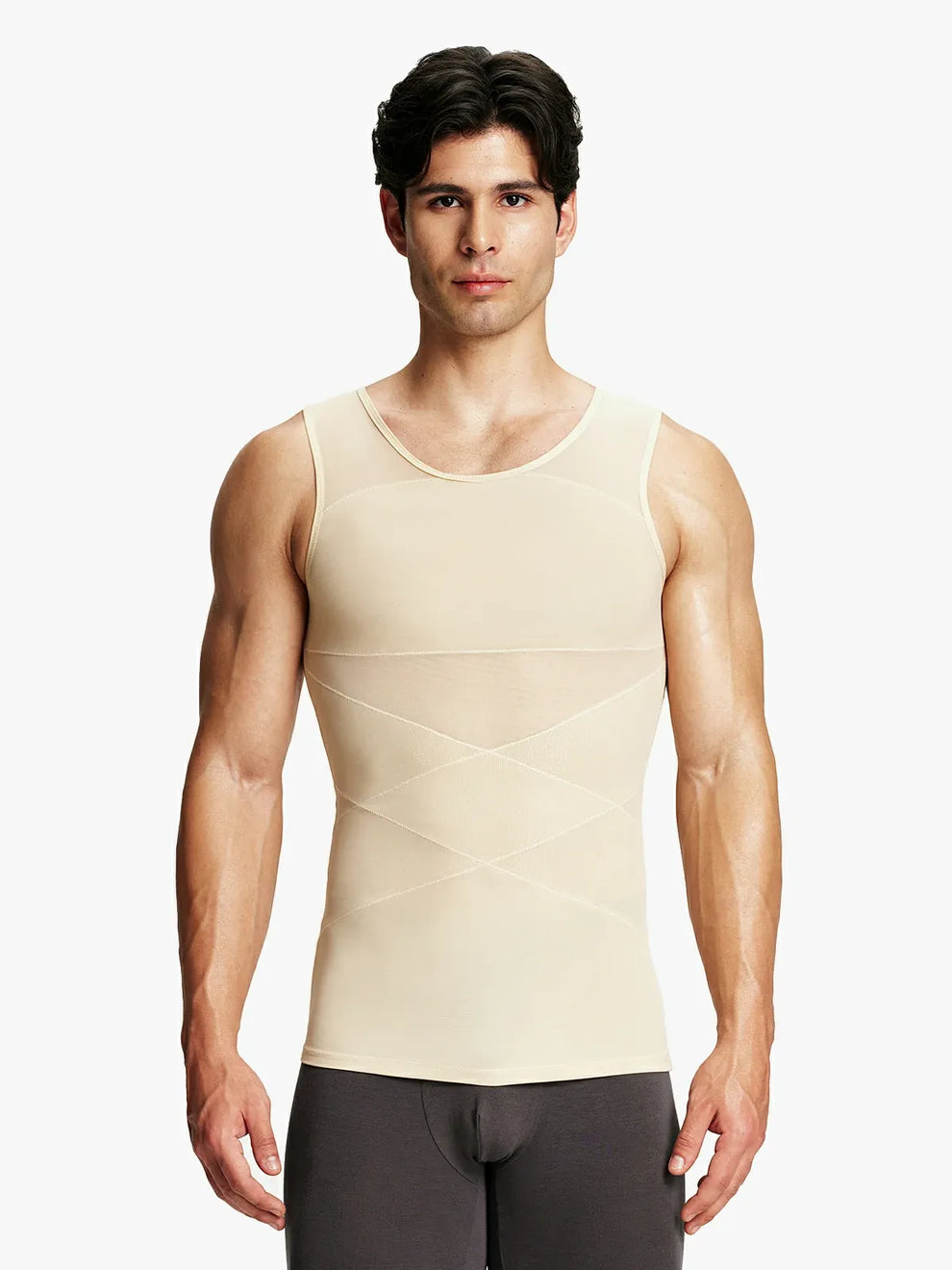
Men's Mesh Compression Tank Top
75% Nylon / 25% Spandex open-knit mesh. Light-medium compression — breathable and flexible. Best for daily wear, hot climates, and moderate loose skin smoothing without overheating.
View Mesh Tank →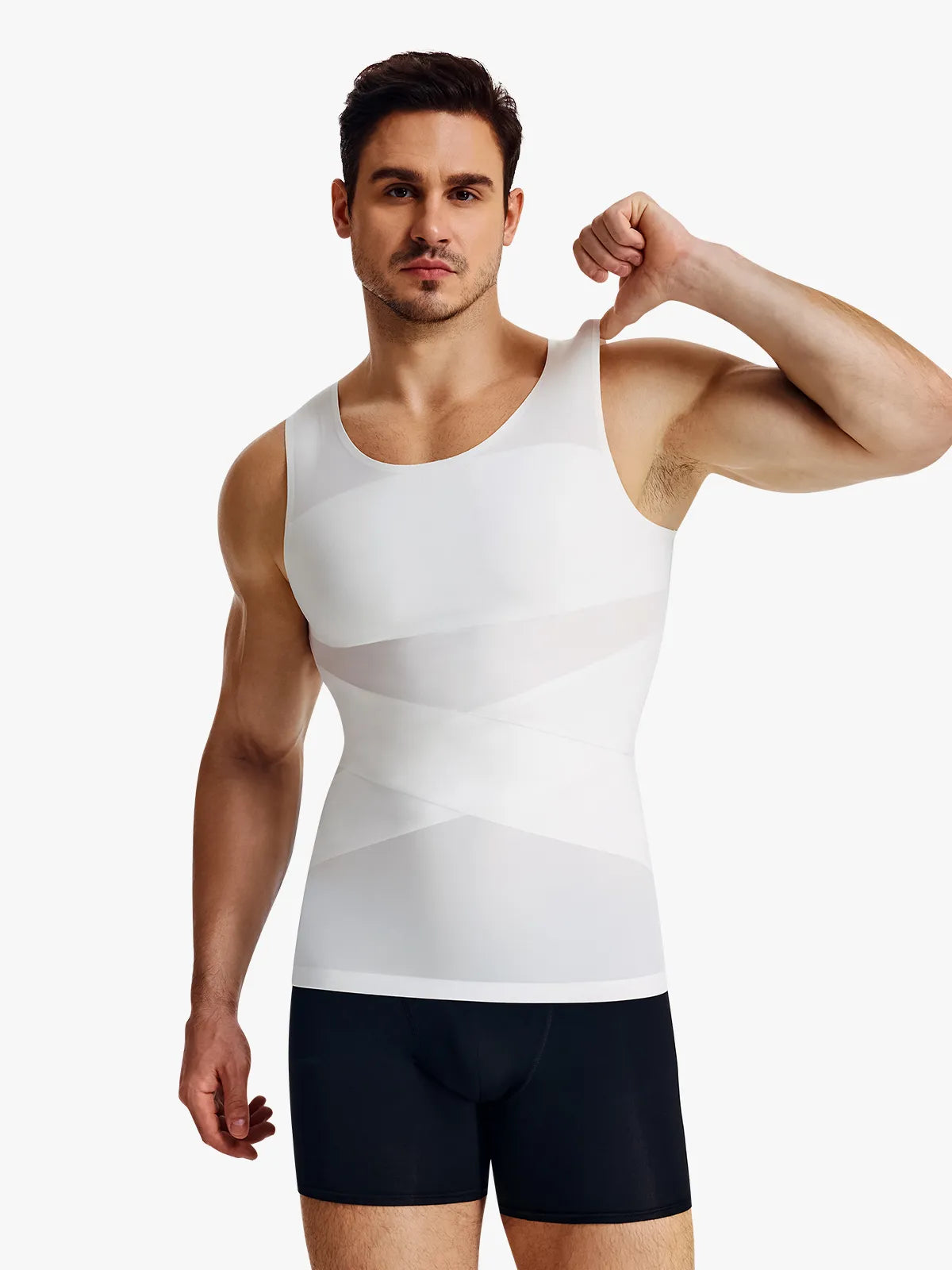
Men's Seamless Breathable Tummy Control Tank Top
49% Nylon / 51% Spandex 4-way stretch seamless knit. Light compression — zero seams, zero hardware, zero visible edges. Best for maximum invisibility under thin fitted t-shirts.
View Seamless Tank →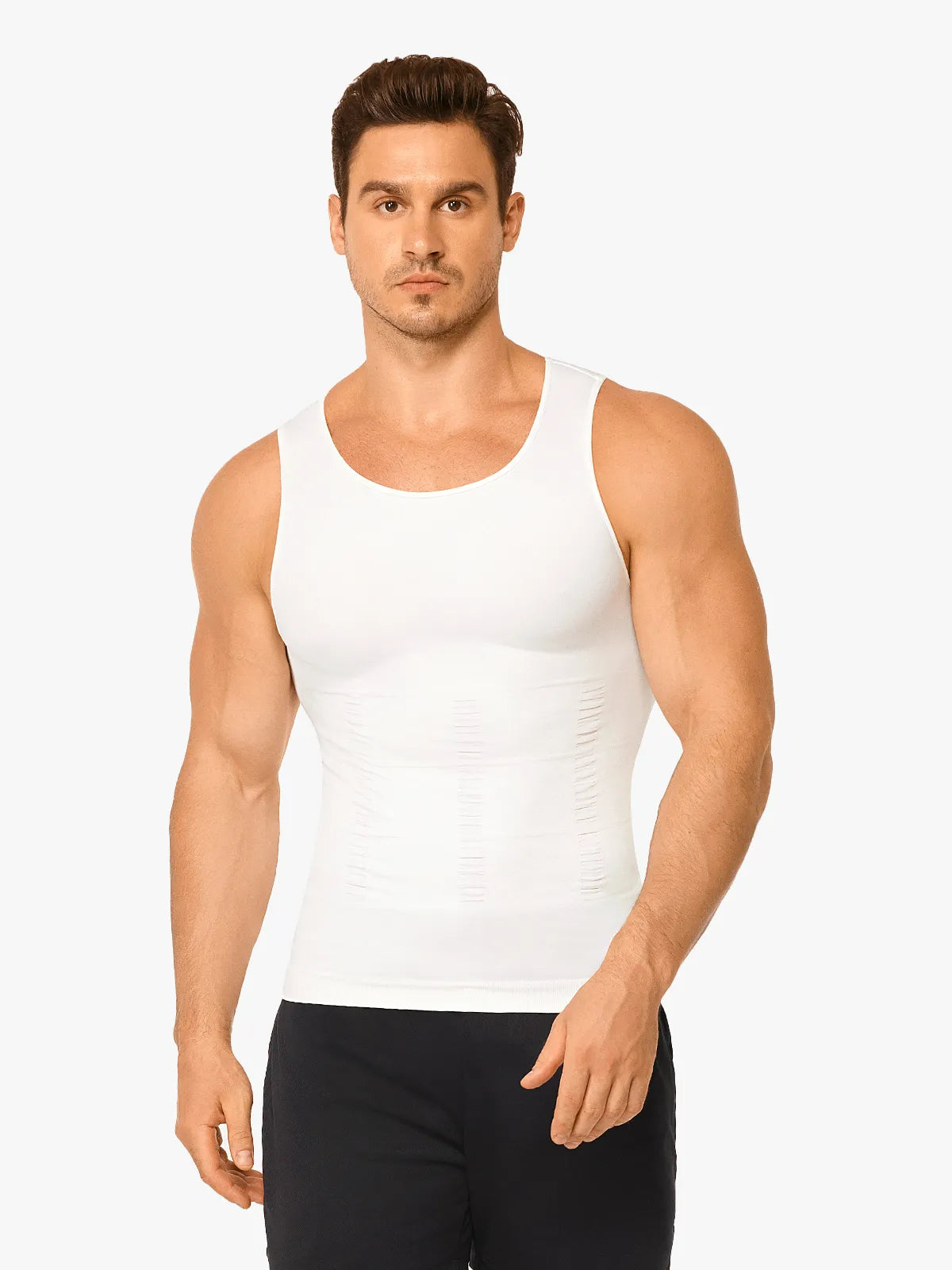
Men's 360° Compression Body Shaper Vest
80% Nylon / 20% Spandex with wide shoulder straps. Light-medium 360° compression provides noticeable smoothing for the chest, belly, back, and sides from every angle.
View 360° Body Shaper Vest →See How Compression Changes the Way Clothes Fit
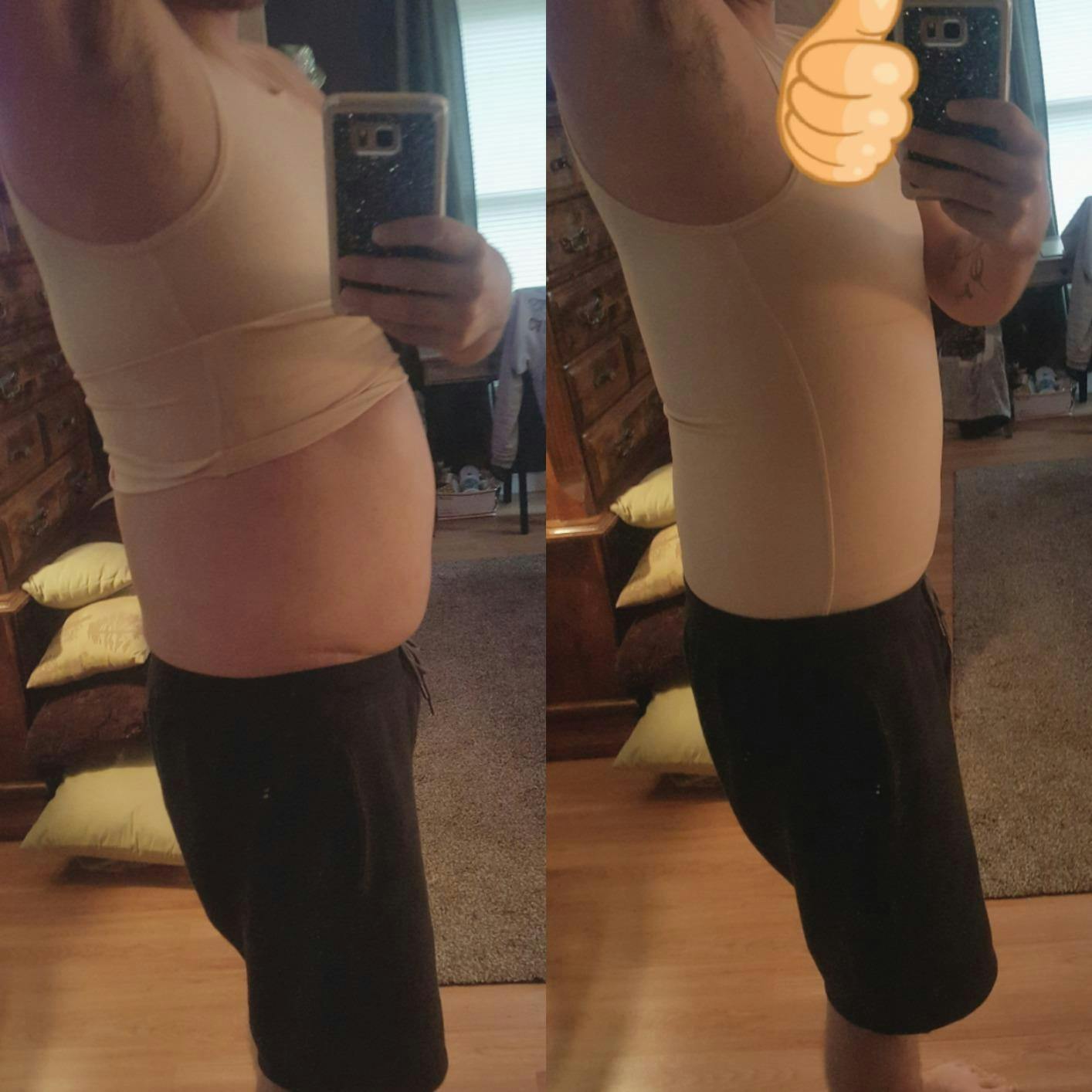
Demonstration images showing garment effect during wear. Individual results vary depending on body composition, skin elasticity, and garment sizing. Same person, same lighting, same angles.

Before & After — Side View
Result: Compression creates a smooth contour — fabric drapes evenly instead of catching

Before & After — Dressed Comparison
Result: Smoother silhouette under clothes — your shirts fit the way you expected
Your Questions About Clothes After Weight Loss
From fabric physics to compression — everything about making your clothes fit again.
Why Clothes Feel Wrong
Q: Why do my clothes still feel wrong after losing weight?
Q: Is it loose skin or fat that makes clothes fit badly after weight loss?
Q: Is it normal to feel frustrated about clothes after weight loss?
What Helps
Q: Can compression wear help my clothes fit better after weight loss?
Q: What type of compression is best for post-weight-loss loose skin?
Q: Should I buy smaller clothes after losing weight?
Q: How long does it take for clothes to fit normally after weight loss?
Unsure about your size? Check our Size Guide before ordering. Most returns come from sizing down — order your regular shirt size.
What Compression Can — and Cannot — Do
Compression Can Help With
- Creating a smooth base layer so fabric drapes evenly
- Reducing visible movement under clothing while worn
- Making your existing clothes fit closer to how you expected
- Providing comfortable, breathable all-day wear
Compression Cannot
- Permanently tighten or restore skin elasticity
- Replace surgical or medical skin removal procedures
- Burn fat or reduce body weight while worn
- Work identically for all body types and skin conditions
Why We Wrote This
Loose skin after major weight loss is not evidence that you failed. In many cases, it is evidence that you succeeded at something extraordinarily difficult. Compression wear is not magic. It is simply one practical tool that can make daily clothing feel easier, smoother, and less mentally exhausting. Visual smoothing only. Not a medical device.
You Deserve Clothes That Work With Your Body
Free shipping. Free returns. Compression built for real life after weight loss.
Explore Compression Wear

Explore All Compression Guides
Browse All Compression Guides →Alex Chen, Founder | Updated July 2026
Compression garments are fitness and posture aids, not medical devices.
Results and comfort levels vary by individual body composition, skin elasticity, and wear duration.