
Best Compression Gear for Working Out and Gym with Loose Skin
Best Compression Gear for Working Out and Gym with Loose Skin
Loose skin should not hold you back at the gym — the right compression gear keeps everything locked in.
Quick Answer
A breathable mesh compression tank is the best gear for working out with loose skin — it holds everything in place without overheating, stops skin bounce during running and lifting, and stays put through every rep.
Why wear compression at the gym?
Loose skin momentum causes bounce and friction. Compression applies even pressure to stop both.
Does it breathe during intense workouts?
75/25 open-knit mesh wicks sweat and allows airflow — designed for high-output training.
Visual smoothing only. Not a medical device. For persistent body concerns, consult a physician.
Why Compression Gear Solves the Gym Problem
Loose skin gains momentum during running, jumping, and plyometrics. A compression tank applies even pressure across your torso, eliminating the movement that causes bounce and the friction that follows.
Intense workouts generate heat. 75/25 nylon-spandex open-knit mesh wicks moisture away from your skin while allowing continuous airflow — so you stay cool without sacrificing hold.
A racerback cut and extended hem keep the tank in place through squats, deadlifts, and overhead presses. No riding up, no readjusting between sets.
A mesh compression tank prioritizes breathability and flexibility — ideal for cardio, HIIT, and moderate lifting. A firm undershirt provides stronger hold for heavy lifts but trades some airflow. Choose based on your training intensity.
Which Compression Type Fits Your Workout
Compare the three main compression types for cardio, heavy lifting, and maximum stability.
← Swipe to compare all options →
| YOUR WORKOUT |
BEST FOR GYM MESH TANK |
HEAVY LIFTING FIRM UNDERSHIRT |
MAXIMUM HOLD BODY SHAPER VEST |
|---|---|---|---|
| BEST FOR |
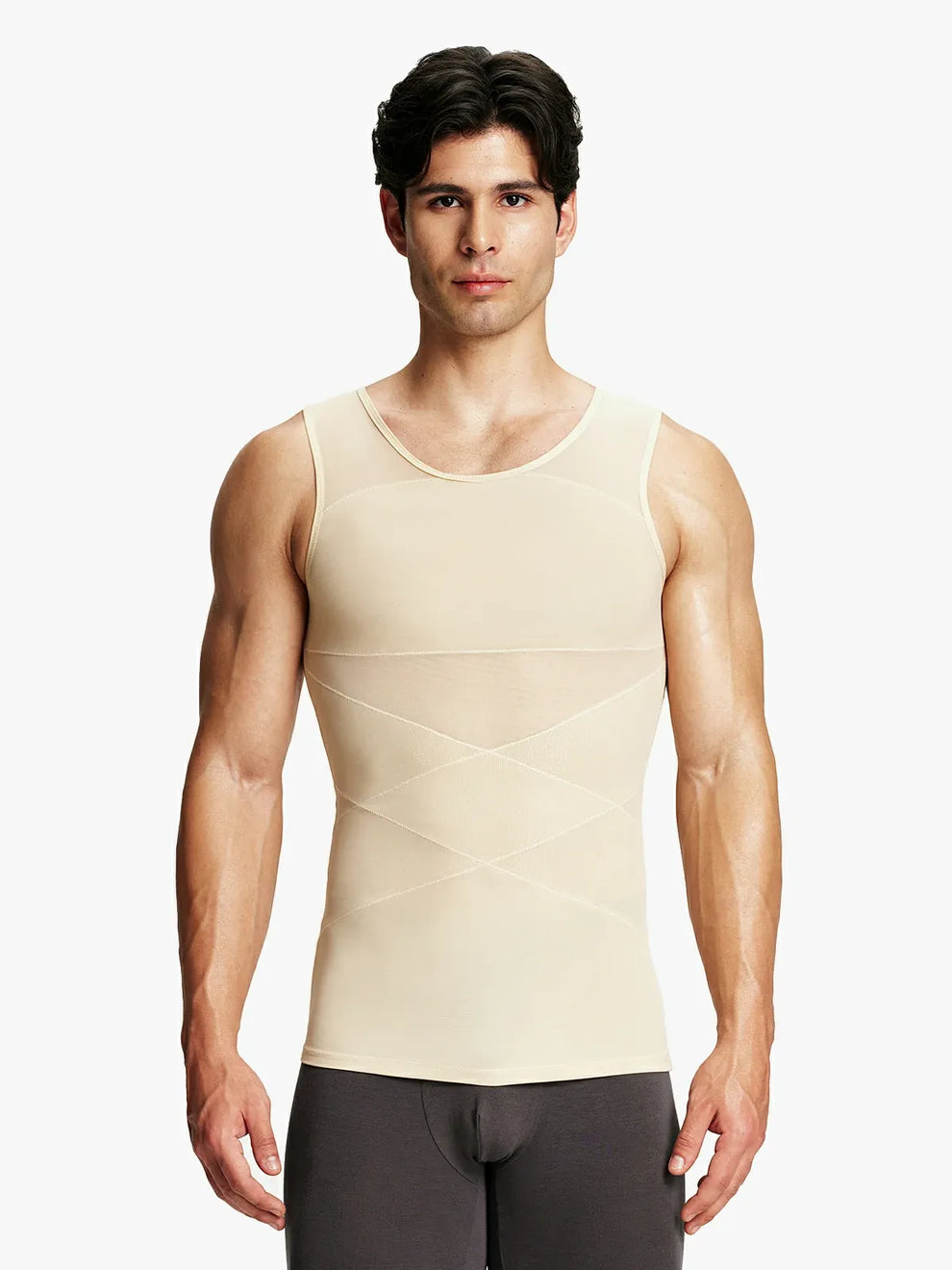 Running, HIIT, cardio, moderate lifting |
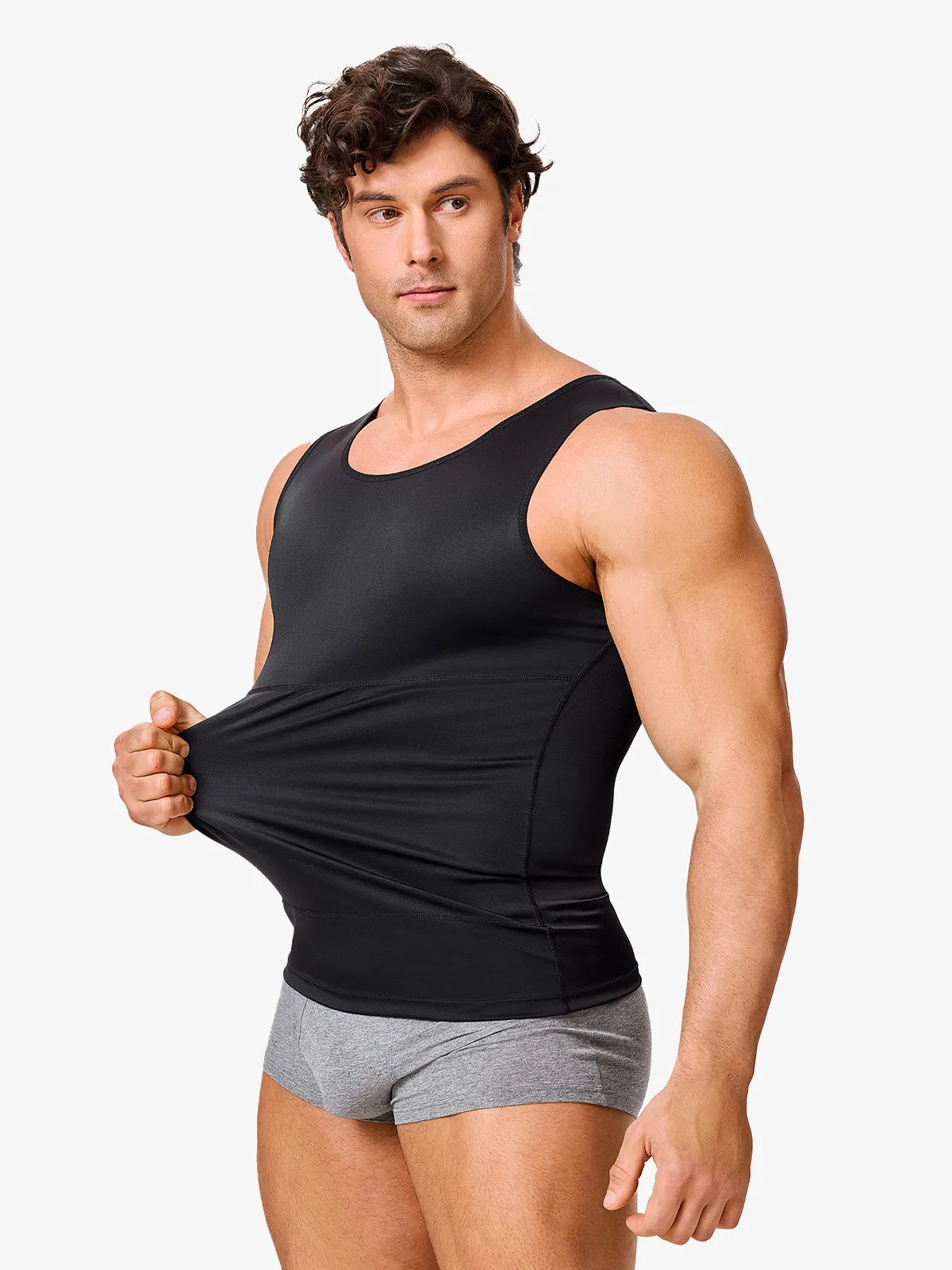 Heavy lifting, CrossFit, powerlifting |
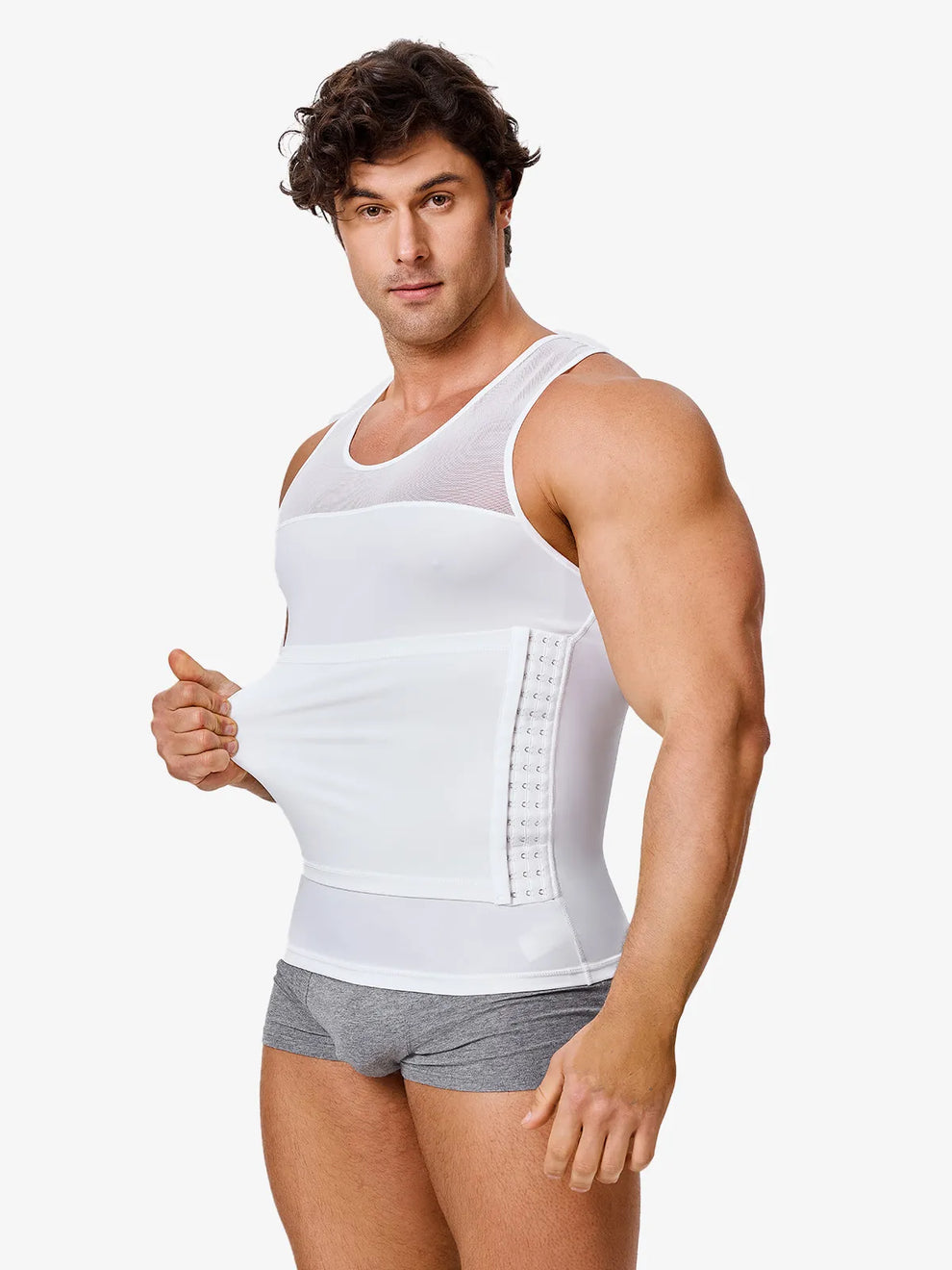 Long sessions, max stability, adjustable hold |
| COMPRESSION LEVEL | ★★☆☆☆ Light-Medium | ★★★☆☆ Medium-Firm | ★★★★☆ Firm (Built-In Belt) |
| WHY | 75% Nylon / 25% Spandex open-knit mesh — best balance of hold and breathability for high-output training | 70% Nylon / 30% Spandex double-layer — stronger compression for heavy lifts without hardware | 60% Nylon / 40% Spandex Mesh + adjustable belt — maximum customizable hold for long sessions |
What Men Tell Us About Compression at the Gym
"During running, loose skin bouncing can actually hurt. Compression stops that physical discomfort — not just the appearance."
What to Avoid at the Gym
Cotton absorbs sweat, becomes heavy, and does nothing to stop skin bounce. A mesh compression tank worn solo or as a base layer solves both problems.
Garments designed for static smoothing trap heat and restrict movement. Choose gym-specific compression with open-knit mesh.
Gym compression prioritizes breathability over maximum smoothing. For all-day wear, explore light-medium compression options designed for extended use.
If your primary need is formalwear smoothing or post-surgical recovery, gym compression is not the right tool. Explore our dress shirt and post-op guides for those specific scenarios.
WaistSculpt designs men's shapewear & compression for body smoothing and everyday wear. Independently reviewed.
Start With Gym-Ready Compression
← Swipe to see all products →
Men's Mesh Compression Tank Top
75% Nylon / 25% Spandex open-knit mesh. Light-medium compression — breathable and flexible. The go-to choice for cardio, HIIT, and moderate lifting.
View Mesh Tank →
Men's Firm Compression Undershirt
70% Nylon / 30% Spandex double-layer construction. Medium-firm compression — stronger hold for heavy lifts, CrossFit, and powerlifting. No hardware means no friction.
View Firm Undershirt →
Men's Compression Body Shaper Vest With Waist Trimmer Belt
60% Nylon / 40% Spandex mesh with built-in adjustable belt. Firm compression with customizable pressure — ideal for long training sessions and max stability.
View Body Shaper Vest →Frequently Asked Questions About Compression at the Gym
Quick answers to the most common questions about wearing compression gear during workouts.
Performance and Comfort
Q: Does compression gear stop loose skin from bouncing during exercise?
Q: Will I overheat wearing compression at the gym?
Q: Does a compression tank roll up during squats or deadlifts?
Gear and Maintenance
Q: Can I wear compression gear as my only gym top?
Q: Does sweat damage compression fabric?
Q: What compression level is best for gym workouts?
Unsure about your size? Check our Size Guide before ordering. Most returns come from sizing down — order your regular shirt size.
Why We Wrote This
The gym is where loose skin is most exposed — skin bounce, sweat, and constant movement. Most compression guides ignore the physical demands of working out. This guide fills that gap.
Train Harder. Stay Locked In.
Free shipping. Free returns. Compression gear that stops the bounce, wicks the sweat, and stays in place — rep after rep.
Explore Compression WearDiscreet packaging. Nobody knows what's inside.

Continue Your Journey
Compression at the gym is just the start. Explore how it fits into your full routine.

🦺 Best Compression Wear for Loose Skin After Weight Loss
Not sure which level? See the full comparison.

🌡️ Best Compression for Loose Skin in Hot Weather
Working out in summer? See the hot weather guide.

👕 How to Smooth Loose Belly Skin Under Everyday Clothing
Already have gym compression? Learn daily layering.
What Compression Can — and Cannot — Do
Compression Can Help With
- Stopping loose skin bounce during high-impact exercise
- Wicking sweat and maintaining airflow during intense workouts
- Providing muscle support and reducing fatigue during long sessions
- Staying in place through full range of motion without readjustment
Compression Cannot
- Permanently tighten or restore skin elasticity
- Replace surgical or medical skin removal procedures
- Burn fat or reduce body weight while worn
- Work identically for all body types and skin conditions
Explore All Compression Guides
Browse the Loose Skin Smoothing Hub →Alex Chen, Founder | Updated June 2026
Compression garments are fitness and posture aids, not medical devices.
Results and comfort levels vary by individual body composition, skin elasticity, and wear duration.