
Can Compression Wear Help with Posture?
Can Compression Wear Help with Posture?
How proprioceptive feedback turns a compression undershirt into a gentle, all-day posture reminder.
Quick Answer
A firm compression undershirt encourages better posture through proprioceptive feedback — gentle, continuous pressure across your torso and shoulders that reminds you to sit up straighter without forcing your spine into position. It is not a mechanical brace. It is a sensory reminder. Visual smoothing only. Not a medical device. Compression shirts are a type of men's shapewear designed for body smoothing and postural awareness under everyday clothing.
How does it actually work?
Compression creates a sensory signal across your back and shoulders. When you slouch, that pressure shifts — your brain notices, and you adjust.
Can it replace an ergonomic chair?
No. Compression is a complementary tool — it reminds you to sit upright, but it cannot fix a poorly adjusted workstation.
Visual smoothing only. Not a medical device. For persistent body concerns, consult a physician.
Why Compression Wear Builds Better Posture Awareness
Find the best garment for your posture goals below.
Which Compression Type Delivers the Best Posture Feedback?
Compare the three best options for building all-day posture awareness.
← Swipe to compare all options →
| YOUR SITUATION |
POSTURE PICK ADJ HOOKS UNDERSHIRT |
STRUCTURED BODY SHAPER VEST |
BREATHABLE THIN MESH TANK |
|---|---|---|---|
| BEST FOR |
 Desk posture cue, formal events, all-day wear with maximum feedback |
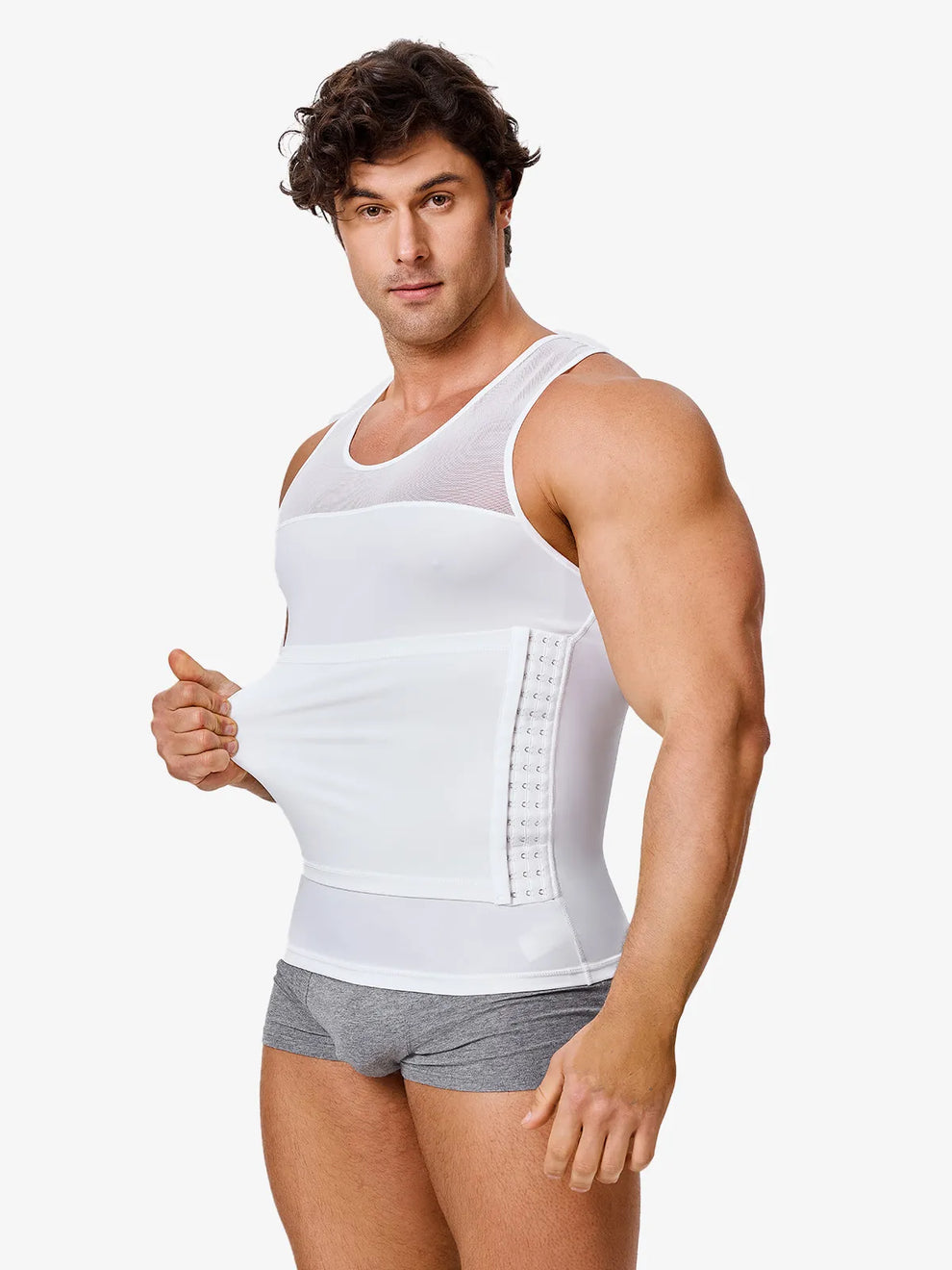 Big & tall frames, stubborn belly, posture feedback with tummy control |
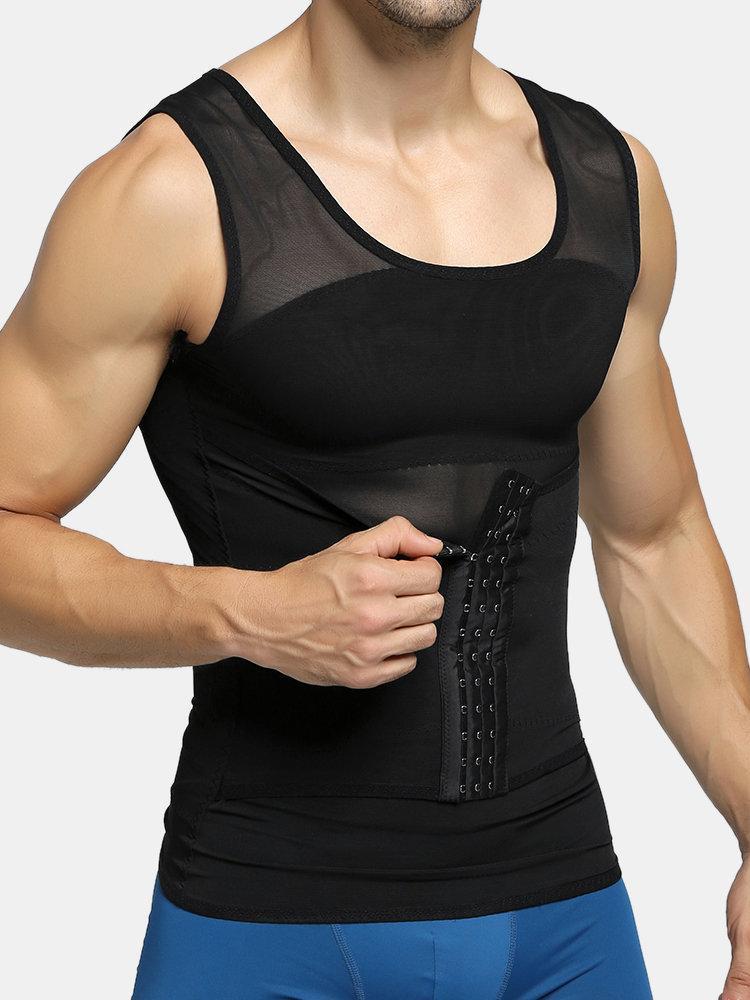 Hot weather, summer office, posture feedback without overheating |
| COMPRESSION LEVEL | ★★★★★ X-Firm | ★★★★☆ Firm | ★★★½☆ Firm |
| POSTURE FEEDBACK | Strongest signal — 2 steel bones create unmistakable spinal feedback, zipper + hooks lock everything in place | Dual signal — 2 steel bones + built-in adjustable belt provide posture cue with targeted tummy control | Firm 360° compression provides all-over posture awareness without steel bones — best for warm climates |
| WHY | 90/10 Polyester/Spandex with front zipper, 3-row hook belt, and 2 steel bones — built for posture cue and all-day desk wear. | 60/40 Nylon/Spandex mesh with 2 steel bones and built-in adjustable belt — firm compression with targeted tummy control and posture feedback. | 88/12 Nylon/Spandex breathable thin mesh — firm 360° compression that delivers strong hold without trapping heat. |
| View Adj Hooks Undershirt → | View Body Shaper Vest → | View Breathable Thin Mesh Tank → |
Our Top Picks for Posture Awareness
← Swipe to see all products →
Men's Tummy Control Shapewear Undershirt w/ Adj Hooks
90% Polyester / 10% Spandex with steel bones, front zipper, and adjustable hooks. X-Firm compression — strongest shaping available. Best for formal events, all-day desk posture cue, and maximum tummy control.
View Adj Hooks Undershirt →
Men's Compression Body Shaper Vest With Waist Trimmer Belt
60% Nylon / 40% Spandex mesh with built-in adjustable belt. Firm compression with full-torso coverage and 2 steel bones — targeted tummy control with added posture feedback. Best for formal events and big & tall frames.
View Body Shaper Vest →
Men's Breathable Thin Mesh Compression Tank
88% Nylon / 12% Spandex breathable thin mesh. Firm compression — delivers the strong hold of firm compression without trapping heat. Stays invisible under any shirt. Best for office, summer events, and warm climates where you need maximum smoothing and posture feedback without overheating.
View Breathable Thin Mesh Tank →See the Difference Compression Makes Under Clothing
Demonstration images showing garment effect during wear. Individual results vary depending on body composition, skin elasticity, and garment sizing. Same person, same lighting, same angles.

Before & After — Side View
Result: Cleaner silhouette and more upright stance

Before & After — Front View Dressed
Result: Improved clothing drape and posture under a dress shirt
Real Reviews from Real Customers
What guys actually say after trying WaistSculpt compression for daily posture support.
← Swipe to see all reviews →
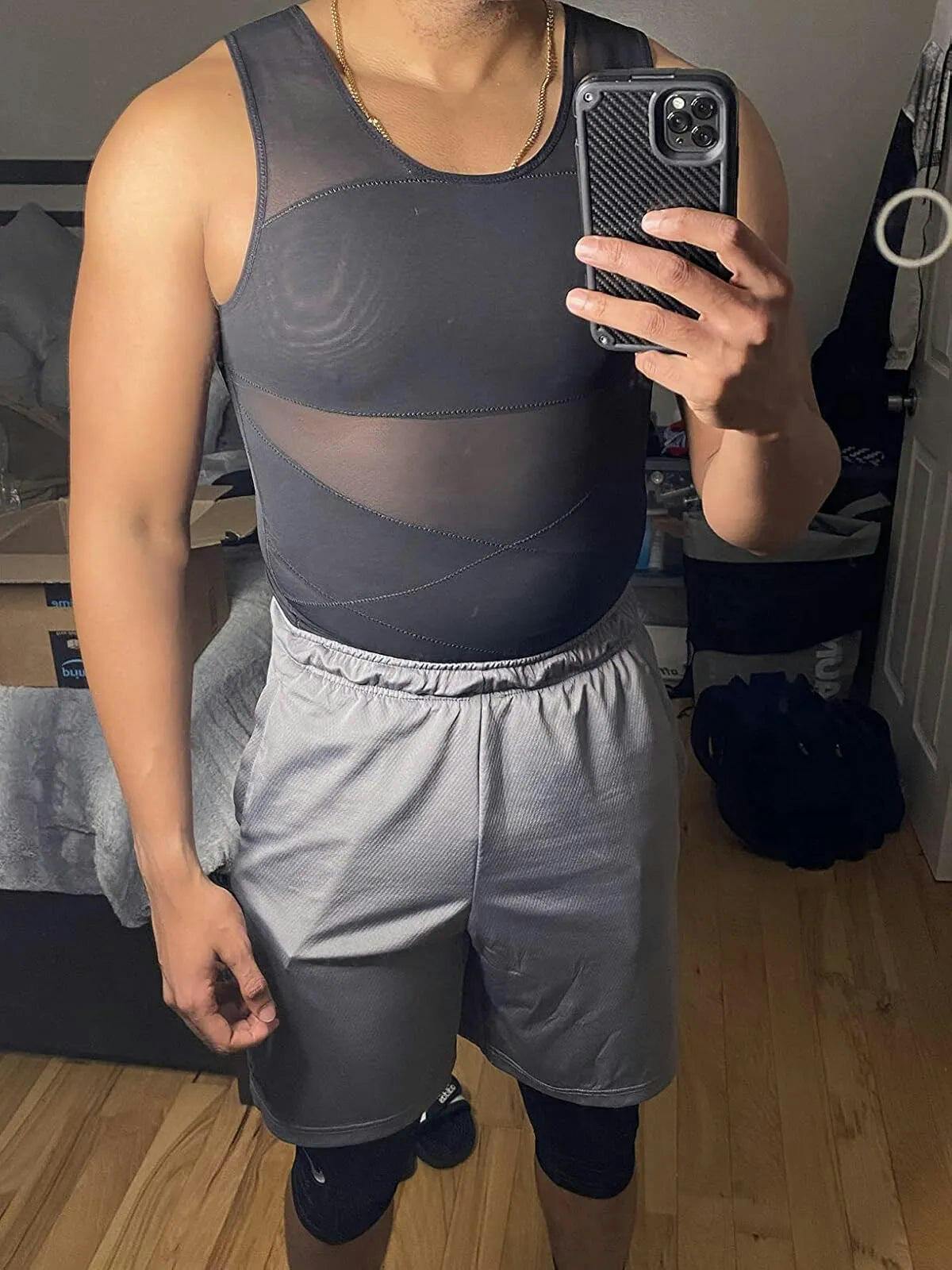
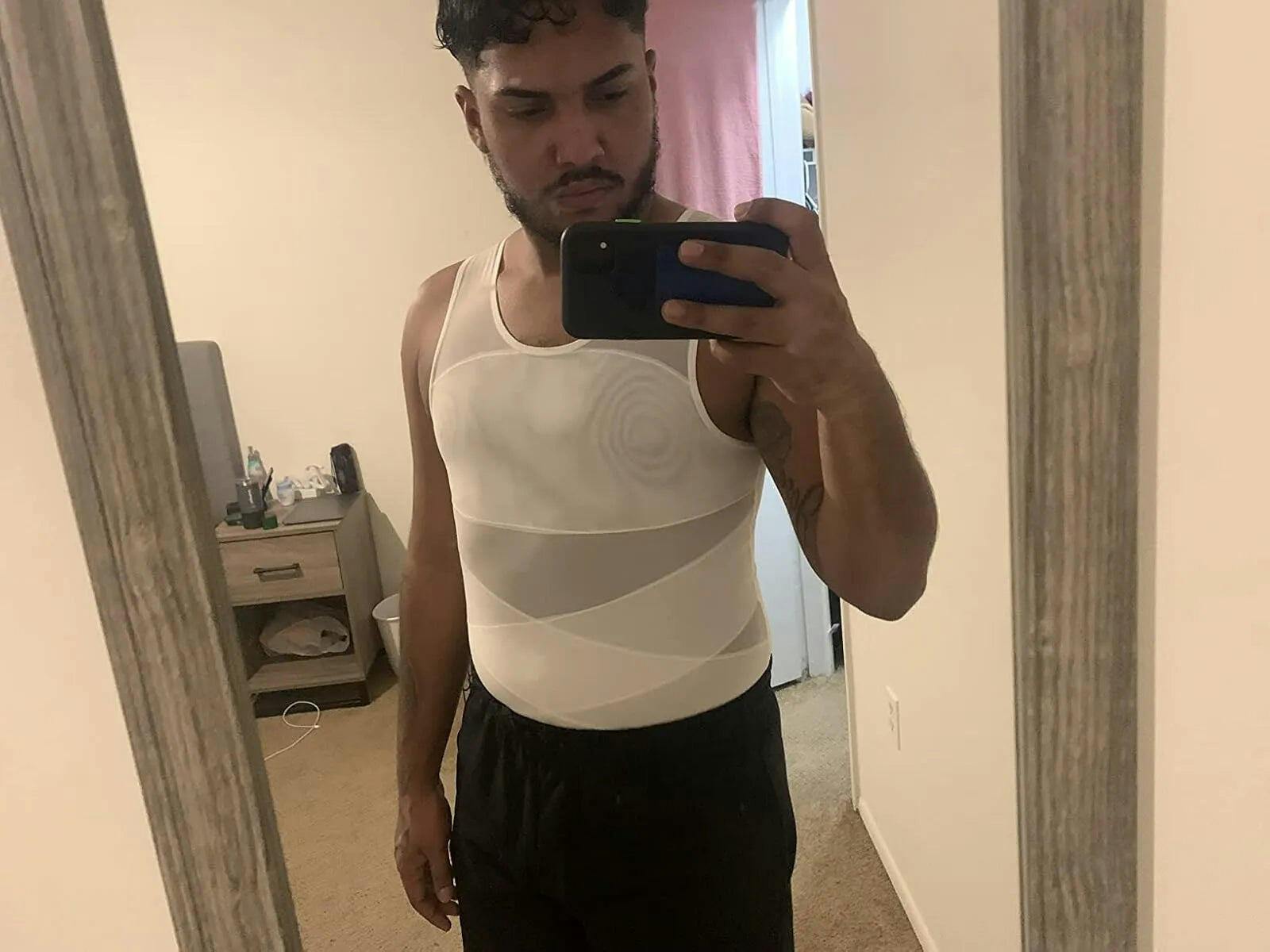
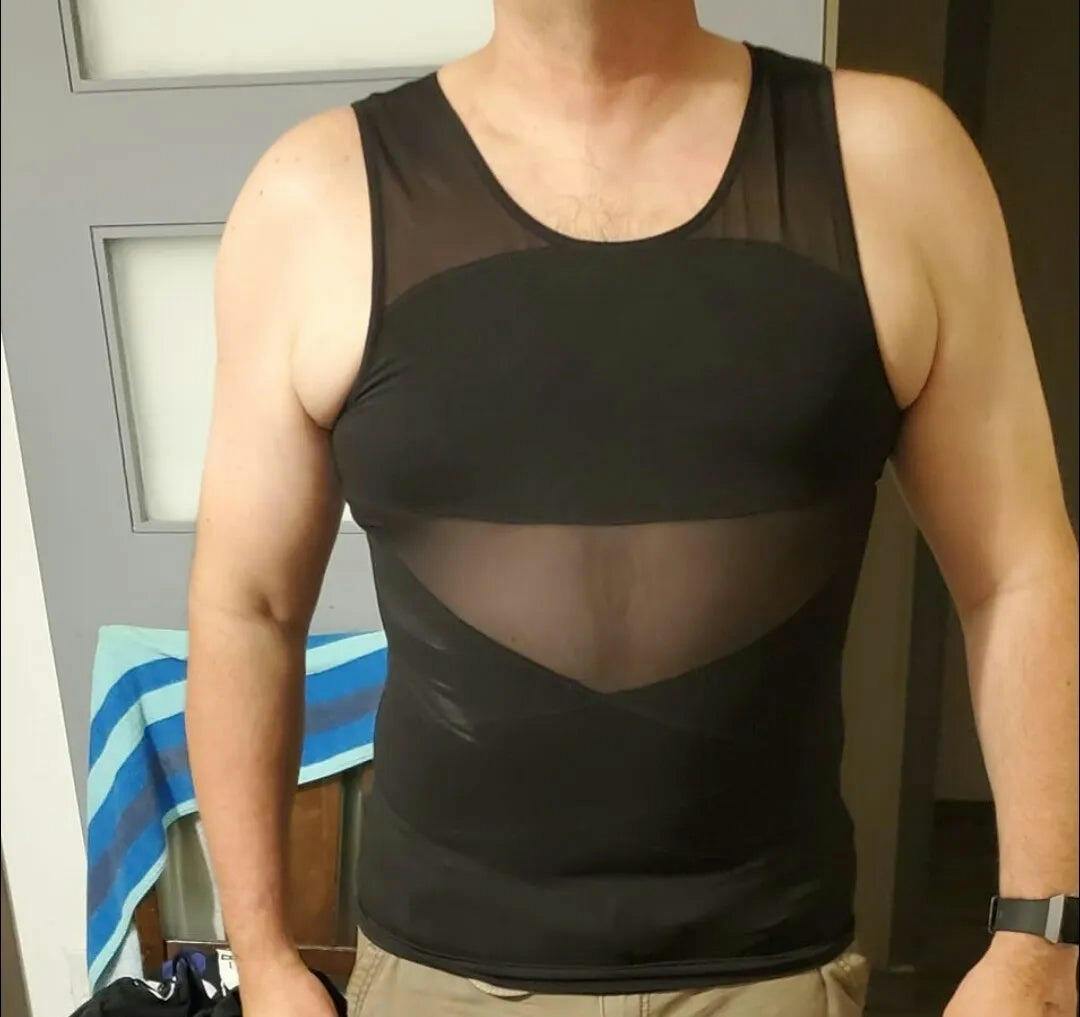
What Men Tell Us About Compression and Posture
"Based on recurring customer feedback: men who spend long hours at a desk often notice the posture benefit of compression before they notice the slimming effect. They describe it as a 'gentle tap on the shoulder' when they start to slouch — not a forceful correction, but a quiet reminder that builds awareness over time. Many say they catch themselves self-correcting even when they are not wearing the garment, because the feeling of slouching has become more recognizable."
Frequently Asked Questions About Compression and Posture
Quick answers to the most common questions about compression wear and posture awareness.
How It Works
Q: Can compression wear permanently fix bad posture?
Q: How is compression different from a posture brace?
Q: Does the posture effect last after taking the garment off?
Practical Use
Q: Can compression help with office-related back discomfort?
Q: Should I use compression instead of an ergonomic setup?
Q: How many hours a day should I wear compression for posture benefits?
Q: What is the difference between wide shoulder straps and narrow straps for posture?
Unsure about your size? Check our Size Guide before ordering. Most returns come from sizing down — order your regular shirt size.
What Compression Can — and Cannot — Do
Compression Can Help With
- Increasing awareness of slouching through proprioceptive feedback during desk work
- Encouraging better sitting and standing posture through consistent sensory reminders
- Improving clothing drape over the shoulders and torso
- Supporting active postural habits without restricting natural movement
Compression Cannot
- Permanently tighten or restore skin elasticity
- Replace surgical or medical skin removal procedures
- Burn fat or reduce body weight while worn
- Work identically for all body types and skin conditions
Why We Wrote This
Posture is one of the most commonly asked-about topics in compression wear — and also one of the most misunderstood. Many people come to us hoping compression will work like a brace, and leave confused when it doesn't. We wrote this guide to clarify what compression actually does for posture, what it doesn't do, and how to use it as part of a broader approach to better daily habits.


Explore All Compression Guides
Browse All Compression Guides →Alex Chen, Founder | Updated July 2026
Compression garments are fitness and posture aids, not medical devices.
Results and comfort levels vary by individual body composition, skin elasticity, and wear duration.