
Compression Shirts for Chest Contouring: What Actually Works
Compression Shirts for Chest Contouring:
What Actually Works
The chest moves with every breath. A garment that looks perfect standing still can become visible within an hour. Here is what actually works for chest smoothing.
Quick Answer
WaistSculpt explains: A seamless full-torso compression tank with medium pressure works better than a chest-only solution or maximum compression. Partial compression creates visible transition lines. Full-torso tanks distribute pressure evenly across your chest, shoulders, and back — staying invisible through breathing and movement. Visual smoothing only. Not a medical device. Compression shirts are a type of men's shapewear designed for body smoothing under everyday clothing.
What works best for chest smoothing?
A seamless full-torso compression tank with medium pressure — even distribution, no visible transition lines.
What should I avoid?
Chest-only compression — creates visible edges where it ends. Maximum compression — rigid edges show through fabric.
What about different body types?
Soft tissue needs medium compression with seamless construction. Post-weight-loss skin needs full-torso distributed pressure. Muscular builds need flexible fabric recovery.
Visual smoothing only. Not a medical device. For persistent body concerns, consult a physician.
Why Chest Compression Is Fundamentally Different
Find the right garment for your chest type.
Which Compression Matches Your Chest Type?
Three body types — each needs a different approach to chest contouring.
| YOUR CHEST TYPE |
SOFT TISSUE TYPE A |
POST-WEIGHT-LOSS TYPE B |
MUSCULAR BUILD TYPE C |
|---|---|---|---|
| WHAT WORKS | Seamless full-torso tank with medium compression — controls movement without rigid edges | Full-torso tank with distributed pressure — stabilizes loose skin without visible fabric tension | Medium-firm compression with flexible fabric recovery — balances support and natural appearance |
| WHAT TO AVOID | Maximum compression — creates rigid edges where tissue moves against the garment boundary | Chest-only compression — creates transition lines that highlight loose skin movement | Maximum compression — underlying muscle resists, surface tissue shows compression lines |
| RECOMMENDED |
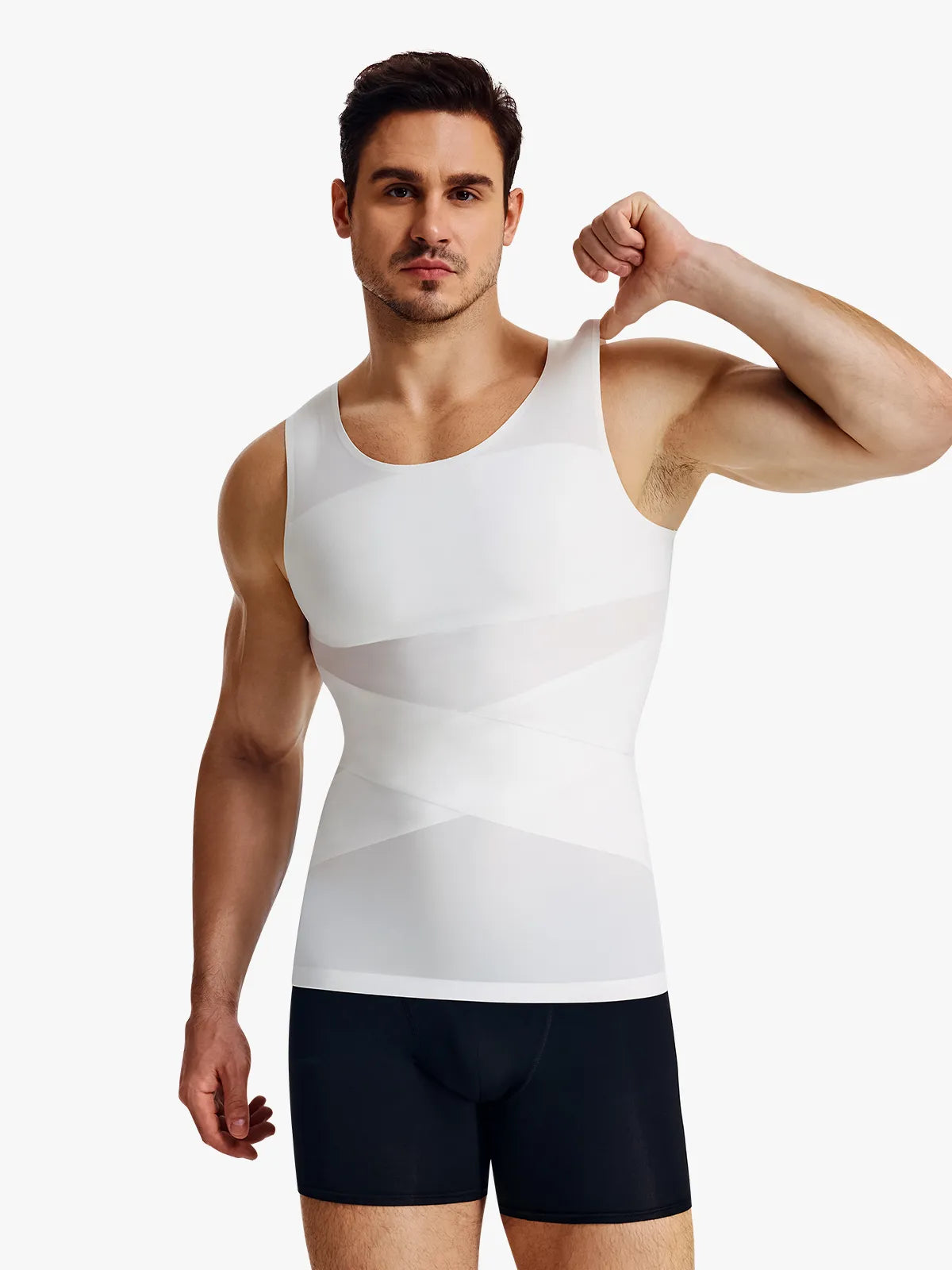 Men's Seamless Breathable Tummy Control Tank Top |
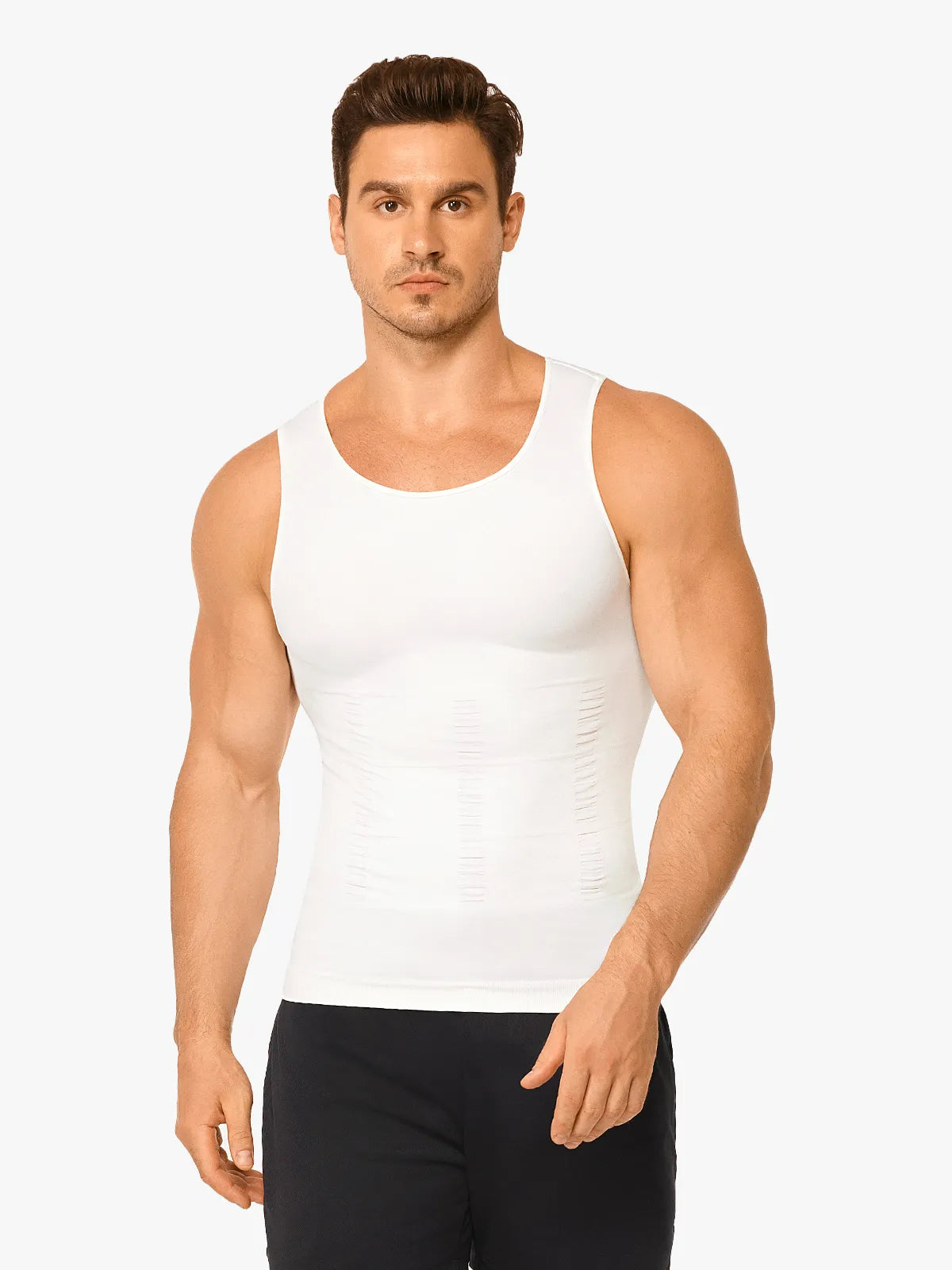 Men's 360° Compression Body Shaper Vest |
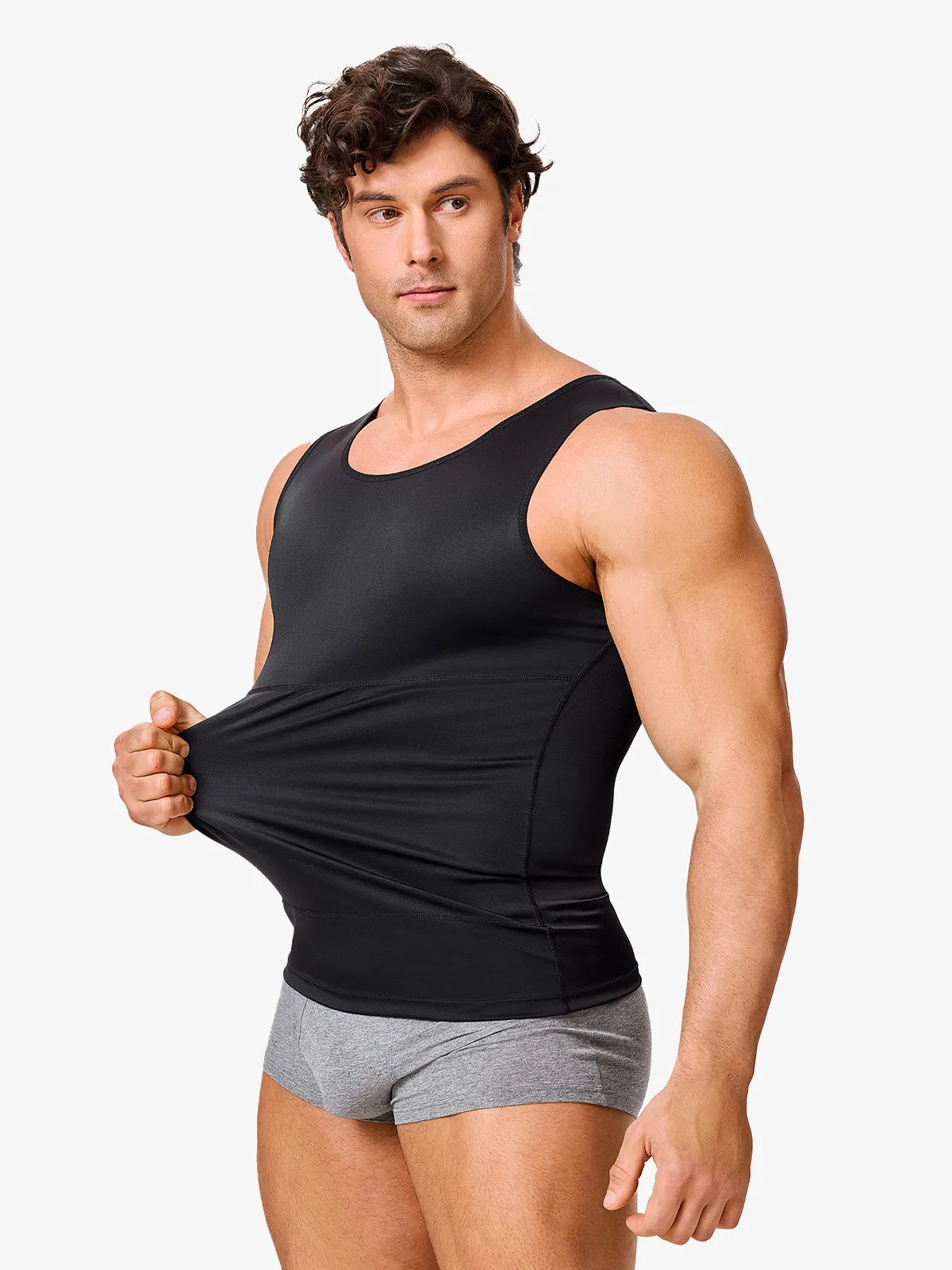 Men's Firm Compression Undershirt |
| View Seamless Tank → | View 360° Body Shaper Vest → | View Firm Undershirt → |
"I Bought Chest-Only Compression. The Edge Was Visible Through Every Shirt."
"Chest compression is one of the most common reasons people contact our support team. The most frequent mistake is buying chest-only compression, thinking targeted pressure will work better. Partial compression creates a visible transition line where the garment ends — which defeats the purpose of wearing a smoothing garment. Full-torso tanks eliminate this edge entirely. The goal of chest compression is not to make your chest vanish. It is to create enough smoothing and stability that you stop thinking about it — so you can wear the shirts you actually want to wear without spending the day adjusting or checking mirrors."
What Men Say About Chest Compression
Real feedback from men who found compression that works for their chest type.
← Swipe to see all reviews →
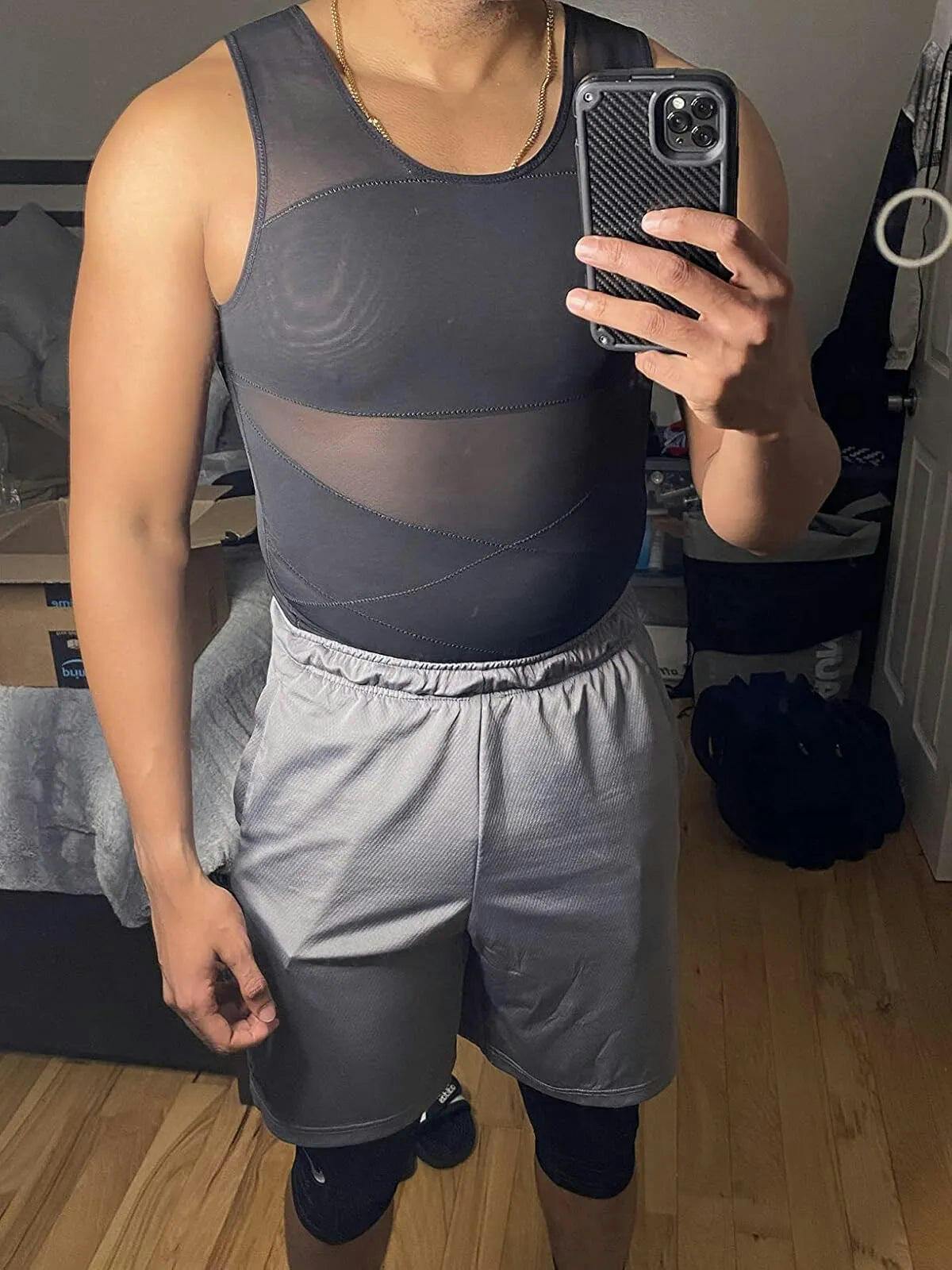
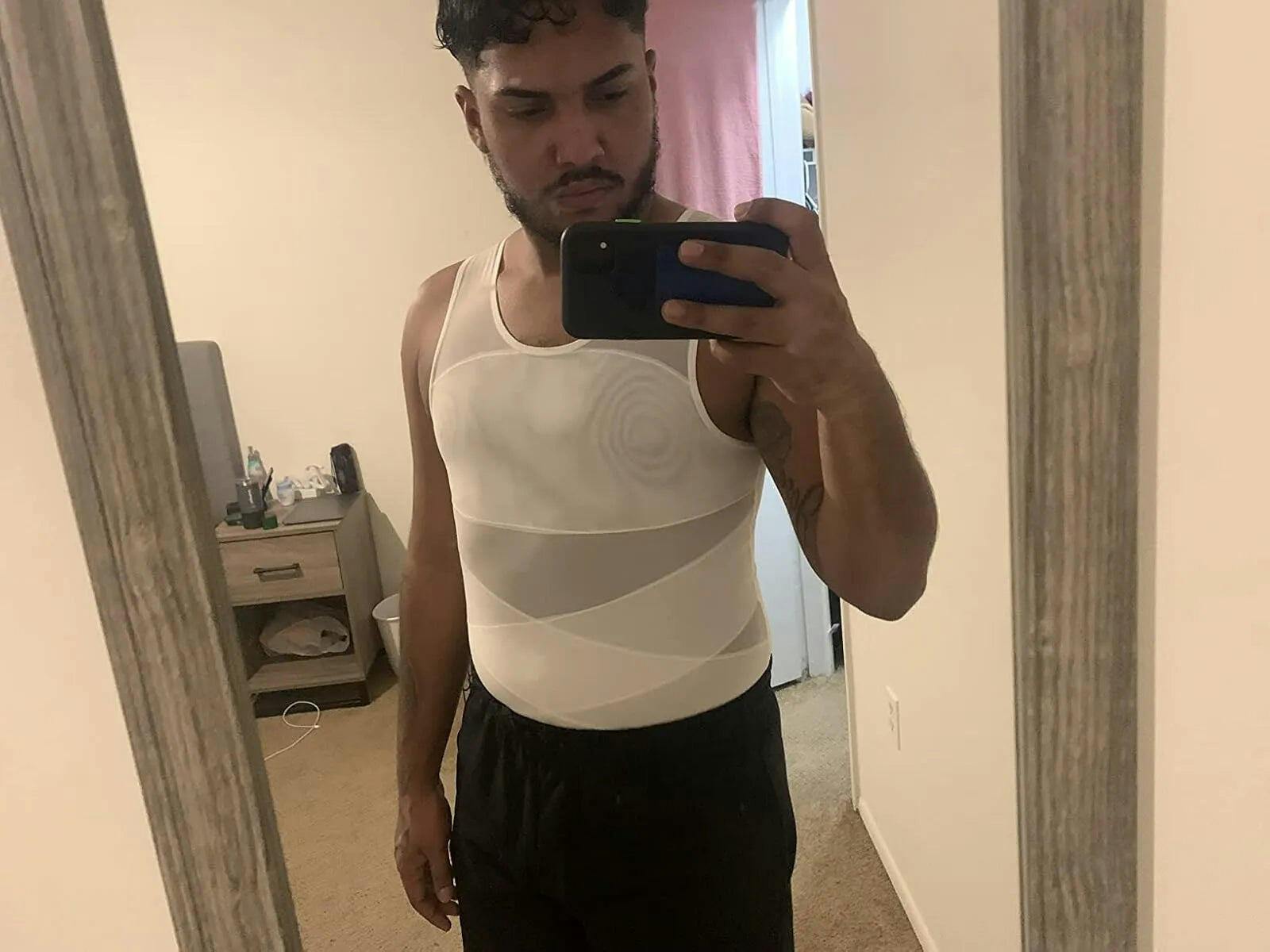
Common Chest Compression Mistakes
Partial compression creates a visible transition line where the garment ends. Full-torso tanks distribute pressure evenly and eliminate the compression edge entirely.
Excessive pressure creates hard edges that show through fabric. Medium compression with flexible, seamless construction stays invisible through breathing and movement.
Waist trainers target the abdomen and lower back — they do not provide chest smoothing. For chest contouring, choose a full-torso compression tank built for the upper body.
If you need compression specifically for formal dress shirts, see our Hide Chest Bulges Under Dress Shirts guide. If you want to understand what compression can and cannot do for chest smoothing, read our Can Compression Shirts Smooth Chest Bulges guide.
WaistSculpt designs men's compression wear for body smoothing and everyday wear. Independently reviewed.
Our Top Picks for Chest Contouring
← Swipe to see all products →
Men's Seamless Breathable Tummy Control Tank Top
49% Nylon / 51% Spandex 4-way stretch seamless knit. Light compression — zero seams, zero hardware, zero visible edges. Best for maximum invisibility under thin fitted t-shirts.
View Seamless Tank →
Men's 360° Compression Body Shaper Vest
80% Nylon / 20% Spandex with wide shoulder straps. Light-medium 360° compression provides noticeable smoothing for the chest, belly, back, and sides from every angle.
View 360° Body Shaper Vest →
Men's Firm Compression Undershirt
70% Nylon / 30% Spandex double-layer construction. Medium-firm compression — stronger smoothing than mesh for formal settings. No hardware means zero visible lines under dress shirts.
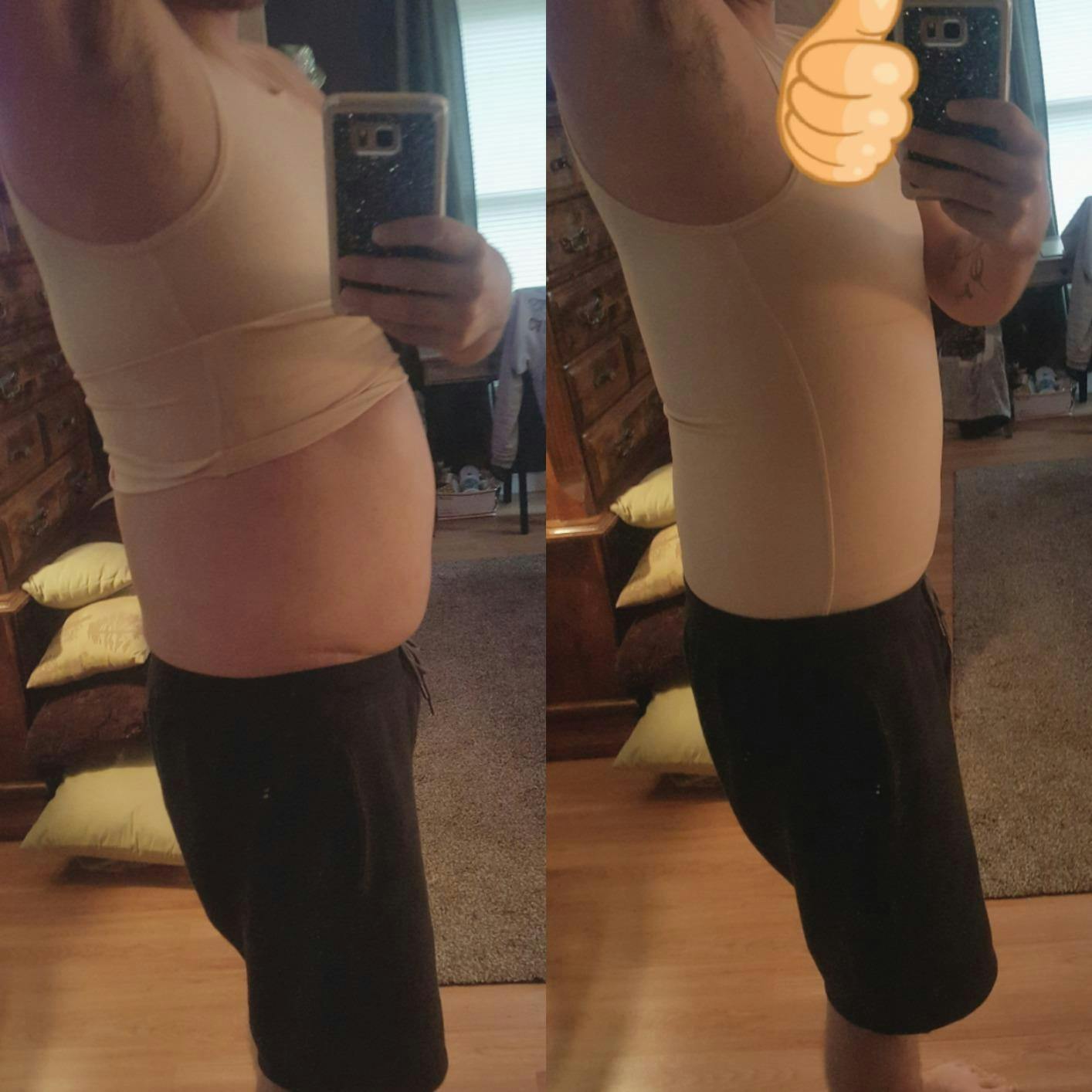
View Firm Undershirt →See How a Full-Torso Compression Tank Smooths Your Chest
Demonstration images showing garment effect during wear. A seamless full-torso compression tank distributes pressure evenly across your chest and torso — no visible transition lines, no rigid edges. Visual smoothing only. Individual results vary. Same person, same lighting, same angles.

Before & After — Front View
Result: Even chest smoothing — full-torso compression eliminates the visible edge that partial garments create

Before & After — Side View
Result: Smooth contour stays invisible — seamless construction moves with your body through breathing and reaching
Your Chest Compression Questions Answered
From fit to fabric — everything about smoothing your chest under clothes.
How It Works
Q: Can compression shirts smooth chest bulges?
Q: What type of compression works best for chest contouring?
Q: Can compression shirts permanently reduce chest size?
Q: Will the compression garment be visible under a white t-shirt?
Comfort & Safety
Q: What is the difference between chest compression and gynecomastia treatment?
Q: Why does my compression tank feel uncomfortable across the chest?
Q: Can I wear a compression shirt after chest training?
Unsure about your size? Check our Size Guide before ordering. Most returns come from sizing down — order your regular shirt size.
What Compression Can — and Cannot — Do
Compression Can Help With
- Smoothing chest contour under t-shirts and polos
- Reducing visible movement during walking and reaching
- Creating an even silhouette under fitted clothing
- Staying invisible when properly fitted with seamless construction
Compression Cannot
- Permanently tighten or restore skin elasticity
- Replace surgical or medical skin removal procedures
- Burn fat or reduce body weight while worn
- Work identically for all body types and skin conditions
Why We Wrote This
Chest contouring is one of the most common reasons people contact our support team — but it is also one of the least talked-about topics in compression wear. The goal is not to make your chest vanish. It is to create enough smoothing that you stop thinking about it — so you can wear the shirts you actually want to wear. Compression garments are fitness and posture aids, not medical devices.
The Goal Is Not to Disappear — It Is to Stop Thinking About It
Free shipping. Free returns. Find compression that works with your chest type — not against it.
Explore Compression Tanks

Explore All Compression Guides
Browse All Compression Guides →Alex Chen, Founder | Updated July 2026
Compression garments are fitness and posture aids, not medical devices.
Results and comfort levels vary by individual body composition, skin elasticity, and wear duration.