
How Tight Should a Compression Shirt Be for Loose Skin
How Tight Should a Compression
Shirt Be for Loose Skin
Compression should feel like a firm hug, not a squeeze — here's how to tell if yours fits right.
Quick Answer
A properly fitted compression shirt for loose skin should feel snug and supportive across your torso without restricting breathing, leaving red marks, or rolling up when you sit — you should be able to take a full breath and forget you're wearing it by lunch. Not intended for medical compression.
What are the signs it's too tight?
Red marks that don't fade quickly, difficulty taking a deep breath, sharp pressure around the ribcage, or the garment rolling up because it's overstretched — these all mean size up or drop a compression level.
What does the right fit feel like?
A firm, even hug around your torso — you feel supported, not squeezed. You can breathe normally, sit comfortably through a full workday, and eventually stop noticing you're wearing it.
What if it feels too loose?
If there's no visible smoothing, the fabric shifts when you move, or it feels like a regular undershirt — the compression level or size isn't right for your goal. But don't size down: try a firmer compression level in the same size instead.
Visual smoothing only. Not a medical device. For persistent body concerns, consult a physician.
Why Compression Fit Matters More Than Compression Level
Compression works by applying even pressure across your torso — not by squeezing as hard as possible. When a garment is too tight, it creates pressure points at the ribs, restricts your diaphragm from expanding fully, and leaves visible marks on your skin. This doesn't mean "it's working" — it means you're wearing the wrong size or compression level. A properly fitted compression shirt distributes pressure evenly, so you feel supported everywhere without sharp discomfort anywhere.
Red marks that don't fade within 10-15 minutes of removal mean the fabric is digging into your skin rather than resting against it. Difficulty taking a full breath means the compression is restricting your diaphragm — you should be able to inhale deeply without feeling a band of resistance. Rolling at the hem means the fabric is overstretched and fighting to return to its original shape. If you're counting the minutes until you can take it off, the fit isn't right — no adaptation period should make you dread wearing it.
The instinct to size down for "stronger compression" is the single most common mistake first-time buyers make. But compression strength comes from the fabric's spandex content and knit structure — not from making the garment smaller. Sizing down creates bulging at the edges, uneven pressure distribution, and a garment that fights against your body instead of moving with it. Your correct size already provides the compression level the garment was designed to deliver. Going smaller doesn't increase the compression level — it just makes the garment fit wrong.
Which Compression Type Gives You the Right Fit Feel
Compare your options based on fit feel, compression level, and daily comfort.
← Swipe to compare all options →
| YOUR FIT PREFERENCE |
PRIMARY CHOICE MESH TANK |
ALTERNATIVE FIRM UNDERSHIRT |
ALTERNATIVE SEAMLESS TANK |
|---|---|---|---|
| BEST FOR |
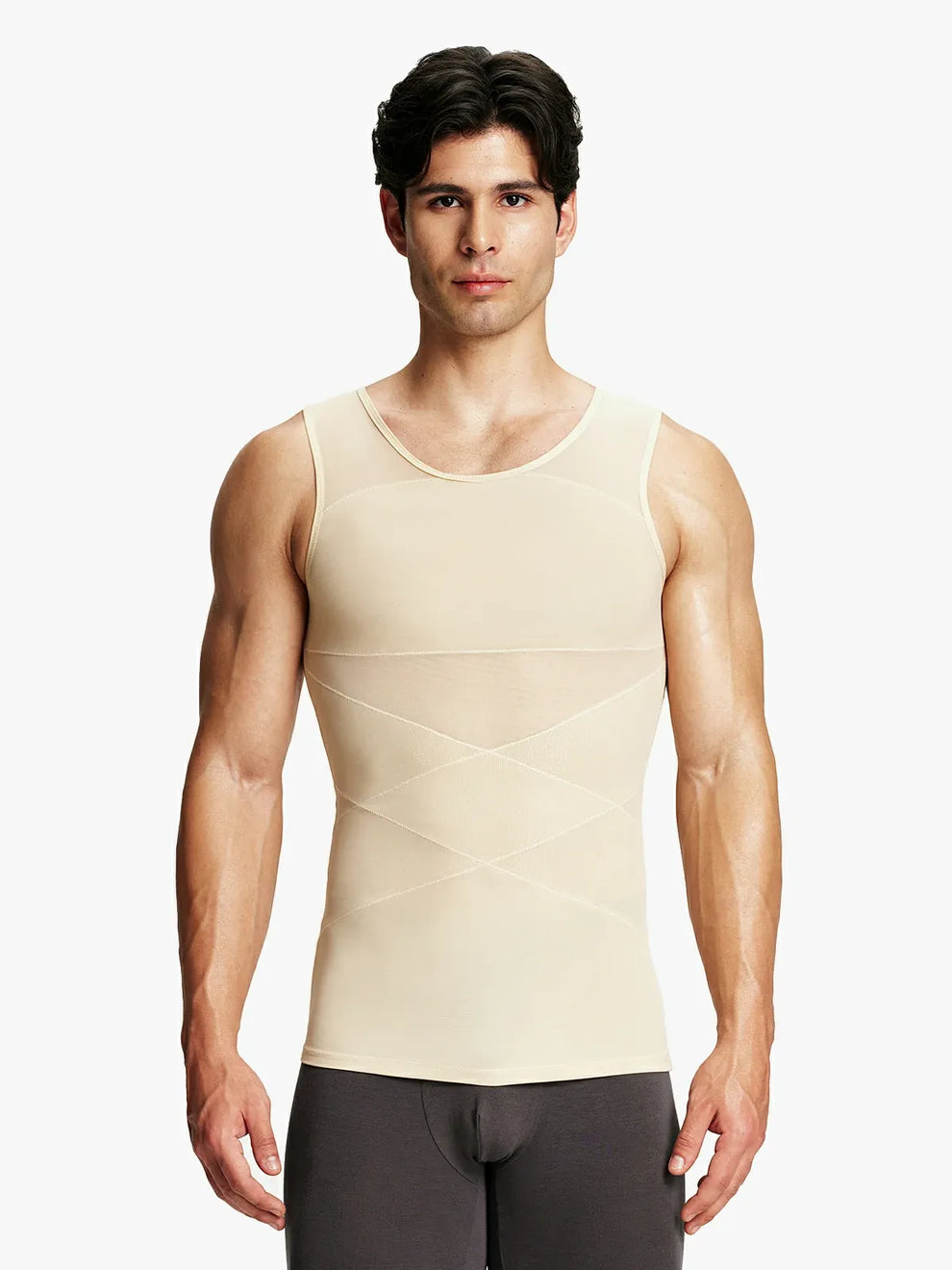 Most body types, daily wear, first-time compression users |
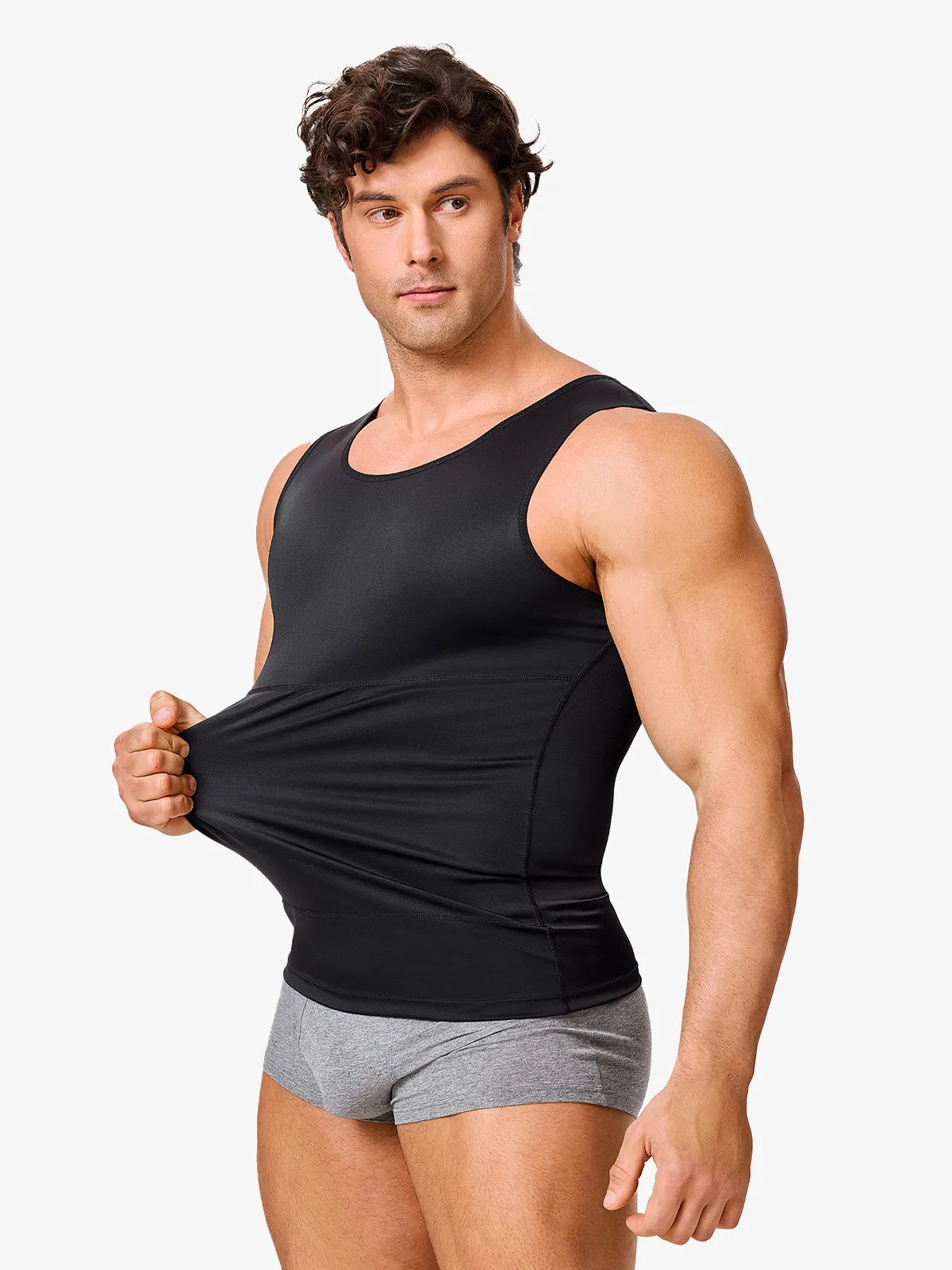 Stronger smoothing for formal events, heavier builds |
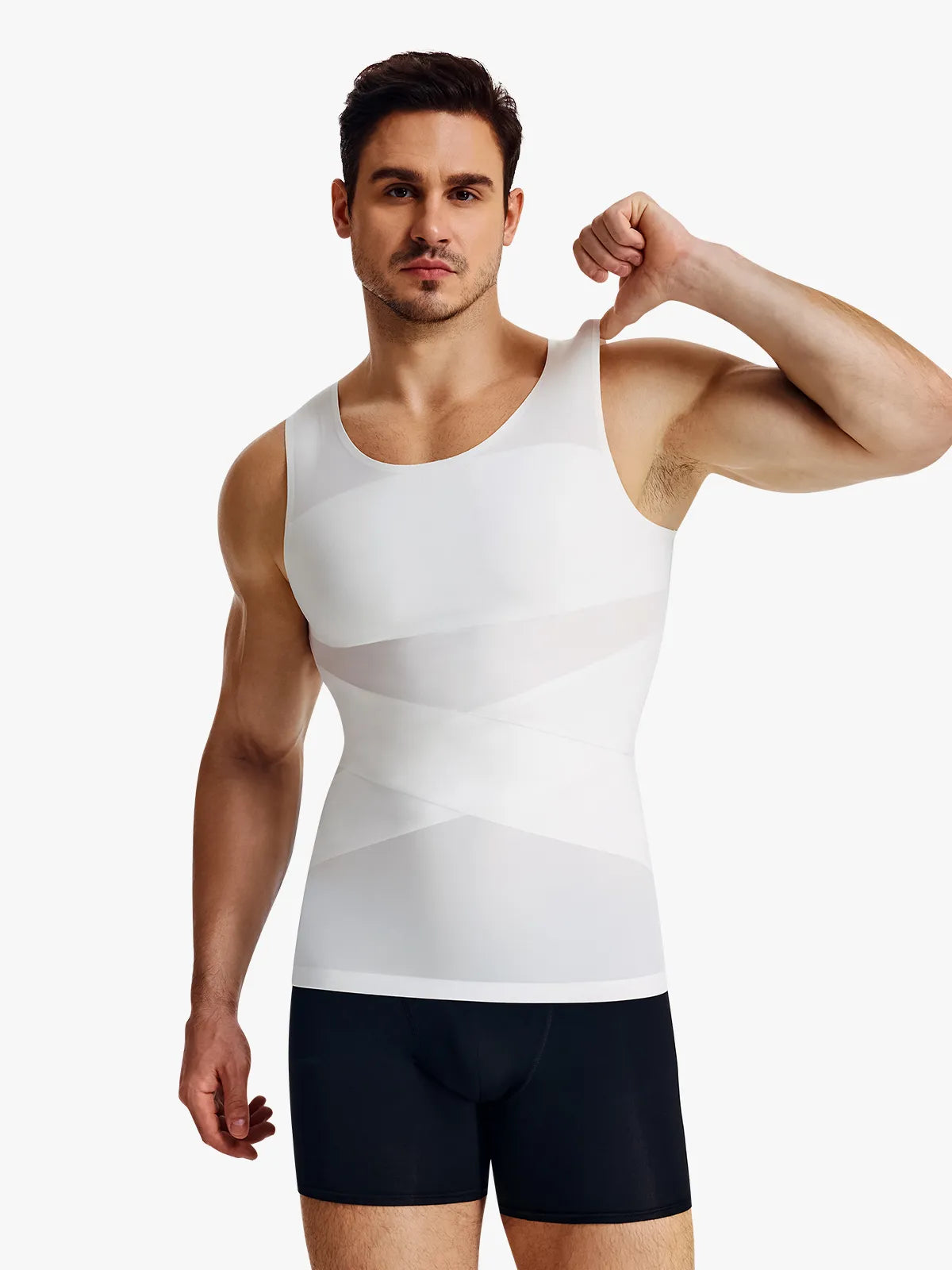 Maximum invisibility under thin tees, light compression preference |
| COMPRESSION LEVEL | ★★☆☆☆ Light-Medium | ★★★☆☆ Medium-Firm | ★☆☆☆☆ Light |
| WHY | 75% Nylon / 25% Spandex open-knit mesh — the balanced option that gives you the right fit feel for most situations | 70% Nylon / 30% Spandex double-layer — firmer hold for when you want more shaping, but still comfortable in your correct size | 49% Nylon / 51% Spandex 4-way stretch seamless — light, second-skin feel for when you want the least noticeable fit |
| View Mesh Tank → | View Firm Undershirt → | View Seamless Tank → |
What Men Actually Tell Us About Compression Fit
"The most common mistake we hear about is buying a size too small thinking it'll make you look slimmer. We hear this almost daily — and it always backfires. The guys who get the best results are the ones who order their true size and let the compression fabric do its job. Once you feel what properly fitted compression actually feels like, you'll never want to squeeze into a too-small garment again."
What to Avoid When Getting the Right Fit
This is the number one return reason across all compression brands. Your correct size already delivers the compression level the garment was designed for. Sizing down creates bulging, discomfort, and uneven pressure.
Compression should never hurt, leave lasting marks, or restrict your breathing. These are signs the size or level is wrong — not signs that it's working.
Most first-timers land at medium compression. Starting with the strongest option often leads to discomfort and returns. You can always go firmer later once you know how compression feels on your body.
If you're looking for medical-grade compression or post-surgical recovery garments, this guide is about cosmetic compression for daily wear. Those have different fit standards and should be fitted under medical supervision. For medical compression needs, consult a qualified physician.
WaistSculpt designs men's shapewear & compression for body smoothing and everyday wear. Independently reviewed.
Best Compression for Getting the Right Fit
← Swipe to see all products →
Men's Mesh Compression Tank Top
75% Nylon / 25% Spandex open-knit mesh. Light-medium compression — breathable and flexible. Best for daily wear, hot climates, and moderate loose skin smoothing without overheating.
View Mesh Tank →
Men's Firm Compression Undershirt
70% Nylon / 30% Spandex double-layer construction. Medium-firm compression — stronger smoothing than mesh. Best when you want firmer compression in your correct size.
View Firm Undershirt →
Men's Seamless Breathable Tummy Control Tank Top
49% Nylon / 51% Spandex 4-way stretch seamless knit. Light compression — zero seams, zero hardware, zero visible edges. Best when you want the lightest, most invisible feel.
View Seamless Tank →Real Results
Demonstration images showing garment effect during wear. Individual results vary depending on body composition, skin elasticity, and garment sizing. Same person, same lighting, same angles.

Without Compression vs. With Compression — Front View
Result: Properly fitted compression creates a smooth silhouette without visible tension lines or fabric pulling — the right fit looks clean and natural.

Without Compression vs. With Compression — Under Clothing
Result: Under everyday clothing, the right compression fit disappears completely — no edge lines, no rolling, no adjusting throughout the day.
Frequently Asked Questions About Compression Fit
Straight answers to what guys actually ask about how compression should feel.
Signs of Wrong Fit
Q: How do I know if my compression shirt is too tight?
Q: Is it normal for compression to leave red marks?
Q: Should I be able to take a deep breath in compression?
Getting the Right Fit
Q: Will the compression stretch out over time?
Q: Which looks better under clothes — tighter or looser compression?
Q: Should I order my regular shirt size for compression?
Unsure about your size? Check our Size Guide before ordering. Most returns come from sizing down — order your regular shirt size.
Continue Your Journey
Not sure which guide to read next? If you're still deciding which compression type is best, start with our complete loose skin guide. If you're wearing compression daily, see our everyday styling guide.

🎯 Best Compression Wear for Loose Skin After Weight Loss
Which compression type wins for loose skin.

👕 How to Smooth Loose Belly Skin Under Everyday Clothing
Match compression to tees, polos, and dress shirts.

📊 How to Choose the Right Compression Level (The 30-Pound Rule)
Every ~30 lbs shifts compression feel by one level.
What Compression Can — and Cannot — Do
Compression Can Help With
- Providing a firm, even hold that smooths without squeezing when fitted correctly
- Improving clothing drape by creating a uniform surface under your shirts
- Stabilizing loose skin movement during walking, sitting, and bending
- Feeling comfortable enough to wear all day — not just for a few hours
Compression Cannot
- Permanently tighten or restore skin elasticity
- Replace surgical or medical skin removal procedures
- Burn fat or reduce body weight while worn
- Work identically for all body types and skin conditions
Why We Wrote This
"How tight should it be?" is the question every first-timer asks but no one answers precisely. This guide exists to give you the specific fit signals — red marks, breathing, rolling, pressure — that tell you whether your compression fits right, without the guesswork.
Find Compression That Fits Right the First Time
Free shipping. Free returns. Compression that fits your body — not your expectations of what tight should feel like.
Explore Compression WearDiscreet packaging. Nobody knows what's inside.
Explore All Compression Guides
Browse the Loose Skin Smoothing Hub →Alex Chen, Founder | Updated June 2026
Compression garments are fitness and posture aids, not medical devices.
Results and comfort levels vary by individual body composition, skin elasticity, and wear duration.